
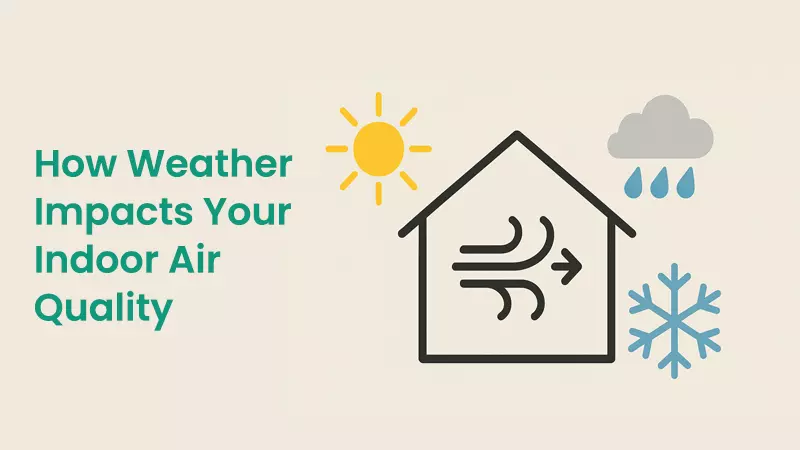


How Weather Impacts Your Indoor Air Quality
Indoor air quality (IAQ) is often thought of as something controlled only by ventilation and daily indoor activities. But the truth is that weather plays a major role in shaping the air you breathe inside your home, office, or workplace. Outdoor temperature, humidity, wind, and seasonal changes all influence how pollutants move, accumulate, or dissipate indoors. Understanding these connections is essential for maintaining a healthy environment year-round—and this is where accurate, real-time air quality monitoring becomes indispensable. And reliable monitoring solutions such as the HibouAir Duo Air Quality Monitor make this possible.
Why Weather Matters More Than You Think
Although indoor spaces appear physically separate from the outdoors, air constantly flows in and out through ventilation systems, windows, doors, and even tiny structural gaps. When the weather shifts, that airflow changes as well—which means pollutants also move differently. Temperature, humidity, pressure, and outdoor particulate levels all influence how gases like CO₂ and VOCs accumulate indoors. Monitoring these factors through real-time, multi-sensor devices such as HibouAir provides clarity and helps users respond to changes before they become problems.
The Role of Temperature in Indoor Air Quality
Temperature fluctuations have a direct impact on ventilation and pollutant behavior. During hot weather, buildings often rely heavily on air conditioning, which reduces natural airflow. As a result, CO2 levels rise more quickly, and pollutants generated indoors—such as VOCs released from paint, furniture, and cleaning agents—linger for longer periods. Heat also speeds up the emission rate of these compounds, making indoor air more chemically active and potentially more irritating for occupants.
Cold weather brings a different set of challenges. When temperatures drop, people tend to keep windows tightly closed, which further restricts air exchange and allows pollutants like PM2.5, CO2, and VOCs to accumulate. Temperature differences between indoor and outdoor environments can also trigger condensation on walls and windows, creating ideal conditions for mold growth. These seasonal changes highlight the value of monitoring temperature and CO2 levels using solutions such as the HibouAir CO2 Monitoring Device.
Humidity: A Weather-Driven Factor That Shapes Indoor Air
Humidity is highly influenced by outdoor weather and plays a significant role in determining indoor comfort and health. When humidity levels rise above the recommended range, mold spores, dust mites, and bacteria thrive, creating long-term air quality concerns. High humidity also triggers chemical reactions that increase VOC levels indoors. Conversely, very low humidity—common in winter—can dry out respiratory passages, increase discomfort, and make airborne particles stay suspended for longer.
Because humidity can swing drastically with seasonal changes, having continuous access to indoor humidity readings is crucial. HibouAir sensors measure humidity alongside temperature, particulate matter, and VOCs, allowing users to understand how weather-driven humidity influences their overall indoor air quality.
Outdoor Conditions and Their Impact on Indoor Pollution
Weather patterns such as wind direction, storms, or temperature inversions significantly affect outdoor pollution levels, which in turn affect indoor environments. Strong winds can carry dust, pollen, industrial emissions, and wildfire smoke into buildings more easily, particularly if windows or ventilation intakes are open. Meanwhile, temperature inversions trap pollutants near the ground, increasing outdoor PM2.5 and PM10 concentrations that can infiltrate indoor spaces even when windows are closed.
The ability to monitor particulate infiltration is especially important in urban settings, industrial zones, or wildfire-prone regions. HibouAir’s particulate measurement capability—supported by its HibouAir PM Sensor —helps detect these fluctuations and provides timely insights for better ventilation decisions.
Rain, Storms, and Seasonal Transitions
Weather changes throughout the year each bring their own indoor air challenges. Rain tends to reduce outdoor particulate concentrations but introduces additional indoor humidity that encourages mold growth if not managed properly. Stormy conditions can stir up outdoor pollutants before rainfall clears them, temporarily increasing infiltration indoors.
Winter typically leads to dry indoor environments due to heating systems, while cold air encourages people to limit ventilation. This contributes to elevated CO2 levels and increased viral persistence in indoor spaces. In contrast, spring and summer bring higher pollen counts and warmer temperatures, which increase both biological and chemical pollutants indoors. These seasonal dynamics make continuous monitoring valuable, particularly when using long-term tracking tools available through the HibouAir Desktop Monitoring Solution and Cloud Monitoring Solution.
How Weather Influences Ventilation Patterns
Ventilation is one of the most important determinants of indoor air quality, and weather directly shapes how often and how effectively buildings are ventilated. In mild weather, occupants tend to open windows more frequently, allowing fresh air to circulate and CO2 levels to drop. However, during extreme cold or heat, windows remain closed and HVAC systems operate continuously, limiting airflow and allowing pollutants to build up.
Weather can also influence the quality of the incoming air. For example, opening windows on a high-pollution day can introduce more contaminants indoors than it removes. This makes real-time monitoring essential for understanding when ventilation is beneficial—and when it may worsen indoor air.
How HibouAir Helps You Manage Weather-Driven IAQ Changes
HibouAir provides a reliable and complete ecosystem for understanding how weather conditions affect indoor environments. Its sensors measure CO2, particulate matter, VOCs, temperature, humidity, noise, and pressure, offering a detailed picture of indoor conditions at any moment. Combined with long-term analytics from the cloud dashboard and easy plug-and-play installation through the Standalone HibouAir Device, users can respond quickly to trends driven by changing seasons or sudden weather shifts.
Whether monitoring a home, office, classroom, industrial site, or public facility, HibouAir makes it simple to maintain a healthy indoor climate regardless of the outdoor conditions.