
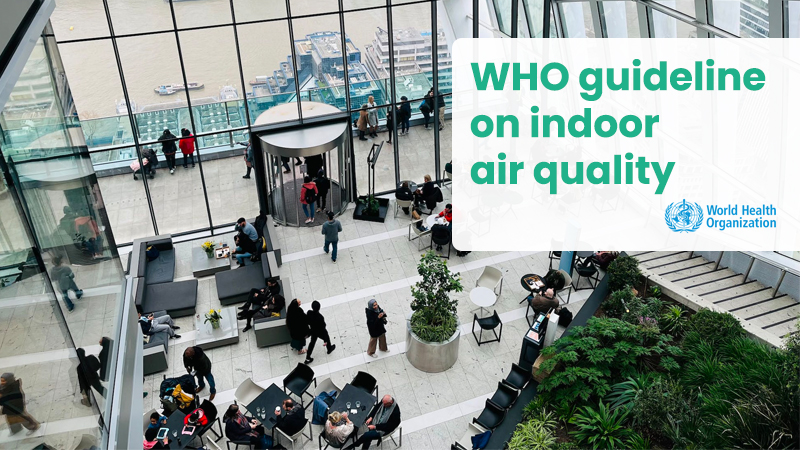
WHO Guidelines on Indoor Air Quality and the Role of Air Quality Monitors
Indoor air quality is an important aspect of human health and well-being. Poor indoor air quality can have adverse effects on human health, including respiratory problems, allergies, and even cancer. The World Health Organization (WHO) has developed guidelines on indoor air quality to help individuals, communities, and governments address this issue.
The WHO Indoor Air Quality Guidelines were first published in 2010 and updated in 2023. The guidelines provide recommendations on how to improve indoor air quality in both residential and non-residential settings. The guidelines cover a range of pollutants, including CO2, particulate matter, VOC, pressure, temperature, humidity, noise etc
CO2
Carbon dioxide (CO2) is a natural component of the atmosphere and is also produced by human activities. However, in indoor spaces, high concentrations of CO2 can lead to headaches, drowsiness, and reduced productivity. WHO recommends maintaining a CO2 concentration of less than 1000 ppm (parts per million) in indoor spaces.
Particulate Matters
Particulate matters (PM) are tiny particles that can be present in the air and can cause respiratory problems. These particles can come from various sources such as smoke, dust, and pollen. WHO recommends maintaining a PM concentration of less than 10 micrograms per cubic meter (µg/m³) for PM2.5 and less than 25 µg/m³ for PM10.
Pressure
Air pressure is the force exerted by air molecules on a surface. It can affect the flow of air and the performance of ventilation systems. WHO recommends maintaining a slightly positive pressure in indoor spaces to prevent the entry of outdoor pollutants.
Temperature
Temperature is a key factor in ensuring comfort and health in indoor environments. The WHO recommends maintaining indoor temperatures of at least 18°C in residential settings during cold seasons to protect against cold-related health risks, particularly for vulnerable populations such as the elderly and those with pre-existing conditions. While WHO does not specify an upper temperature limit or exact ranges for office environments, it emphasizes the need to avoid excessive indoor heat, especially during hot weather, through adequate ventilation, insulation, and cooling measures. Read more
VOCs
Volatile organic compounds (VOCs) are chemicals that can be emitted from various sources such as paints, cleaning products, and furniture. Exposure to high levels of VOCs can cause eye, nose, and throat irritation. WHO recommends maintaining a VOC concentration of less than 200 µg/m³.
Humidity
Humidity refers to the amount of moisture present in the air. Excessive humidity indoors can contribute to mold growth and microbial contamination, which are linked to respiratory issues and allergic reactions. Conversely, very low humidity can lead to discomfort such as dry skin and eyes. While the WHO does not prescribe a specific relative humidity percentage, it emphasizes the importance of preventing persistent dampness and visible mold. Maintaining indoor humidity in a moderate range—commonly considered to be between 30% and 50%—is generally advised by experts to support good indoor air quality and health. Read more .
Noise
Noise is a significant environmental factor that can affect sleep quality, cognitive performance, and overall well-being. Chronic exposure to high noise levels has been associated with stress, sleep disturbance, and increased risk of cardiovascular problems. According to WHO guidelines, indoor noise levels should ideally remain below 35 dB(A) during the day in living spaces to allow comfortable conversation, and below 30 dB(A) at night in bedrooms to prevent sleep disruption. Sudden noise events at night should not exceed 45 dB(A) to protect sleep continuity and health. Read more
Role of Air Quality Monitor
Air quality monitors are devices that measure the concentration of various pollutants in the air. These devices can be used to monitor the levels of CO2, particulate matters, VOCs, humidity, and temperature in indoor spaces. They can also provide real-time data on the air quality, which can be used to identify sources of pollution and take corrective actions.
Air quality monitors can be used to achieve WHO’s guidelines on indoor air quality by providing accurate and timely data on the concentration of various pollutants. This data can be used to adjust ventilation systems, identify and remove sources of pollution, and maintain a healthy indoor environment.
How HibouAir can help achieve this guideline
HibouAir is a comprehensive indoor air quality monitoring solution that provides real-time data on various parameters, including CO2, particulate matter, temperature, humidity, and volatile organic compounds (VOCs). By using a combination of sensors and analytics, HibouAir can help identify sources of pollution and provide insights to improve the indoor air quality.
One of the key features of HibouAir is its user-friendly dashboard, which provides real-time data on various parameters. This dashboard can be accessed from any device with an internet connection, making it easy to monitor indoor air quality from anywhere. With HibouAir, users can set up alerts and notifications for specific parameters, which can help identify potential issues before they become major problems.
Another useful feature of HibouAir is its ability to generate reports on indoor air quality trends. These reports can be used to track changes over time and identify patterns that may indicate a need for corrective action. This information can be valuable for building owners and managers, who can use it to make informed decisions about ventilation systems and other aspects of building management.
HibouAir’s data can also be integrated with other building management systems, such as HVAC and energy management systems, to provide a more comprehensive view of building performance. This integration can help optimize energy use and reduce operating costs while maintaining a healthy indoor environment.
Top 40 air quality blogs
HibouAir’s commitment to providing informative content on indoor air quality has been recognized by Feedspot, a leading content reader platform. HibouAir’s blog has been selected as one of the top 40 air quality blogs on Feedspot’s list of “40 Best Air Quality Blogs and Websites”
HibouAir’s blog provides a wealth of information on indoor air quality, including tips on how to improve air quality, insights on the latest research, and updates on trends in air quality monitoring technology. By sharing this knowledge, HibouAir aims to empower individuals and organizations to take proactive steps towards achieving a healthier indoor environment.
Referenes
WHO Global Air Quality Guidelines
New WHO Global Air Quality Guidelines aim to save millions of lives from air pollution
.