
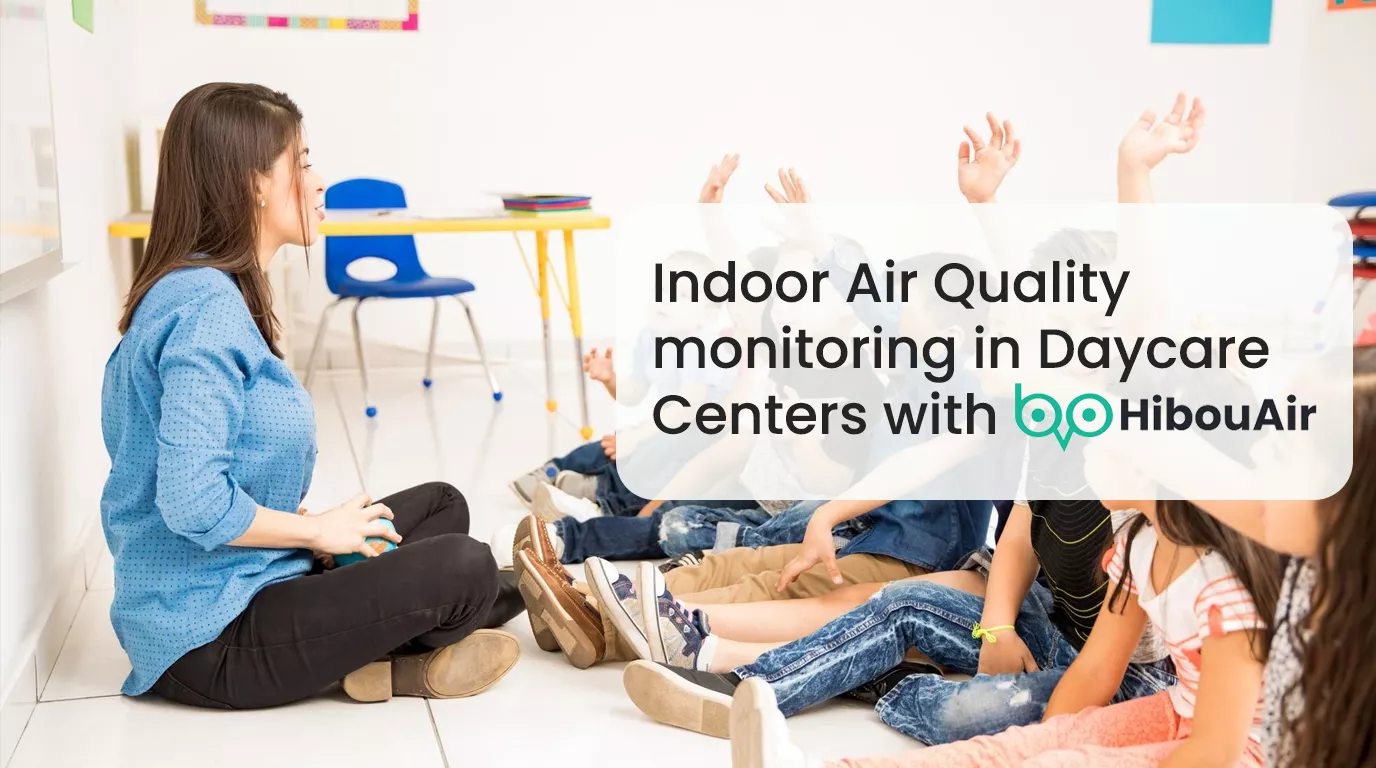


Why Indoor Air Quality in Daycare Centers Matters More Than Ever
Daycare centers are environments where young children spend many hours each day learning, playing, and interacting with others. While nutrition, safety, and education are often the main priorities, indoor air quality is an equally important factor that directly affects children’s health. Because daycare classrooms typically have many children in relatively small spaces, indoor air conditions can change quickly if ventilation is not properly managed.
Children are more sensitive to air pollution than adults because their lungs are still developing and they breathe faster relative to their body size. When indoor air contains high levels of carbon dioxide (CO2), fine particles, or chemical pollutants, children may experience symptoms such as fatigue, coughing, or irritation of the eyes and throat. Maintaining healthy indoor air in daycare environments is therefore essential for both immediate comfort and long-term respiratory health.
Common Indoor Air Quality Challenges in Daycare Centers
Daycare facilities often experience indoor air quality challenges because of high occupancy and constant activity. When many children share the same room, CO2 levels can increase quickly as a result of normal breathing. Elevated CO2 is usually a sign that ventilation is insufficient and can lead to tiredness and reduced concentration among both children and staff.
Particles in the air are another concern. Dust from carpets, outdoor pollution entering through doors or windows, and particles from everyday activities can accumulate indoors. Since children frequently play on the floor and move around actively, these particles can easily become airborne again and increase exposure. In addition, certain materials such as cleaning products, furniture, and art supplies may release volatile organic compounds that can build up indoors if ventilation is not adequate.
The Health Impact of Poor Air Quality on Young Children
Young children are especially vulnerable to environmental conditions, and poor air quality can affect both their health and daily comfort. When indoor environments contain elevated pollutants, children may experience more frequent respiratory symptoms, allergy irritation, or fatigue. These issues can interfere with their ability to participate fully in learning and play activities.
Why Monitoring Indoor Air Quality Is Essential
Many daycare buildings rely on ventilation systems to maintain indoor comfort, but without proper monitoring it is difficult to know whether the air quality actually meets healthy standards. CO2 levels may increase during busy periods, particle levels may change depending on outdoor conditions, and humidity may fluctuate throughout the day.
Real-time air quality monitoring with devices like HibouAir provides visibility into these changes. By measuring parameters such as CO2, particulate matter, temperature, and humidity, facility managers can understand how indoor conditions evolve during daily activities. Monitoring solutions such as HibouAir allow daycare operators to track indoor air quality continuously and identify when action may be needed to maintain healthy environments.
Integrating Air Quality Monitoring With Ventilation Systems
Monitoring indoor air quality becomes even more valuable when it is connected with building ventilation systems. Instead of running ventilation at a fixed rate, demand-controlled ventilation allows airflow to adjust based on real indoor conditions. When CO2 levels rise due to higher occupancy, the ventilation system can automatically increase airflow to restore healthy conditions.
This approach improves indoor comfort while also reducing unnecessary energy use when spaces are less occupied. By using air quality sensors as part of the ventilation strategy, daycare facilities can maintain healthy environments while operating more efficiently.
Using HibouAir ControlHub for Smart Air Quality Management
In daycare centers with multiple rooms or classrooms, managing air quality across the entire building can become challenging. A centralized system such as HibouAir ControlHub helps simplify this process by collecting data from multiple air quality monitors and presenting it in a single interface.
With centralized monitoring, administrators can quickly identify which rooms may require improved ventilation or attention. The system can also support automated responses, such as adjusting ventilation when CO2 levels rise. Over time, historical data helps facility managers understand patterns in occupancy and air quality.
Building Healthier Indoor Environments for Children
Creating healthy indoor environments in daycare centers is an important step toward protecting children’s health and supporting their development. Clean air helps reduce illness, improves comfort, and supports better learning conditions for both children and staff.
By combining real-time air quality monitoring with intelligent ventilation strategies, daycare facilities can maintain healthier indoor spaces throughout the day. Solutions such as HibouAir monitoring devices and ControlHub management systems provide the data and control needed to maintain safe and comfortable environments where children can learn and grow.