How to Place Indoor Air Quality Monitors in Offices and Commercial Buildings

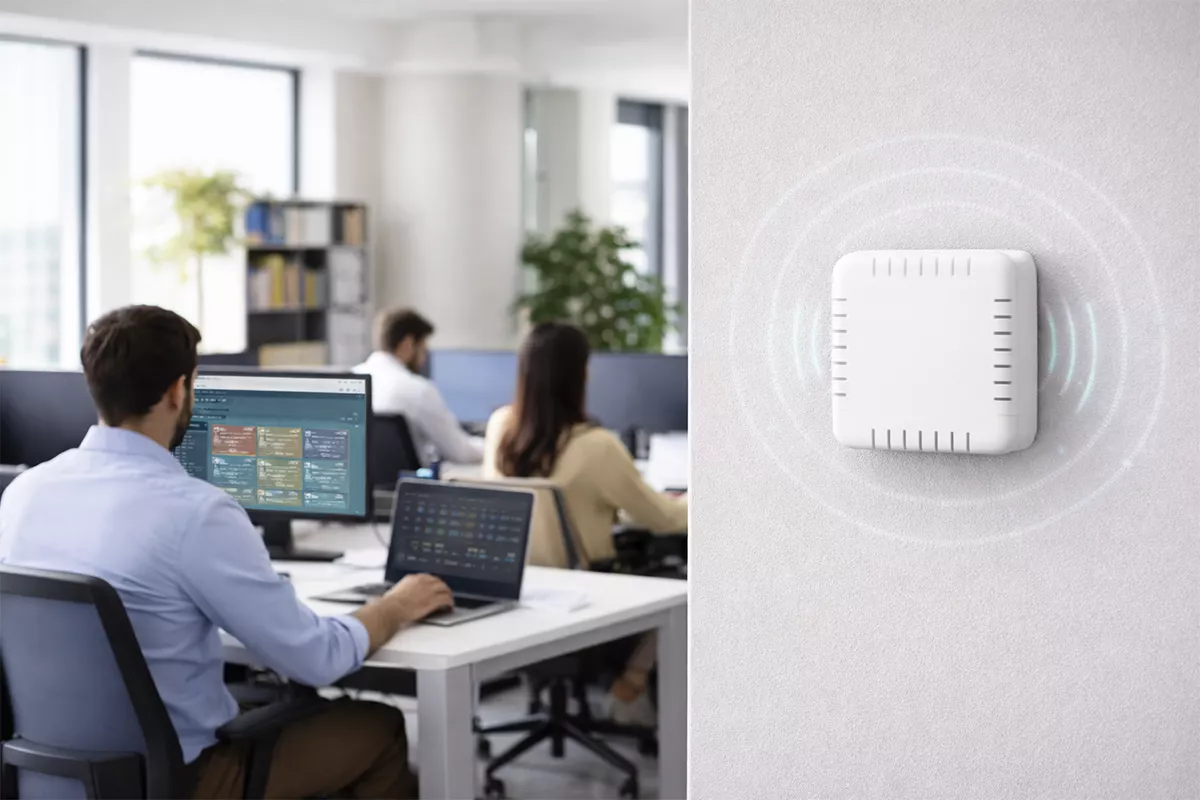
Installing an indoor air quality monitor is a powerful step toward improving workplace health and performance. But for facility managers, simply installing a device is not enough. Where that monitor is placed will determine whether the data supports smart building decisions — or quietly leads you in the wrong direction.

In commercial environments, air does not behave evenly. Temperature, humidity, ventilation flow, and occupant density all create microclimates within a single space. A monitor placed in the wrong location can measure the air from an HVAC vent, a sunlit window, or a rarely used corner — none of which represent what employees are actually breathing throughout the day.

For air quality monitoring to be useful in an office or commercial building, placement must be intentional and strategic.

Start With the Breathing Zone

The most important concept in commercial IAQ monitor placement is the breathing zone. This refers to the vertical range where occupants inhale air during normal activity. According to commonly referenced guidelines such as ASHRAE and WELL, this zone sits approximately 1.1 to 1.7 meters (3.6 to 5.6 feet) above the floor.

This range represents seated and standing head height in typical office environments. Placing a monitor too close to the ceiling often results in warmer air readings and diluted CO2 values. Installing it near the floor can exaggerate particulate accumulation or temperature differences that occupants are not directly exposed to.
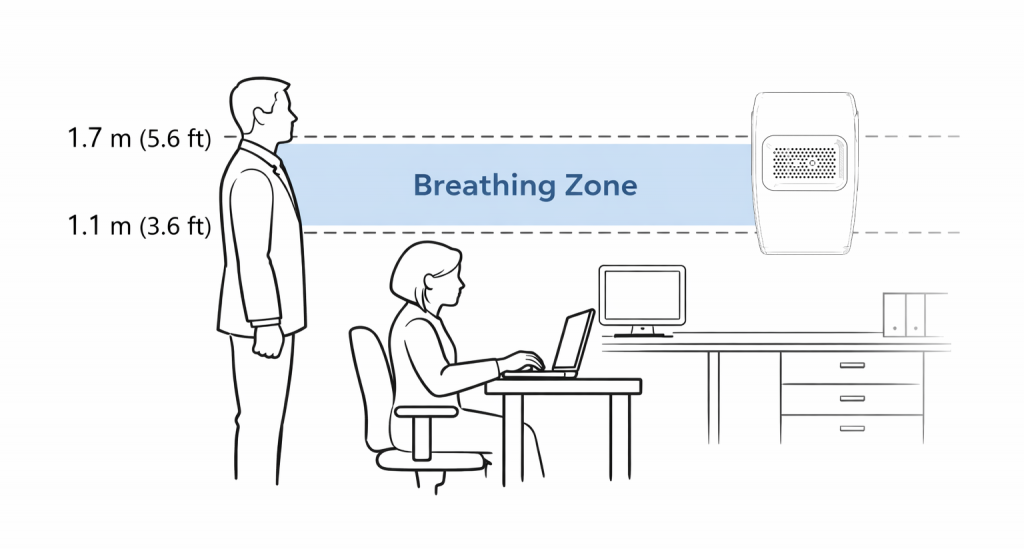
In a conference room, for example, mounting a device at seated head level ensures that rising CO2 concentrations during meetings are accurately captured. In open workspaces, a centrally positioned wall mount at eye level usually provides the most representative measurement of real occupant exposure.

When monitors are positioned within the breathing zone, the data reflects lived conditions — not architectural extremes.

Avoid Direct Influence From HVAC and Openings

Modern commercial buildings rely heavily on mechanical ventilation systems. Supply diffusers introduce conditioned air that may differ significantly from the ambient room average. A monitor installed directly beneath an air supply vent might report excellent air quality, while employees a few meters away experience rising CO2 and stale air.

Similarly, windows and exterior doors introduce rapidly changing temperature and humidity conditions. Direct sunlight can heat sensor surfaces, artificially elevating temperature readings and altering relative humidity calculations.
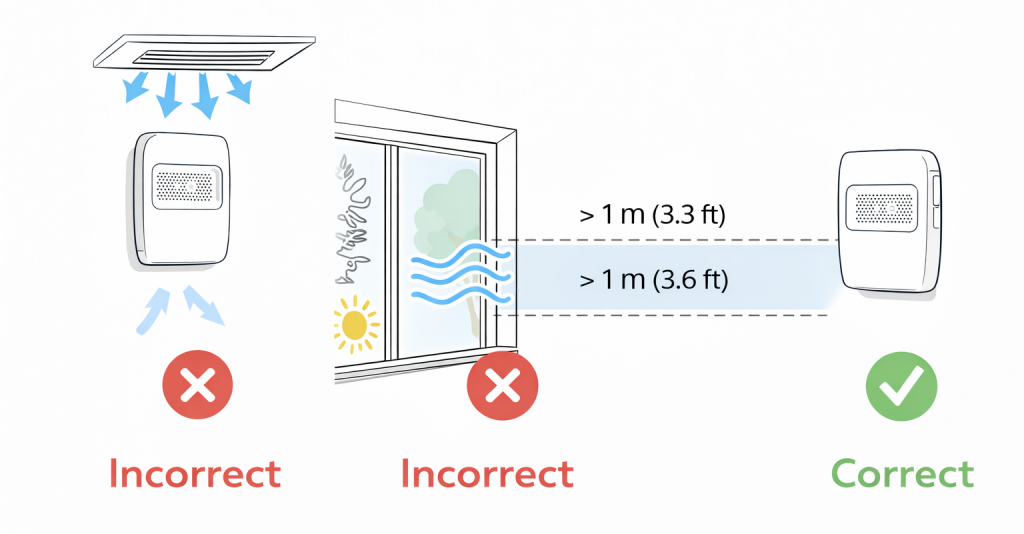
To maintain reliable indoor air quality data, monitors should generally be positioned at least one meter away from HVAC supply vents, air returns, operable windows, and exterior doors. The goal is to capture stable, mixed room air rather than freshly delivered or outdoor-influenced air.

This simple adjustment can significantly improve data accuracy.

Understand How Humidity Affects Measurements

Humidity is often overlooked, yet it plays a major role in sensor behavior. In many commercial-grade air quality monitors, particulate matter is measured using optical particle counting. When relative humidity becomes elevated, airborne particles can absorb moisture and grow in size. This process can cause the monitor to overestimate particulate mass concentration.

Similarly, some VOC sensors are sensitive to moisture levels. High humidity can alter the chemical reactions occurring at the sensor surface, influencing baseline readings.

If a device is placed near a humidifier, kitchen area, or poorly ventilated corner, it may display pollutant levels that reflect localized moisture conditions rather than overall building performance.

This is why thoughtful placement is not only a spatial decision — it is a scientific one. By positioning monitors in areas with stable ambient conditions, facility managers reduce the risk of distorted readings and unnecessary corrective actions.

Place Monitors Where People Actually Work

The most valuable air quality data comes from spaces that are regularly occupied. Reception areas, open workstations, conference rooms, private offices, and collaborative zones are typically the most critical monitoring points in commercial environments.

Installing monitors only in storage rooms or low-traffic corridors may provide data, but it does not represent the exposure conditions of building occupants.

Carbon dioxide, in particular, is closely tied to occupancy. In meeting rooms, levels can rise quickly during extended sessions. Without proper monitoring in those spaces, ventilation issues may go unnoticed until complaints arise.
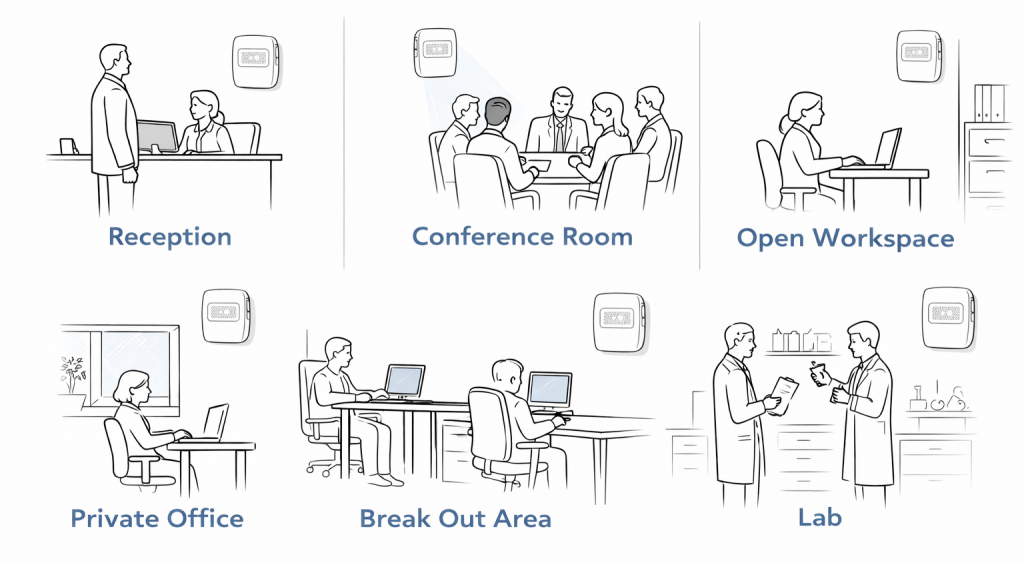
A well-designed commercial air quality monitoring strategy reflects population density and usage patterns. The monitor should be where people spend time — not hidden in mechanical spaces.

Consider Building Layout and Monitor Density

Larger commercial buildings introduce additional complexity. Different HVAC zones, floor orientations, and occupancy densities can produce varying air quality conditions within the same property.

Industry guidance and building standards often suggest coverage guidelines of roughly 325 square meters (3,500 square feet) per monitor, though practical deployment depends heavily on layout and ventilation design. Separate conference rooms typically require independent monitoring. Distinct HVAC zones should not rely on a single sensor for representation.

Higher monitor density improves resolution and diagnostic capability. Even in cost-sensitive deployments, placing monitors strategically in both high-occupancy and lower-occupancy areas provides a more complete picture of building performance.

For facility managers, the objective is not simply coverage — it is actionable insight.

Avoid Common Placement Mistakes

Many monitoring issues stem from predictable errors. Mounting a device directly under a vent, near a printer, beside a cleaning supply cabinet, or in a stagnant corner can produce skewed readings. Positioning the unit too high, too low, or behind furniture limits airflow around the sensors.

Even small placement adjustments can dramatically improve reliability.
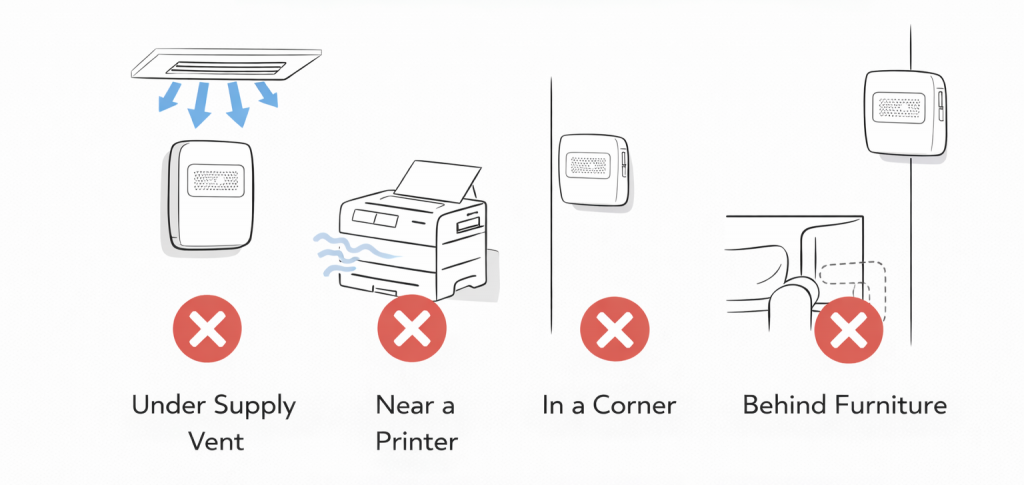
The aim is always the same: measure the air that occupants experience, not the air influenced by isolated events or architectural anomalies.

Turning Data Into Building Intelligence

Air quality monitoring should not be a passive compliance exercise. When placed correctly, monitors provide insight into ventilation efficiency, occupancy-driven CO2 trends, humidity control performance, and pollutant patterns over time.

Facility managers can use this information to optimize HVAC schedules, validate ventilation upgrades, support sustainability reporting, and proactively address comfort complaints.

Systems such as HibouAir are designed to support this approach by combining real-time measurements with historical trend analysis and alert thresholds. When deployed strategically within the breathing zone and away from direct environmental influences, such systems provide reliable data that supports informed building management decisions.

Correct placement transforms raw data into meaningful intelligence. And meaningful intelligence is what drives healthier, more productive commercial environments.

Share this post on :

Use Case: Supporting University Research on Indoor Air Quality with HibouAir Cloud Monitoring

Air pollution is becoming a serious concern around the world. Wildfires, traffic emissions, and other environmental factors are increasing the level of fine particles in the air. These particles, especially PM2.5, are small enough to enter the lungs and cause health problems.

While outdoor air pollution is often monitored by regional stations, indoor air quality is not always measured in detail. This is a problem because people spend most of their time indoors. To understand real exposure levels, indoor air must be measured directly.

Researchers from the School of Built Environment at the University of Technology Sydney wanted to study this issue more closely. Elaheh Samandi, Arezoo Shirazi, and Sidney Newton carried out a research project called “Measuring the fine particulate exposure levels of building occupants using localized sensors.” Their goal was to understand how outdoor pollution affects indoor air inside a university building in Sydney, Australia.

To collect accurate data over five months, the research team used IoT air quality sensors, including the HibouAir air quality monitoring device.

The Research Approach: Continuous Monitoring Inside the Building

The researchers installed sensors inside different areas of a multi-story university building. They also measured outdoor PM2.5 levels near the building. By doing this, they were able to compare indoor and outdoor air quality over time.

The study ran for five months and included different environmental conditions, such as winter and periods of Hazard Reduction Burning (HRB). These events helped the researchers understand how extreme outdoor pollution affects indoor air.

Using the collected data, the team calculated Indoor-to-Outdoor ratios and something called an Exceedance Index. These measurements helped them understand how much outdoor pollution enters the building and how often indoor air exceeds recommended health limits.

Because they used localized sensors instead of relying only on a regional monitoring station, they were able to see what was really happening inside the building.

Key Findings: Indoor Air Can Be Worse Than Expected

The study revealed several important findings.

During winter, PM2.5 levels increased overnight. This shows that air quality can change even when buildings are not fully occupied. Continuous monitoring is important because pollution does not only happen during working hours.

The researchers also found that areas close to the building entrance had much higher exposure levels. In fact, the indoor space nearest to the entrance exceeded more than double the World Health Organization’s recommended PM2.5 limit for over 80 percent of the study period. This clearly shows that pollution can enter buildings through doors and air intakes.

When the researchers compared their local outdoor sensor data with the nearest regional air quality monitoring station, they found something important. The local outdoor PM2.5 readings were about 2.5 times higher than the regional station’s readings. This shows that regional stations may not always reflect the real pollution levels around a specific building.

The Role of HibouAir in the Study

HibouAir helped make this research possible by providing reliable and continuous PM2.5 measurements inside the building.

The device collected data over the full five-month period. Because it connects to a cloud platform, the researchers were able to store, download, and analyze the data easily. This allowed them to study patterns over time and compare different areas inside the building.

Although this study focused mainly on PM2.5, HibouAir can also measure CO2, PM1.0, PM10, temperature, humidity, and VOCs. This makes it useful for broader indoor air quality research in the future.

The ability to monitor continuously and access data remotely made HibouAir a practical tool for long-term research.

Why Localized Monitoring Is Important

This research clearly shows that regional air quality data is not always enough. Pollution levels can be very different at the local level, especially near busy roads or during events like Hazard Reduction Burning.

Buildings also behave differently depending on design, ventilation systems, and how close they are to pollution sources. Without localized monitoring, it is difficult to understand what occupants are actually breathing.

By using localized sensors like HibouAir, researchers and facility managers can see real exposure levels instead of relying on distant monitoring stations.

With accurate and reliable data, researchers can better understand these patterns and develop strategies to improve indoor air quality. Tools like HibouAir make this possible by providing clear and consistent environmental data.

For readers interested in learning more, the full research article can be accessed here:
https://www.sciencedirect.com/science/article/abs/pii/S0360132323004304

Share this post on :

How Many Air Quality Sensors Do You Need Per Building? A Practical Sizing Guide

When organizations begin planning indoor air quality monitoring, one of the most common questions is: How many sensors do we actually need per building?

It sounds like a simple question, but the answer depends on several practical factors — building layout, room function, ventilation zoning, occupancy patterns, and the type of monitoring solution you choose.

Installing too few sensors creates blind spots. Installing too many may increase cost without improving insight. The goal is not to cover every square meter with a device, but to measure the areas where air quality truly changes.

This guide provides a structured way to estimate sensor count in commercial buildings such as offices, schools, healthcare facilities, retail spaces, and mixed-use properties.

Step 1: Understand the Building Layout

Before deciding how many sensors you need, start by looking at your building in a simple way. How many floors does it have? How many rooms are on each floor? Are the spaces open or divided into smaller offices? Is the ventilation system shared across the floor or split into different zones?

Air quality is not the same everywhere inside a building. A sensor near the entrance will not show the same readings as a meeting room on the top floor. Even on the same floor, different rooms can have very different air conditions depending on how many people are inside and how the air flows.

So the first step is not technical. Just draw a basic map of the building and understand how the spaces are used. This makes the next steps much easier.

Step 2: Room Type Is More Important Than Size

Many people think they should calculate sensors based on square meters. But in reality, the type of room matters more than the size.

For example, a large open office with steady occupancy might only need one or two sensors, depending on how the ventilation is designed. But a small meeting room can fill up quickly, and CO₂ levels can rise fast during a one-hour meeting. That small room may need its own sensor even though it is not big.

Kitchens and break rooms are also special cases. Cooking, coffee machines, and cleaning products can increase particles and VOC levels. These changes may not affect the whole building, so placing a sensor directly in the kitchen gives clearer information.

Healthcare rooms, waiting areas, and retail entrances also behave differently from normal offices. Some spaces are quiet and stable, while others change constantly during the day. That is why you should decide sensor placement based on how each space is used, not just how big it is.

Step 3: Estimate Sensors Per Floor

Once you understand the rooms, it becomes easier to calculate how many sensors you might need per floor.

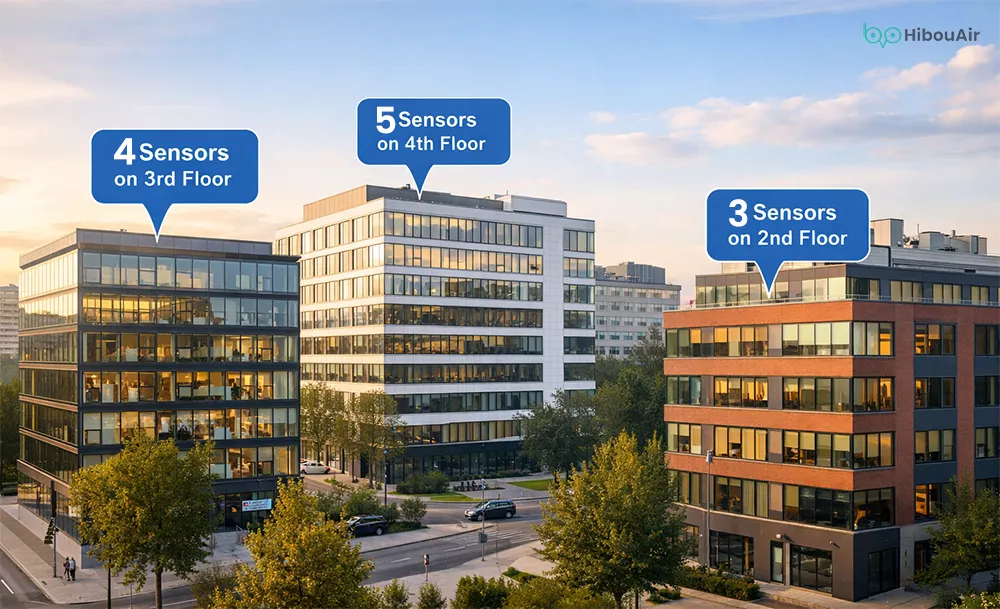
Let’s imagine a simple example. Suppose one floor has a large open office area, two meeting rooms, and one kitchen. The open office might need one or two sensors depending on the ventilation layout. Each meeting room would ideally have one sensor. The kitchen would also benefit from one.

In this example, you might end up with around five sensors on one floor. If the building has four similar floors, that could mean about twenty sensors in total.

This is not a fixed rule, but it gives you a realistic way to think about it. Instead of guessing a total number for the whole building, calculate floor by floor and room by room.

Step 4: Check Your Ventilation Zones

The ventilation system plays a big role in deciding sensor count.

If your building has different HVAC zones, each zone should ideally have at least one sensor. This is especially important if you plan to automate ventilation based on CO₂ levels.

For example, if one side of the floor has its own air supply and the other side has a separate system, using just one sensor for the whole floor may not give accurate control. One area could be over-ventilated while another area is under-ventilated.

When sensors match the ventilation zones, the system works better. The data becomes more meaningful, and ventilation can respond correctly to real conditions.

Desktop Solution vs Cloud Deployment: How It Affects Planning

The number of sensors is influenced not only by building layout but also by connectivity strategy.

In a local deployment like HibouAir Desktop Solution, sensors broadcast data via Bluetooth Low Energy. A desktop application or gateway collects this information locally, stores historical data, and provides real-time dashboards without requiring cloud connectivity. This approach has several advantages: it avoids ongoing cloud dependency, supports offline operation, and allows direct access to historical data and export functions.

However, BLE coverage must be considered. Indoor Bluetooth range typically varies between 10 and 30 meters depending on walls, materials, and interference. Large buildings may require multiple gateways to ensure reliable data collection. When planning sensor quantity in a desktop-based environment, both monitoring needs and signal coverage must be evaluated together.

In contrast, WiFi-enabled cloud deployments like HibouAir Cloud Solution remove range limitations associated with Bluetooth. Each device connects directly to the network and sends data to a centralized dashboard. As long as WiFi coverage exists, physical distance from a gateway is not a constraint. This makes scaling across multiple floors or buildings simpler. Additionally, cloud solutions allow remote access from anywhere in the world, centralized analytics, and multi-building management.

In cloud-based setups, sensor count is determined purely by monitoring requirements rather than connectivity constraints.

Rough Sizing Guide by Building Type

Building TypeApproximate Sensor Density
Small office (under 300 m²)2–3 sensors
Medium office (per floor)4–6 sensors
Large commercial floor1 per HVAC zone
School1 per classroom
Healthcare1 per patient cluster
Warehouse1 per large zone
Restaurant1 dining + 1 kitchen

This table serves as a practical starting point. Actual requirements may vary depending on ventilation design and occupancy behavior.

When Fewer Sensors May Work

In small, open-plan buildings with uniform ventilation and consistent occupancy, fewer sensors may still provide meaningful insight. If airflow is well-mixed and there are no isolated high-occupancy areas, a limited number of strategically placed units may be sufficient.

However, reducing sensor count increases the likelihood of blind spots. In dynamic commercial environments, variability is more common than uniformity.

When You Need More Sensors

Additional sensors become necessary when occupancy varies significantly throughout the day, when ventilation zones differ, or when compliance reporting is required. Buildings pursuing ESG documentation or energy optimization strategies often benefit from more granular monitoring. Automation systems also rely on accurate, zone-specific data to perform effectively.

More detailed monitoring improves ventilation control, energy efficiency, and occupant comfort while supporting regulatory transparency.

The Cost vs Insight Balance

The decision should not be driven solely by device count but by insight value. Installing additional sensors may increase upfront cost, but poor ventilation can lead to higher energy consumption, reduced productivity, and health-related impacts.

Accurate data allows building managers to fine-tune ventilation systems instead of relying on fixed schedules or assumptions. In many cases, better data leads to operational savings that outweigh the initial investment.

Final Practical Recommendation

There is no universal number of sensors per building. Instead of asking how many devices are required, it is more useful to ask how many ventilation zones exist, where occupancy peaks occur, and where pollutant sources originate.

Start by monitoring air quality in high-priority areas such as conference rooms, open office zones, kitchens, and high-traffic spaces. Align sensors with ventilation branches whenever possible. Then scale based on real-world data and insights.

By approaching sensor placement strategically rather than uniformly, commercial buildings can achieve accurate air quality visibility, enable smarter ventilation control, reduce energy waste, and create healthier indoor environments.

The building does not need sensors everywhere,
it needs sensors where air quality changes.

Share this post on :

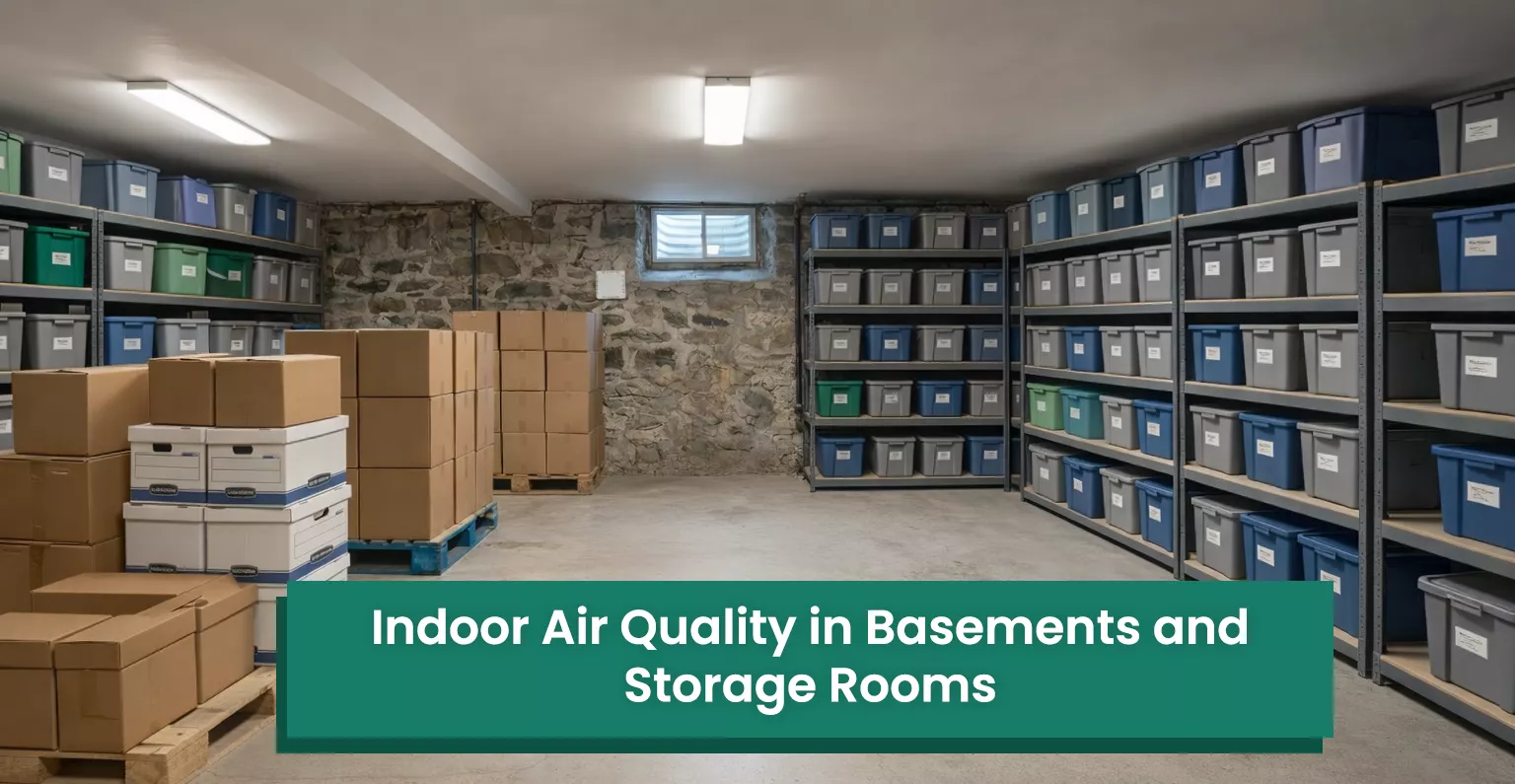
Indoor Air Quality in Basements and Storage Rooms: The Overlooked Risk Zone

When indoor air quality is discussed, the focus almost always falls on visibly occupied areas—offices, production zones, or meeting rooms. Basements and storage rooms are rarely part of the conversation. They are seen as secondary spaces, places people pass through briefly rather than environments that demand active management.

This assumption is precisely what makes indoor air quality in basements and storage rooms such a persistent and underestimated risk. These areas operate quietly in the background of a building, often accumulating air quality problems long before anyone notices there is an issue at all.

The Conditions That Make Basements a Problem

Basements and storage rooms share structural characteristics that naturally work against healthy air. Limited ventilation, low air movement, and reduced daylight create environments where air tends to stagnate. Moisture intrusion from surrounding soil or plumbing further complicates the picture, raising humidity levels that rarely receive attention until damage appears.

Storage itself adds another layer of complexity. Packaging materials, cleaning products, maintenance supplies, and archived goods all emit pollutants over time. In enclosed spaces, CO2, volatile organic compounds, and fine particulate matter do not disperse easily. Instead, they linger and accumulate, creating conditions that are unhealthy for both people and materials.

The Silent Damage to Stored Assets

Beyond health considerations, poor air quality in basements and storage rooms directly affects what is stored there. Elevated humidity accelerates mold growth and corrosion. Paper records degrade, electronic components fail prematurely, and stored inventory loses quality long before visible signs appear.

For facilities that rely on long-term storage—archives, healthcare supplies, spare parts, or sensitive equipment—these conditions create hidden costs. The absence of monitoring means problems are often discovered only after materials are already compromised.

Why Air Quality Monitoring Changes the Equation

The core issue is not that basements are inherently problematic, but that they are unmeasured. Without continuous insight, facility teams are left guessing. Occasional inspections or odor complaints provide no meaningful understanding of how conditions behave over time.

This is where air quality monitoring becomes essential rather than optional. Continuous measurement of CO2, humidity, temperature, VOC levels, and particulate matter reveals slow-developing patterns that would otherwise remain invisible. Instead of reacting to symptoms, teams gain the ability to recognize early warning signs and intervene before damage or complaints occur.

How HibouAir Fits Naturally Into These Spaces

Solutions like HibouAir are particularly effective in basements and storage rooms because they are designed to operate quietly and consistently, without requiring constant user interaction. These are not spaces where people check dashboards daily, and they shouldn’t need to.

By continuously tracking indoor air conditions, HibouAir provides a factual record of what is actually happening below ground. It highlights recurring humidity issues, identifies pollutant spikes tied to specific activities, and removes uncertainty from decision-making. In spaces that have traditionally been ignored, that visibility alone represents a major shift.

From Awareness to Control

Monitoring, however, is only the first step. Knowing that air quality is poor does little good if action depends on someone noticing a problem and responding manually. In overlooked spaces, that delay can be costly.

This is where HibouAir ControlHub plays a decisive role. By allowing air quality data to automatically drive ventilation or air exchange, ControlHub turns passive monitoring into active protection. When conditions drift outside acceptable ranges, corrective action happens without waiting for human intervention.

The result is not aggressive ventilation or constant airflow, but balanced control. Air quality improves when needed and stabilizes once conditions return to normal, protecting both the space and the energy profile of the building.

Basements and storage rooms are rarely included in discussions about indoor air quality strategy, yet they often define it. These spaces influence moisture levels, pollutant movement, and long-term building health more than their low visibility suggests.

Treating them with the same seriousness as occupied areas is not about overengineering. It is about acknowledging that indoor air quality is a system, not a collection of isolated rooms. When basements and storage areas are monitored and managed properly, the benefits extend upward—improving overall air quality, protecting assets, and preventing problems before they surface.

Share this post on :

Fume Extraction and Ventilation During Welding: Why Indoor Air Quality Monitoring Matters

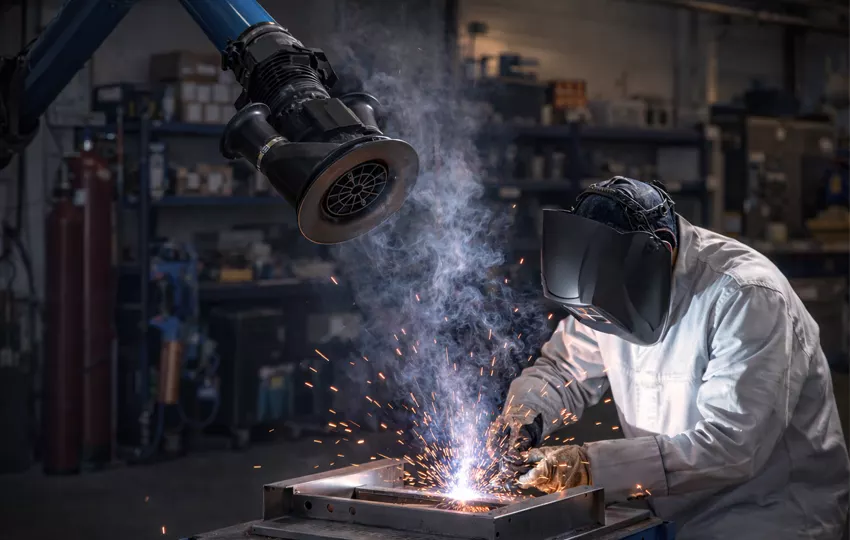
Welding plays a vital role in manufacturing, construction, maintenance, and industrial fabrication. From small workshops to large production facilities, welding enables metal structures and components that modern industry depends on. However, welding carried out indoors introduces a significant occupational health challenge that is often underestimated: the accumulation of welding fumes in enclosed spaces.

Unlike outdoor environments where airborne contaminants disperse naturally, indoor welding areas allow fumes and fine particles to remain suspended in the air for extended periods. Without effective fume extraction, ventilation, and continuous monitoring, workers may be exposed to harmful air throughout their shift. This exposure is frequently invisible, gradual, and easy to overlook until health symptoms or compliance issues emerge.

What Are Welding Fumes?

Welding fumes are created when metal is heated to extremely high temperatures and begins to vaporize. As the vapor cools, it condenses into microscopic particles that remain airborne. These particles are often small enough to penetrate deep into the respiratory system when inhaled.

In indoor welding environments, fumes are a complex mixture of fine particulate matter, metal oxides, and gases generated from shielding gases, surface coatings, and residues such as oils or paints. Because many of these particles fall into the PM2.5 and PM1.0 size range, they can stay suspended in the air long after welding has stopped. Over time, repeated welding activity causes these pollutants to accumulate, especially in spaces with limited airflow or ineffective extraction systems.

Health Risks Associated With Welding Fumes

Exposure to welding fumes poses both short-term and long-term health risks. In the short term, workers may experience eye and throat irritation, coughing, headaches, dizziness, and general fatigue. These symptoms are often dismissed as minor or temporary, yet they are early indicators of excessive airborne contamination.

Long-term exposure is more concerning. Prolonged inhalation of fine metal particles and gases has been linked to chronic respiratory conditions, reduced lung capacity, occupational asthma, and increased cardiovascular strain. Certain welding fumes may also affect the nervous system, depending on the materials involved. One of the most serious challenges is that these health effects develop gradually, often without obvious warning signs, making continuous exposure difficult to detect without proper air quality monitoring.

Why Ventilation Alone Is Not Enough

Ventilation and fume extraction systems are essential in welding environments, but they are not foolproof. Many systems operate at fixed airflow rates or are manually controlled, assuming that ventilation performance remains constant under all conditions. In reality, welding intensity, materials, workspace layout, and occupancy levels change throughout the day.

Without measurement, it is impossible to know whether ventilation is adequately capturing and removing contaminants. Filters may become clogged, extraction arms may be positioned incorrectly, or airflow may be insufficient during peak welding activity. In some cases, ventilation continues running unnecessarily when air quality is already acceptable, leading to wasted energy and higher operational costs. Ventilation without monitoring is reactive by nature and provides no confirmation that exposure risks are actually being reduced.

The Role of Indoor Air Quality Monitoring in Welding Areas

Indoor air quality monitoring brings visibility to conditions that would otherwise remain hidden. By continuously measuring airborne particles and environmental parameters, air quality monitors provide objective data about what workers are breathing during welding operations.

In welding environments, monitoring fine particulate matter is particularly important, as these particles are the primary carriers of welding fumes. Additional parameters such as temperature, humidity, and volatile organic compounds also provide valuable context, as they influence how particles behave and how contaminants spread within enclosed spaces. Carbon dioxide levels offer insight into overall ventilation efficiency and air exchange performance. With real-time data, facility managers can identify high-risk periods, poorly ventilated zones, and unexpected pollution spikes as they occur.

Integrating Air Quality Monitoring With Ventilation Systems

The most effective approach to indoor welding safety combines air quality monitoring with automated ventilation control. Instead of relying on preset ventilation schedules, systems can respond dynamically to measured conditions inside the workspace.

When air quality monitors detect rising particulate levels during active welding, ventilation and fume extraction systems can automatically increase airflow. As air quality improves, ventilation can scale back to maintain safe conditions without unnecessary energy consumption. This creates a balanced system that prioritizes worker safety while optimizing operational efficiency. Over time, integrated monitoring also helps identify recurring problem areas, evaluate ventilation design, and support predictive maintenance.

Why Real-Time Data Is Critical in Welding Environments

Welding is not a continuous process. Short periods of intense activity can generate sharp spikes in airborne pollution that may not be reflected in average air quality readings. Real-time monitoring ensures that these peaks are captured as they happen, allowing immediate corrective action.

Continuous data collection also enables long-term analysis. By reviewing historical air quality trends, organizations can identify which welding processes, materials, or shifts consistently generate higher exposure. This insight supports better safety planning, training, and system optimization. Real-time data transforms air quality management from a reactive response into a proactive safety strategy grounded in evidence.

HibouAir and Smart Control of Indoor Welding Air Quality

HibouAir solutions are designed for environments where air quality has a direct impact on health, safety, and operational reliability. In indoor welding facilities, HibouAir monitors provide continuous measurement of key air quality parameters, delivering clear and actionable insights into particulate levels and ventilation effectiveness.

For facilities seeking deeper automation and control, HibouAir ControlHub enables air quality data to be integrated directly with ventilation, extraction, or building management systems. This allows equipment to respond automatically to real conditions on the workshop floor, reducing reliance on manual intervention and fixed rules. By combining accurate sensing with intelligent control, welding environments gain a more resilient and adaptive safety framework.

Welding fumes are an unavoidable part of metal fabrication, but prolonged indoor exposure does not have to be accepted as a risk. Effective fume extraction, proper ventilation design, and continuous air quality monitoring work together to create safer and healthier welding environments.

Share this post on :

Contact Us

Call us or simply fill out the form below, and one of our representatives will get back to you as soon as possible.