CO2 Demand-Controlled Ventilation vs Fixed Ventilation: Which Is Better?

Ventilation plays a major role in indoor comfort, air quality, and energy use. It removes stale air, brings in fresh air, and helps control indoor pollutants.

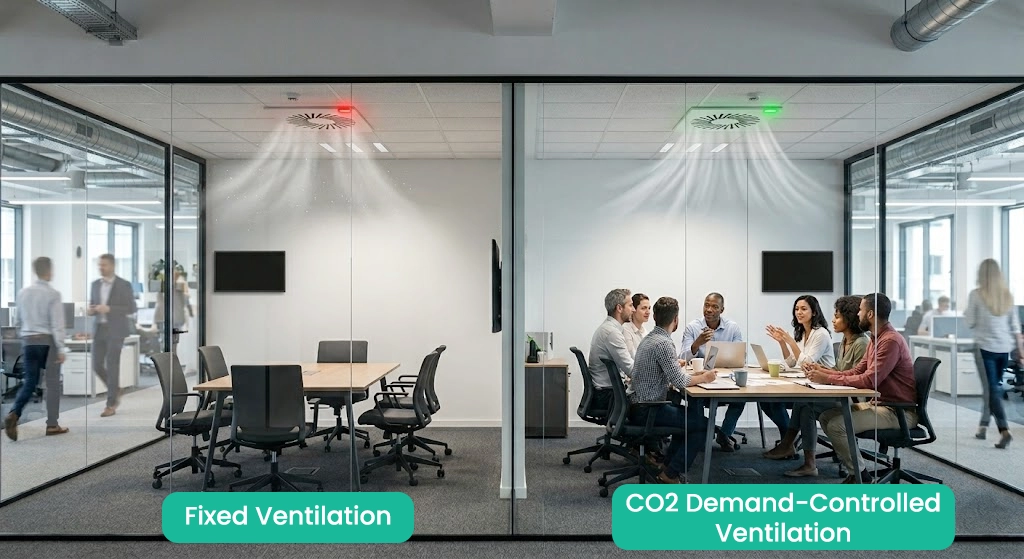
Many buildings still use fixed ventilation. The system runs at a preset fan speed, airflow rate, damper position, or schedule. This is simple, but it does not respond to what is actually happening inside the building.

A meeting room with two people does not need the same ventilation as a full meeting room. A classroom during a lesson does not need the same airflow after students leave. An office on a busy day does not need the same setting as an office with half the staff working remotely.

That is why CO2 demand-controlled ventilation is becoming a better option for many commercial buildings. With HibouAir CO2 Monitor or HibouAir DUO, buildings can measure real-time indoor air quality, while HibouAir ControlHub can use that data to support smarter ventilation control.

What Is Fixed Ventilation?

Fixed ventilation means the system operates based on a set condition. It may run during working hours, maintain a constant airflow rate, or keep fans and dampers at a fixed setting.

This approach is easy to understand and maintain. It can work in spaces with stable occupancy. But in buildings where occupancy changes throughout the day, fixed ventilation often creates two problems.

The first is under-ventilation. When more people are present than expected, CO2 levels rise and the air can feel stale or uncomfortable.

The second is over-ventilation. When rooms are empty or lightly occupied, the system may still bring in more outdoor air than needed. This increases heating, cooling, and energy demand.

What Is CO2 Demand-Controlled Ventilation?

CO2 demand-controlled ventilation uses real-time CO2 levels to adjust ventilation.

People exhale CO2 when they breathe. When more people occupy a room, or when fresh air supply is too low, CO2 levels increase. By monitoring CO2, a building can understand when a space needs more ventilation.

When CO2 rises above a selected threshold, the system can increase airflow by opening dampers, increasing fan speed, or activating ventilation equipment. When CO2 levels return to a better range, airflow can be reduced.

The goal is not to ventilate less. The goal is to ventilate based on actual demand.

The Problem with Fixed Ventilation

Fixed ventilation treats every day almost the same. But buildings are rarely used the same way every day.

Meeting rooms fill and empty. Offices have flexible work schedules. Restaurants have peak hours. Classrooms change between lessons and breaks. Hotels, clinics, gyms, and public buildings all experience changing occupancy.

When ventilation does not adjust, facility teams may face: High CO2 complaints, Stale or stuffy air, Unnecessary energy use, More difficult troubleshooting, Extra load on HVAC equipment etc

For facility managers and HVAC technicians, the biggest issue is lack of feedback. Without live indoor air quality data, it is hard to know whether a problem is caused by poor airflow, incorrect scheduling, blocked vents, damper issues, or high occupancy.

Where HibouAir Fits In

A smart ventilation strategy needs two things: reliable air quality data and a way to turn that data into action.

HibouAir CO2 Monitor provides real-time CO2 monitoring along with temperature, humidity, pressure, VOCs, and ambient light. It helps building teams understand how indoor conditions change during the day.
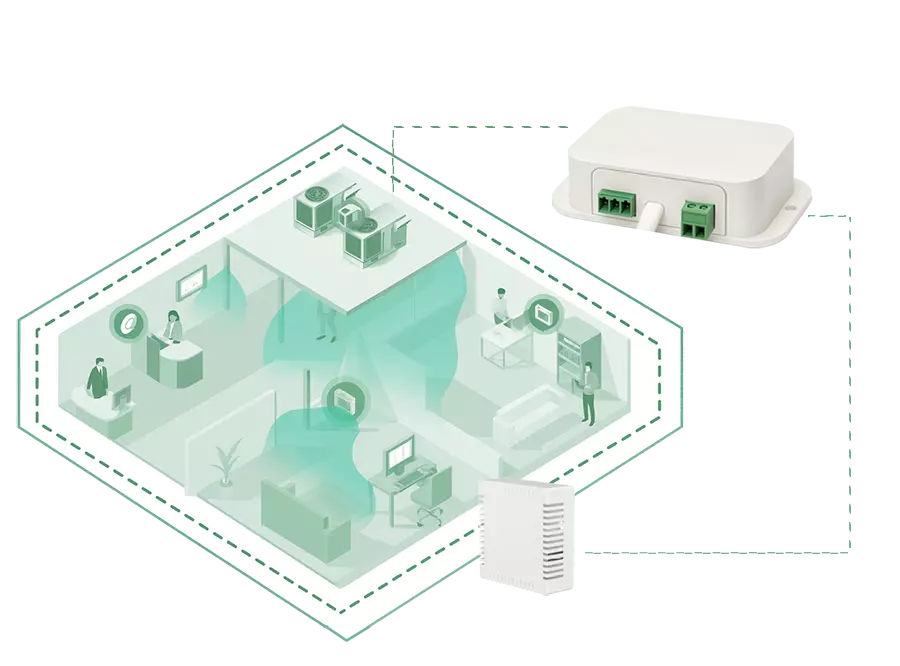
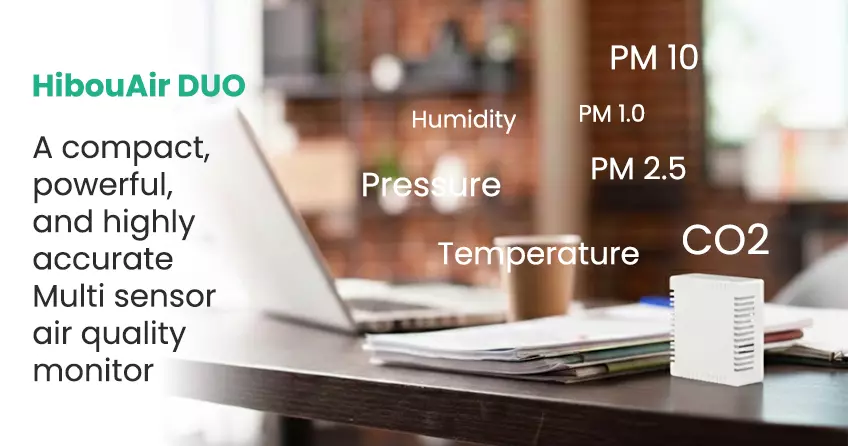
HibouAir DUO is suitable when a wider air quality picture is needed. It monitors CO2, PM1.0, PM2.5, PM10, VOC, temperature, humidity, and pressure. This is useful for offices, schools, healthcare spaces, commercial buildings, industrial facilities, and smart building projects.

HibouAir ControlHub connects monitoring to action. It can use data from HibouAir monitors and send control outputs to fans, dampers, HVAC controllers, or building automation systems.

For example, if CO2 rises in a meeting room, ControlHub can trigger more ventilation. When CO2 returns to a better level, ventilation can be reduced. This helps move the building from passive monitoring to automatic response.

Fixed Ventilation Still Has a Role

Fixed ventilation is not always wrong. Some spaces need constant airflow for safety, odor control, pressure control, or process requirements. This may include restrooms, kitchens, laboratories, healthcare areas, storage rooms, and some industrial spaces.

In many buildings, the best approach is a combination. A minimum ventilation rate can remain in place, while CO2 demand-controlled ventilation increases airflow when occupancy rises.

This gives the building a stable baseline with smarter response when needed.

Which Is Better?

CO2 demand-controlled ventilation is usually better for spaces with changing occupancy, comfort complaints, high energy costs, or limited visibility into ventilation performance.

Fixed ventilation may be enough for spaces with predictable use or where constant airflow is required. But for many modern buildings, fixed ventilation alone is too rigid.

The stronger question is: does the ventilation system understand what is happening inside the building?

If not, CO2 demand-controlled ventilation offers a clear improvement.

With HibouAir CO2 Monitor or HibouAir DUO, facility teams can measure indoor air quality in real time. With HibouAir ControlHub, that data can be used to control ventilation equipment and support smarter HVAC operation.

For facility managers, HVAC companies, and technicians, this means healthier indoor spaces, better comfort, lower energy waste, and more responsive buildings.


Share this post on :

Humidity and IAQ: Ideal Ranges, Mold Risk, and Comfort

Indoor air quality is often associated with pollutants like CO2, particulate matter, or VOCs. Yet humidity plays an equally important role, quietly influencing health, comfort, and even the condition of the building itself. When humidity drifts outside the ideal range, it can lead to discomfort, respiratory issues, and long-term structural problems such as mold growth.

Understanding how humidity behaves indoors and how to manage it effectively is essential for maintaining a healthy environment.

Humidity a key parameter Indoor Air Quality

Humidity refers to the amount of moisture present in the air. It directly affects how we feel and how our bodies respond to the environment. Air that is too dry can irritate the skin, eyes, and respiratory system, while overly humid air can feel heavy, uncomfortable, and difficult to breathe.

Beyond comfort, humidity also interacts with other air quality factors. High humidity can increase the presence of airborne pollutants by encouraging biological growth, while low humidity can allow particles and viruses to remain suspended in the air for longer periods.

This makes humidity a key parameter in any serious indoor air quality strategy, not something to be treated as secondary.

Ideal Indoor Humidity Range

For most indoor environments, the recommended relative humidity range is between 40% and 60%. Within this range, people tend to feel comfortable, and the risk of health issues and material damage is minimized.

When humidity falls below 40%, the air becomes dry. This can lead to irritation in the throat and nasal passages, increased susceptibility to infections, and static electricity buildup. On the other hand, when humidity rises above 60%, the environment becomes favorable for mold, dust mites, and bacteria.

Mold Risk and Long-Term Damage

One of the most serious consequences of high humidity is mold growth. Mold thrives in damp environments and can begin to develop when humidity levels remain elevated for extended periods, particularly above 60–65%.

Once established, mold spreads quickly across walls, ceilings, and hidden spaces such as behind furniture or inside ventilation systems. It not only damages materials but also releases spores into the air, which can trigger allergies, asthma, and other respiratory problems.

The challenge with mold is that it often develops unnoticed. By the time it becomes visible, the problem is usually already advanced. Preventing it requires early detection of moisture conditions rather than reacting after damage has occurred.

This is why having access to real-time humidity data through a device like HibouAir indoor air quality monitor can make a meaningful difference. It allows users to identify rising humidity trends before they turn into costly or harmful issues.

Comfort and Productivity

Humidity also has a strong influence on how comfortable a space feels. In offices, classrooms, and homes, poor humidity control can lead to fatigue, headaches, and reduced concentration.

High humidity can make a room feel warmer than it actually is, leading to overuse of air conditioning systems. Low humidity, on the other hand, can cause dryness that affects sleep quality and overall well-being.

Maintaining stable humidity levels contributes not only to physical comfort but also to productivity and performance. In environments where people spend long hours indoors, this becomes especially important.

The Challenge of Manual Control

Traditionally, humidity management relies on manual adjustments opening windows, adjusting HVAC settings, or using standalone humidifiers and dehumidifiers. While these methods can help, they are often reactive and inconsistent.

Indoor conditions can change quickly due to occupancy, weather, or building usage. Without continuous feedback, it is difficult to maintain optimal humidity levels throughout the day.

This is where monitoring systems and automation begin to play a more significant role.

Smarter Monitoring and Control

Modern indoor environments benefit from systems that combine real-time monitoring with intelligent control. Instead of relying on occasional checks, continuous data provides a clear picture of how humidity behaves over time.

A solution such as HibouAir indoor air quality monitor offers ongoing insight into humidity alongside other air quality parameters. This broader context helps users understand whether changes in humidity are linked to occupancy, ventilation, or external conditions.

Taking it a step further, automation can help maintain stability without constant manual intervention. With a control solution like HibouAir ControlHub, humidity thresholds can be used to trigger ventilation systems, fans, or dehumidifiers automatically. When levels rise beyond a defined point, the system responds immediately. As conditions return to normal, it adjusts accordingly.

This approach not only improves air quality but also reduces energy waste by ensuring systems operate only when needed.

Humidity is not an isolated factor. It works together with temperature, ventilation, and pollutant levels to shape the overall indoor environment. Ignoring it can lead to hidden risks, while managing it effectively can significantly improve both health and comfort.

Share this post on :

Why Indoor Air Quality in Daycare Centers Matters More Than Ever

Daycare centers are environments where young children spend many hours each day learning, playing, and interacting with others. While nutrition, safety, and education are often the main priorities, indoor air quality is an equally important factor that directly affects children’s health. Because daycare classrooms typically have many children in relatively small spaces, indoor air conditions can change quickly if ventilation is not properly managed.

Children are more sensitive to air pollution than adults because their lungs are still developing and they breathe faster relative to their body size. When indoor air contains high levels of carbon dioxide (CO2), fine particles, or chemical pollutants, children may experience symptoms such as fatigue, coughing, or irritation of the eyes and throat. Maintaining healthy indoor air in daycare environments is therefore essential for both immediate comfort and long-term respiratory health.

Common Indoor Air Quality Challenges in Daycare Centers

Daycare facilities often experience indoor air quality challenges because of high occupancy and constant activity. When many children share the same room, CO2 levels can increase quickly as a result of normal breathing. Elevated CO2 is usually a sign that ventilation is insufficient and can lead to tiredness and reduced concentration among both children and staff.

Particles in the air are another concern. Dust from carpets, outdoor pollution entering through doors or windows, and particles from everyday activities can accumulate indoors. Since children frequently play on the floor and move around actively, these particles can easily become airborne again and increase exposure. In addition, certain materials such as cleaning products, furniture, and art supplies may release volatile organic compounds that can build up indoors if ventilation is not adequate.

The Health Impact of Poor Air Quality on Young Children

Young children are especially vulnerable to environmental conditions, and poor air quality can affect both their health and daily comfort. When indoor environments contain elevated pollutants, children may experience more frequent respiratory symptoms, allergy irritation, or fatigue. These issues can interfere with their ability to participate fully in learning and play activities.

Why Monitoring Indoor Air Quality Is Essential

Many daycare buildings rely on ventilation systems to maintain indoor comfort, but without proper monitoring it is difficult to know whether the air quality actually meets healthy standards. CO2 levels may increase during busy periods, particle levels may change depending on outdoor conditions, and humidity may fluctuate throughout the day.

Real-time air quality monitoring with devices like HibouAir provides visibility into these changes. By measuring parameters such as CO2, particulate matter, temperature, and humidity, facility managers can understand how indoor conditions evolve during daily activities. Monitoring solutions such as HibouAir allow daycare operators to track indoor air quality continuously and identify when action may be needed to maintain healthy environments.

Integrating Air Quality Monitoring With Ventilation Systems

Monitoring indoor air quality becomes even more valuable when it is connected with building ventilation systems. Instead of running ventilation at a fixed rate, demand-controlled ventilation allows airflow to adjust based on real indoor conditions. When CO2 levels rise due to higher occupancy, the ventilation system can automatically increase airflow to restore healthy conditions.

This approach improves indoor comfort while also reducing unnecessary energy use when spaces are less occupied. By using air quality sensors as part of the ventilation strategy, daycare facilities can maintain healthy environments while operating more efficiently.

Using HibouAir ControlHub for Smart Air Quality Management

In daycare centers with multiple rooms or classrooms, managing air quality across the entire building can become challenging. A centralized system such as HibouAir ControlHub helps simplify this process by collecting data from multiple air quality monitors and presenting it in a single interface.

With centralized monitoring, administrators can quickly identify which rooms may require improved ventilation or attention. The system can also support automated responses, such as adjusting ventilation when CO2 levels rise. Over time, historical data helps facility managers understand patterns in occupancy and air quality.

Building Healthier Indoor Environments for Children

Creating healthy indoor environments in daycare centers is an important step toward protecting children’s health and supporting their development. Clean air helps reduce illness, improves comfort, and supports better learning conditions for both children and staff.

By combining real-time air quality monitoring with intelligent ventilation strategies, daycare facilities can maintain healthier indoor spaces throughout the day. Solutions such as HibouAir monitoring devices and ControlHub management systems provide the data and control needed to maintain safe and comfortable environments where children can learn and grow.

Share this post on :

How to Place Indoor Air Quality Monitors in Offices and Commercial Buildings

Installing an indoor air quality monitor is a powerful step toward improving workplace health and performance. But for facility managers, simply installing a device is not enough. Where that monitor is placed will determine whether the data supports smart building decisions — or quietly leads you in the wrong direction.

In commercial environments, air does not behave evenly. Temperature, humidity, ventilation flow, and occupant density all create microclimates within a single space. A monitor placed in the wrong location can measure the air from an HVAC vent, a sunlit window, or a rarely used corner — none of which represent what employees are actually breathing throughout the day.

For air quality monitoring to be useful in an office or commercial building, placement must be intentional and strategic.

Start With the Breathing Zone

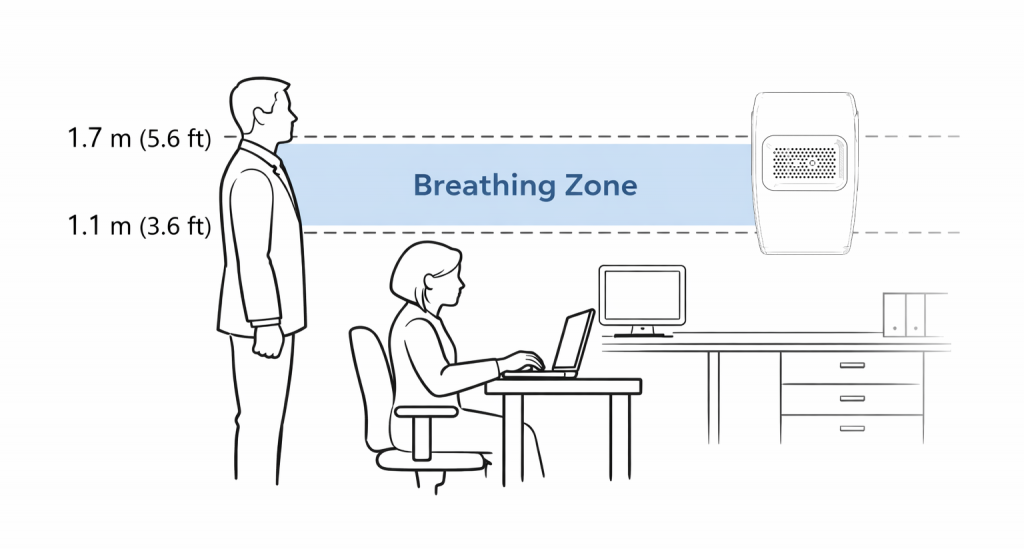
The most important concept in commercial IAQ monitor placement is the breathing zone. This refers to the vertical range where occupants inhale air during normal activity. According to commonly referenced guidelines such as ASHRAE and WELL, this zone sits approximately 1.1 to 1.7 meters (3.6 to 5.6 feet) above the floor.

This range represents seated and standing head height in typical office environments. Placing a monitor too close to the ceiling often results in warmer air readings and diluted CO2 values. Installing it near the floor can exaggerate particulate accumulation or temperature differences that occupants are not directly exposed to.

In a conference room, for example, mounting a device at seated head level ensures that rising CO2 concentrations during meetings are accurately captured. In open workspaces, a centrally positioned wall mount at eye level usually provides the most representative measurement of real occupant exposure.

When monitors are positioned within the breathing zone, the data reflects lived conditions — not architectural extremes.

Avoid Direct Influence From HVAC and Openings

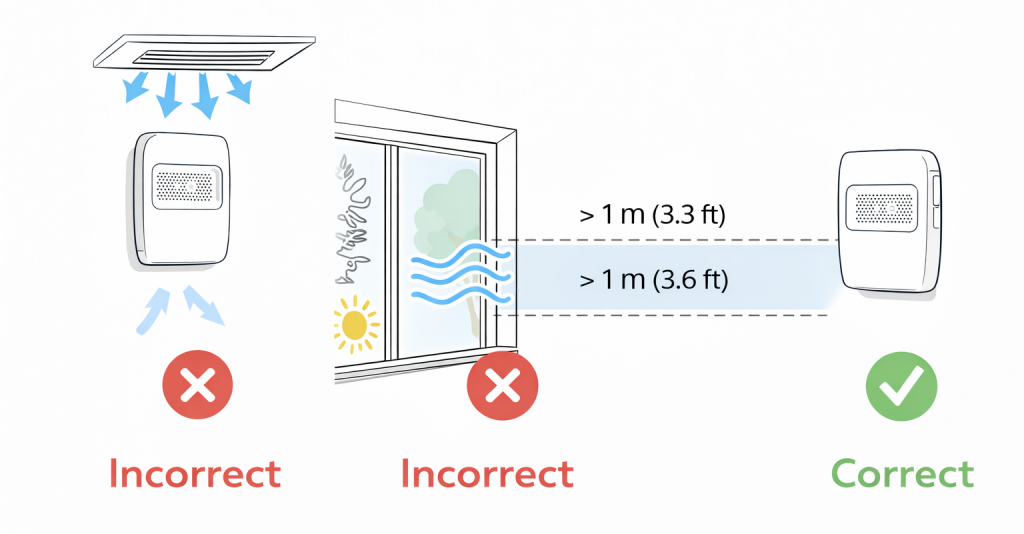
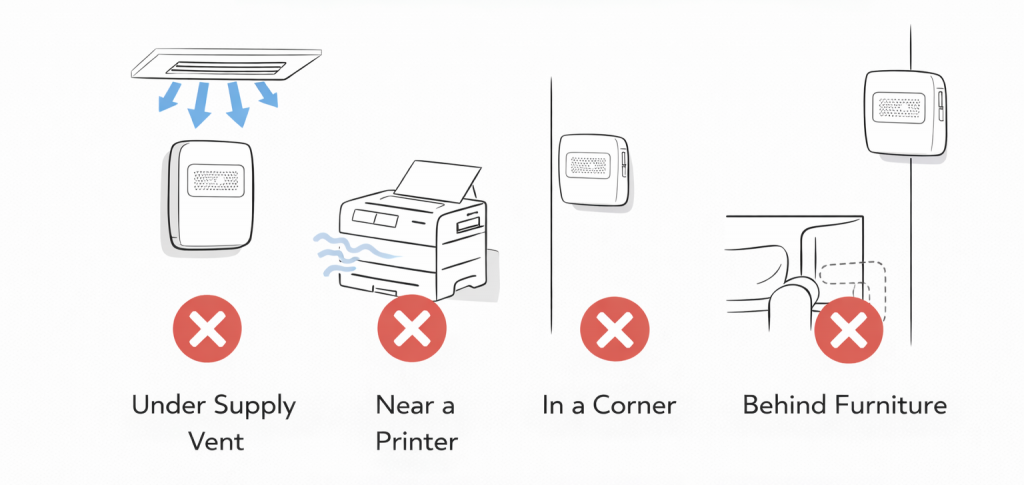
Modern commercial buildings rely heavily on mechanical ventilation systems. Supply diffusers introduce conditioned air that may differ significantly from the ambient room average. A monitor installed directly beneath an air supply vent might report excellent air quality, while employees a few meters away experience rising CO2 and stale air.

Similarly, windows and exterior doors introduce rapidly changing temperature and humidity conditions. Direct sunlight can heat sensor surfaces, artificially elevating temperature readings and altering relative humidity calculations.

To maintain reliable indoor air quality data, monitors should generally be positioned at least one meter away from HVAC supply vents, air returns, operable windows, and exterior doors. The goal is to capture stable, mixed room air rather than freshly delivered or outdoor-influenced air.

This simple adjustment can significantly improve data accuracy.

Understand How Humidity Affects Measurements

Humidity is often overlooked, yet it plays a major role in sensor behavior. In many commercial-grade air quality monitors, particulate matter is measured using optical particle counting. When relative humidity becomes elevated, airborne particles can absorb moisture and grow in size. This process can cause the monitor to overestimate particulate mass concentration.

Similarly, some VOC sensors are sensitive to moisture levels. High humidity can alter the chemical reactions occurring at the sensor surface, influencing baseline readings.

If a device is placed near a humidifier, kitchen area, or poorly ventilated corner, it may display pollutant levels that reflect localized moisture conditions rather than overall building performance.

This is why thoughtful placement is not only a spatial decision — it is a scientific one. By positioning monitors in areas with stable ambient conditions, facility managers reduce the risk of distorted readings and unnecessary corrective actions.

Place Monitors Where People Actually Work

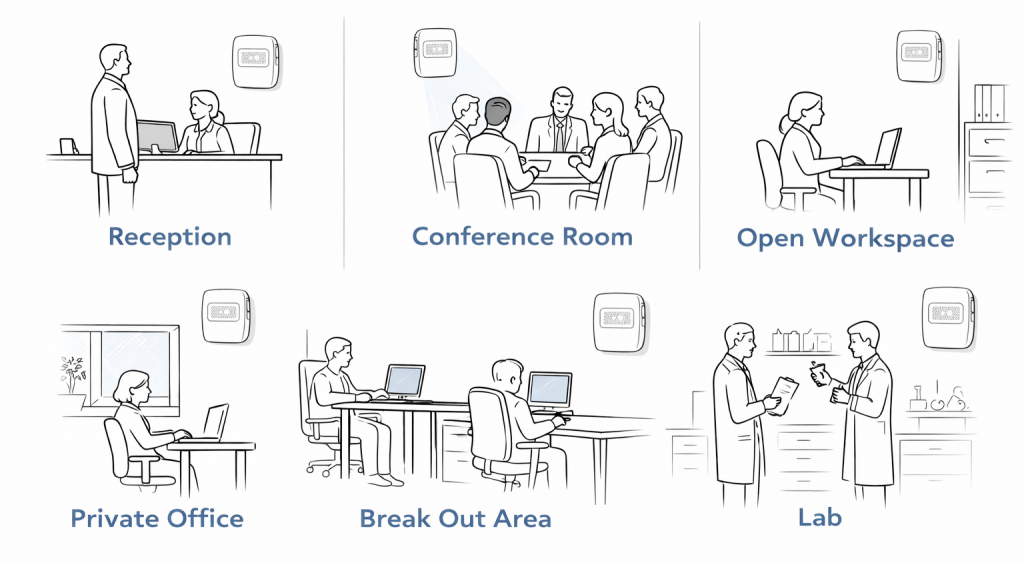
The most valuable air quality data comes from spaces that are regularly occupied. Reception areas, open workstations, conference rooms, private offices, and collaborative zones are typically the most critical monitoring points in commercial environments.

Installing monitors only in storage rooms or low-traffic corridors may provide data, but it does not represent the exposure conditions of building occupants.

Carbon dioxide, in particular, is closely tied to occupancy. In meeting rooms, levels can rise quickly during extended sessions. Without proper monitoring in those spaces, ventilation issues may go unnoticed until complaints arise.

A well-designed commercial air quality monitoring strategy reflects population density and usage patterns. The monitor should be where people spend time — not hidden in mechanical spaces.

Consider Building Layout and Monitor Density

Larger commercial buildings introduce additional complexity. Different HVAC zones, floor orientations, and occupancy densities can produce varying air quality conditions within the same property.

Industry guidance and building standards often suggest coverage guidelines of roughly 325 square meters (3,500 square feet) per monitor, though practical deployment depends heavily on layout and ventilation design. Separate conference rooms typically require independent monitoring. Distinct HVAC zones should not rely on a single sensor for representation.

Higher monitor density improves resolution and diagnostic capability. Even in cost-sensitive deployments, placing monitors strategically in both high-occupancy and lower-occupancy areas provides a more complete picture of building performance.

For facility managers, the objective is not simply coverage — it is actionable insight.

Avoid Common Placement Mistakes

Many monitoring issues stem from predictable errors. Mounting a device directly under a vent, near a printer, beside a cleaning supply cabinet, or in a stagnant corner can produce skewed readings. Positioning the unit too high, too low, or behind furniture limits airflow around the sensors.

Even small placement adjustments can dramatically improve reliability.

The aim is always the same: measure the air that occupants experience, not the air influenced by isolated events or architectural anomalies.

Turning Data Into Building Intelligence

Air quality monitoring should not be a passive compliance exercise. When placed correctly, monitors provide insight into ventilation efficiency, occupancy-driven CO2 trends, humidity control performance, and pollutant patterns over time.

Facility managers can use this information to optimize HVAC schedules, validate ventilation upgrades, support sustainability reporting, and proactively address comfort complaints.

Systems such as HibouAir are designed to support this approach by combining real-time measurements with historical trend analysis and alert thresholds. When deployed strategically within the breathing zone and away from direct environmental influences, such systems provide reliable data that supports informed building management decisions.

Correct placement transforms raw data into meaningful intelligence. And meaningful intelligence is what drives healthier, more productive commercial environments.

Share this post on :

Indoor Air Quality in Call Centers: CO2, Noise, and Productivity in Dense Work Areas

Call centers are designed for people, not machines. Hundreds of employees may work in the same space, often seated close together, speaking continuously, and spending long hours indoors. While most call centers pay attention to seating, lighting, and temperature, one critical factor is often overlooked: indoor air quality.

Poor air quality does not usually cause immediate failure, but it directly affects concentration, energy levels, communication quality, and overall productivity. In dense work environments like call centers, air quality issues can quietly reduce performance, increase fatigue, and contribute to higher absenteeism and staff turnover.

Monitoring indoor air quality helps make these invisible problems visible and gives facility teams the data they need to improve working conditions in a measurable way.

Why call centers are especially vulnerable to poor air quality

Unlike offices where people move around frequently, call centers have several characteristics that increase air quality risk. Occupancy density is high, people speak constantly, and many employees remain at their desks for extended periods. This leads to faster buildup of CO2 and higher noise levels, even when the room temperature feels comfortable.

Ventilation systems may not always adapt well to rapid changes in occupancy, such as peak shifts, overtime hours, or seasonal staffing increases. As a result, air quality can degrade during the day without anyone noticing until performance begins to drop.

Because these changes happen gradually, they are often mistaken for “normal tiredness” rather than environmental stress.

CO2 and cognitive performance in call centers

CO2 is one of the most important indicators of indoor air quality in call centers. CO2 itself is not toxic at typical indoor levels, but rising CO2 strongly indicates inadequate ventilation.

As CO2 levels increase, people commonly experience reduced concentration, slower reaction time, headaches, and mental fatigue. In a call center, this can lead to longer call handling times, more errors, reduced customer satisfaction, and increased stress for employees.

When CO2 is monitored continuously, it becomes clear how closely air quality follows occupancy and ventilation patterns. Teams can then adjust ventilation schedules or airflow based on real usage rather than fixed assumptions.

Noise: an overlooked environmental stress factor

Noise is a daily reality in call centers. Constant conversations, ringing phones, HVAC systems, and background equipment all contribute to sound levels that may not feel extreme but are persistent.

Over time, elevated noise increases stress, reduces speech clarity, and contributes to mental exhaustion. Employees may unconsciously raise their voices to compensate, further increasing noise levels across the room.

Monitoring noise does not replace acoustic treatment, but it provides valuable insight. Changes in noise patterns can indicate overcrowding, layout issues, or ventilation systems working harder than expected. Over time, noise trends can support better space planning and operational decisions.

Temperature and humidity still matter

Temperature comfort remains important in call centers, but comfort alone does not guarantee a healthy environment. A space can feel cool while still having high CO2 or poor ventilation.

Humidity also plays a role. Air that is too dry can cause throat irritation and vocal strain, especially in environments where employees speak continuously. High humidity, on the other hand, can increase discomfort and contribute to poor perceived air quality.

The key is to monitor temperature and humidity together with CO2 and noise, rather than treating them as separate issues.

Air quality problems are hard to spot without data

Most call center air quality issues do not trigger alarms. There is no obvious “failure moment.” Instead, performance declines slowly.

Supervisors may notice higher fatigue later in the day, more sick leave during certain seasons, or lower productivity during peak hours. Without environmental data, these patterns are often attributed to workload or staffing rather than indoor conditions.

Continuous air quality monitoring creates a clear picture. It shows when CO2 rises, how noise changes during shifts, and how temperature and humidity behave across the day. This makes it easier to separate environmental problems from operational ones.

Using trends to improve productivity and well-being

One of the biggest advantages of air quality monitoring is trend analysis. Instead of reacting to complaints, teams can proactively identify patterns.

For example, CO2 levels may rise sharply after lunch when the room refills, or during evening shifts when ventilation settings are reduced. Noise may peak during certain campaigns or seasonal hiring periods. These insights allow managers to adjust ventilation, staffing layout, or break schedules to reduce stress and maintain performance.

Over time, these small adjustments can improve productivity, reduce burnout, and support employee retention.

Integrating air quality monitoring with HVAC and BMS

Air quality monitoring becomes even more effective when it is connected to HVAC or building management systems.

If CO2 levels rise above a defined threshold, ventilation can automatically increase. If noise levels indicate overcrowding or system strain, alerts can prompt operational changes. If temperature or humidity drifts outside the comfort range, corrective action can be taken before complaints begin.

This type of integration turns air quality data into action, ensuring the indoor environment responds to real conditions rather than static schedules.

How HibouAir supports call center environments

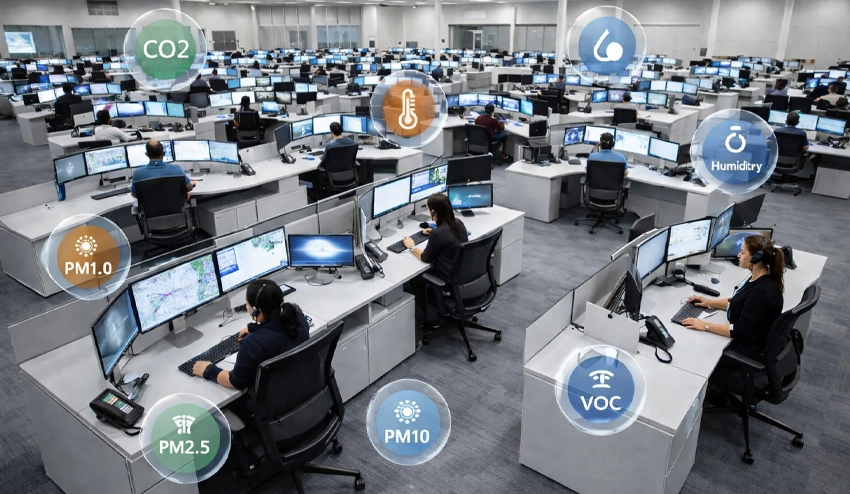
HibouAir is designed for continuous indoor air quality monitoring in real working environments, including dense office spaces and call centers.

Devices such as the HibouAir Duo air quality monitor measure CO2, temperature, humidity, noise, particulate matter, and other relevant parameters in a single compact unit. This makes it easier to understand how different environmental factors interact throughout the day.

HibouAir supports both local and remote monitoring, allowing facility managers and operations teams to view air quality data across one or multiple call centers. Historical data and trends help teams make informed decisions rather than relying on assumptions or complaints.

Because HibouAir focuses on long-term visibility rather than one-time measurements, it supports gradual improvement of working conditions and better alignment between people, space, and ventilation systems.

Air quality as a productivity tool, not just a comfort feature

In call centers, productivity depends on people’s ability to focus, communicate clearly, and remain comfortable throughout long shifts. Indoor air quality directly affects all three.

By monitoring CO2, noise, temperature, and humidity, organizations gain a practical tool to improve performance, employee well-being, and operational efficiency. When air quality data is integrated with HVAC and building systems, the environment can adapt automatically to real usage.

Clean, well-managed air is not just about comfort in call centers. It is about supporting people so they can perform consistently, communicate effectively, and work in a healthier, more sustainable environment.

Share this post on :

Why Multi-Sensor Air Quality Monitoring Matters — And How HibouAir DUO Leads the Way

Indoor air quality has become one of the most important health and productivity factors in modern living. We spend up to 90% of our time indoors — at home, in offices, in schools, and in other enclosed environments. Yet many of these spaces contain elevated levels of carbon dioxide (CO2), harmful particulate matter (PM), and other pollutants that can affect how we feel, how we think, and how well we perform. With more organizations paying attention to ventilation, energy efficiency, and workplace wellness, accurate indoor air quality monitoring is no longer optional; it’s essential.

The Problem: Most Sensors Only Capture Part of the Air Quality Story

Although there is growing interest in indoor air quality, the market is full of devices that offer only a partial view of what’s really happening in the environment. Many monitors focus solely on CO2 levels, which are important for measuring ventilation efficiency and detecting occupancy-related issues — but CO2 alone cannot reveal the presence of harmful particles in the air.

On the other hand, some devices focus only on PM 1.0, PM2.5 or PM10, which are critical indicators of pollution from dust, smoke, outdoor air infiltration, and indoor activities. PM sensors help assess filtration performance and identify the presence of airborne particles that affect respiratory health. But without CO2 monitoring, there’s no way to understand how stale or poorly ventilated the air is, which is equally important.

This split approach means users often need to buy multiple devices to get a full picture — adding complexity, cost, and inconsistent data. In environments like offices, schools, hospitals, or production facilities, relying on single-parameter sensors can lead to misinformed decisions about ventilation, filtration, and safety.

The Solution: One Device That Combines CO2 and PM Monitoring — HibouAir DUO

This is where HibouAir DUO stands out. Instead of forcing users to choose between CO2 or PM, HibouAir DUO combines both of the most essential indoor air quality parameters in a single, compact sensor. By integrating high-accuracy CO2 measurement with detailed PM monitoring (PM1.0, PM2.5, and PM10), the device provides a complete, real-time understanding of indoor environmental health. It also includes additional measurements such as temperature, humidity, VOCs, and atmospheric pressure, giving users an even more holistic view of the air they breathe.

What makes this especially valuable is that CO2 and PM represent two different categories of indoor air challenges. CO2 reveals how effectively a space is ventilated, while PM exposes pollution sources and filtration needs. When monitored together, they tell the full story — allowing you to understand whether a problem is caused by poor ventilation, outdoor pollution, indoor activity, or a combination of factors. This makes HibouAir DUO not just a sensor, but a powerful decision-making tool for improving air quality, comfort, and energy efficiency.

Why Multi-Sensor Monitoring Changes Everything

A multi-sensor approach helps identify issues that a single reading would miss. For example, a room may show low CO2 levels because ventilation is running well, but PM could still be high due to dust, cleaning, or outside pollution entering the building. Conversely, PM may be low while CO2 is rising, indicating that ventilation is insufficient even though the air “looks” clean. With HibouAir DUO capturing all the key data points at once, users can act quickly and accurately to resolve the true cause of indoor air problems.

In workplaces, this leads to better productivity and comfort. In schools, it supports healthier learning environments. In healthcare and industrial spaces, it strengthens safety and compliance. And for smart building managers, it allows more precise optimization of HVAC systems, reducing energy waste while maintaining healthy indoor conditions.

A Smarter, Connected Way to Monitor Air Quality

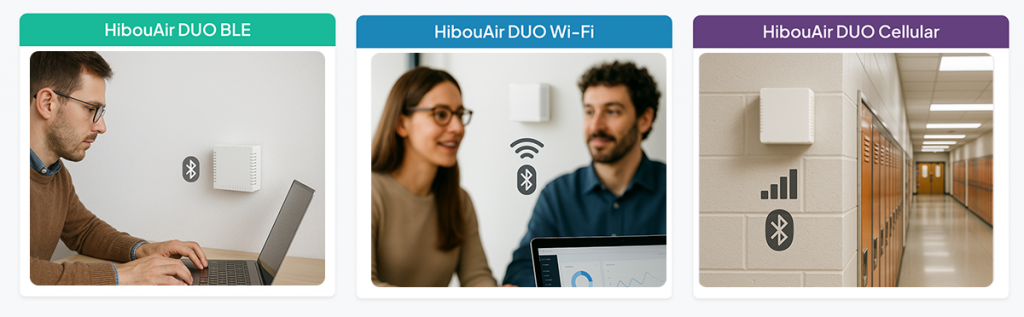
Beyond the sensor itself, HibouAir DUO offers flexible connectivity options — Bluetooth, Wi-Fi, and even cellular LTE-M — making it suitable for everything from smart offices to remote industrial sites. Real-time data is accessible through the HibouAir mobile app and cloud dashboard, enabling continuous tracking, historical analysis, and data-driven decisions.

The simplicity of installation and the accuracy of the readings make HibouAir DUO an effective solution for anyone seeking reliable indoor air quality insights without complexity or multiple devices.

Cleaner, Healthier Spaces Start With Better Data

Indoor air quality monitoring is only as effective as the information you can gather. Relying on single-parameter sensors limits your ability to understand what’s truly happening in your environment. HibouAir DUO solves this problem by bringing CO2 and PM sensing together — along with temperature, humidity, VOCs, and pressure — in one compact and intelligent device.

Whether you’re managing a workspace, a classroom, a healthcare facility, or your own home, having accurate, multi-sensor data empowers you to make smarter choices for ventilation, filtration, comfort, and overall well-being. HibouAir DUO delivers the complete picture — so you can take control of the air you breathe.

Share this post on :

Contact Us

Call us or simply fill out the form below, and one of our representatives will get back to you as soon as possible.