Use Case: Optimizing HVAC Filter Performance with Real-World PM Data Using HibouAir 

In commercial and industrial buildings, HVAC filters are essential for maintaining indoor air quality and protecting both occupants and equipment. However, many facilities still rely on fixed replacement schedules or simple pressure drop readings to decide when filters should be changed. These traditional methods often fail to reflect the real conditions inside a building. 

When filters are replaced too early, companies waste money on materials, labor, and unnecessary downtime. When they are replaced too late, airflow can decrease, energy consumption increases, and indoor air quality may suffer. In both cases, the core problem remains the same: decisions are made based on assumptions instead of actual environmental data. 

This is where Filtration Advice has taken a different approach. 

Data-Driven Filter Optimization 

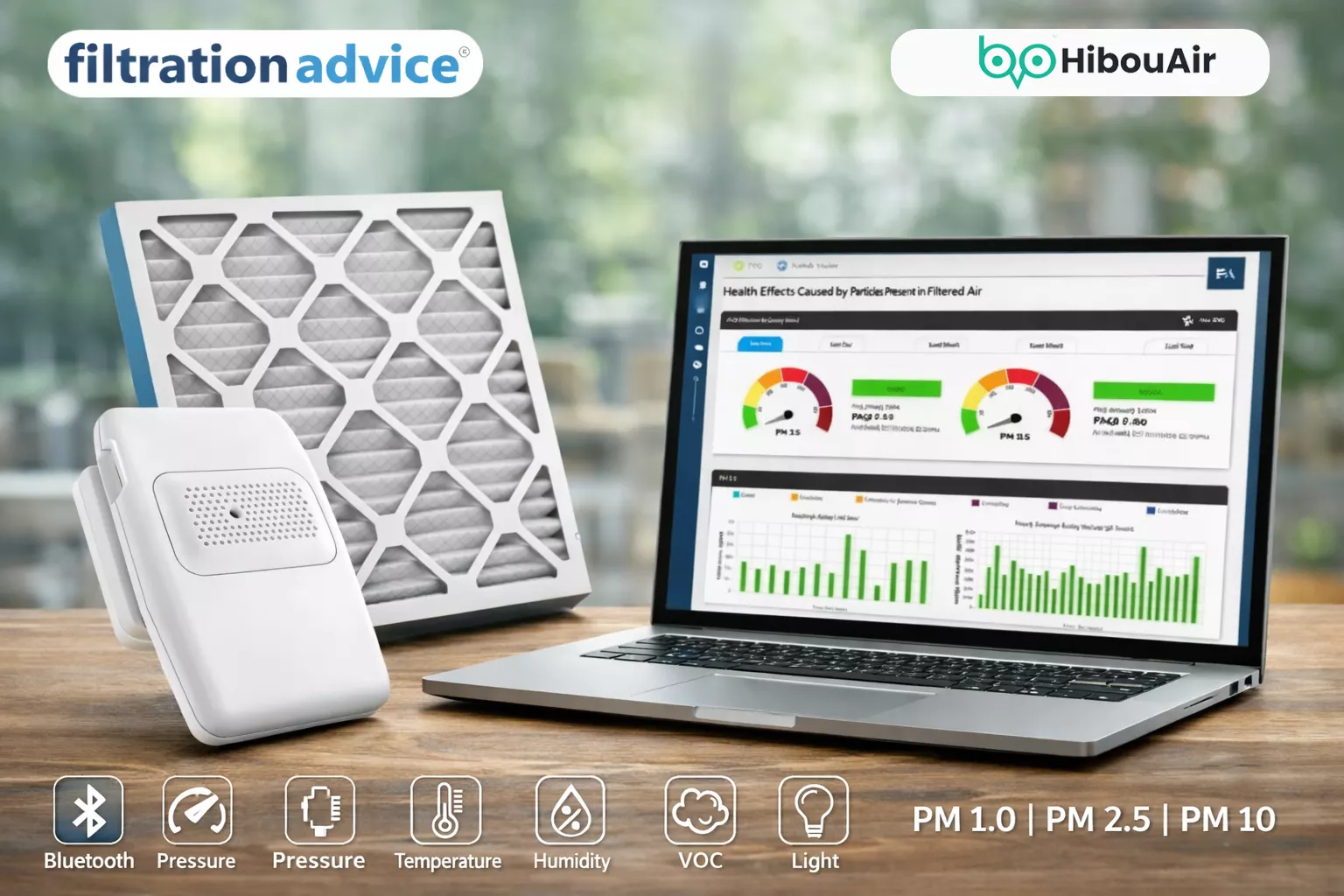
Filtration Advice has developed an advanced Total Cost of Ownership (TCO) platform designed to optimize HVAC air filtration systems using engineering models and real-world measurements. Rather than focusing only on filter efficiency ratings or theoretical dust loading assumptions, their software analyzes how filters perform over time within actual operating conditions. 

Their TCO platform predicts filter lifecycle, evaluates pressure drop development, estimates energy impact, and identifies the optimal time for replacement. The goal is not simply to replace filters on a schedule, but to maximize performance while minimizing cost and environmental impact. 

A critical part of making this prediction accurate is understanding the real particulate load in the building. For this purpose, Filtration Advice integrates HibouAir PM sensors into their analytical ecosystem. 

The Role of HibouAir PM Sensors 

HibouAir PM sensors provide continuous and reliable measurements of particulate matter, including PM1.0, PM2.5 and PM10. These measurements represent the actual particle concentration present in the indoor environment, giving Filtration Advice precise data about the dust load that HVAC filters are exposed to. 

By feeding real-time PM data into their TCO software, Filtration Advice can model how quickly filters accumulate particles and how their performance evolves under real conditions. This transforms filter lifecycle prediction from a theoretical estimate into a measurable and data-supported process. 

Instead of assuming an average dust level for a building, the system uses actual environmental readings captured by HibouAir. This allows more accurate forecasting of filter loading behavior and supports smarter maintenance decisions. 

From Monitoring to Performance Intelligence 

Within the Filtration Advice platform, particulate data is not only displayed but analyzed. The system presents graphical views, trend analysis, and air quality indexing that help users understand how particle levels fluctuate over time. Hourly, daily, and long-term averages provide deeper insight into building conditions and filtration performance. 

By correlating particle concentration with HVAC runtime and filter characteristics, Filtration Advice can assess how effectively the system removes airborne particles and how filter performance changes over its operational life. This analytical approach enables predictive maintenance rather than reactive or schedule-based replacement. 

The result is a more intelligent filtration strategy that improves energy efficiency, extends filter lifespan, and enhances indoor air quality management. 

Why HibouAir Was Easy to Integrate 

One of the strengths of HibouAir is its plug-and-play design and reliable data delivery. The PM sensors are designed for continuous monitoring and provide stable, accurate measurements that can be easily integrated into external analytical platforms. 

For Filtration Advice, integrating HibouAir into their TCO ecosystem was a natural step. The sensor acts as the environmental measurement layer, supplying real-world particulate data that supports their lifecycle modeling algorithms. Because HibouAir delivers clean and consistent data output, it fits seamlessly into advanced software environments without complex customization. 
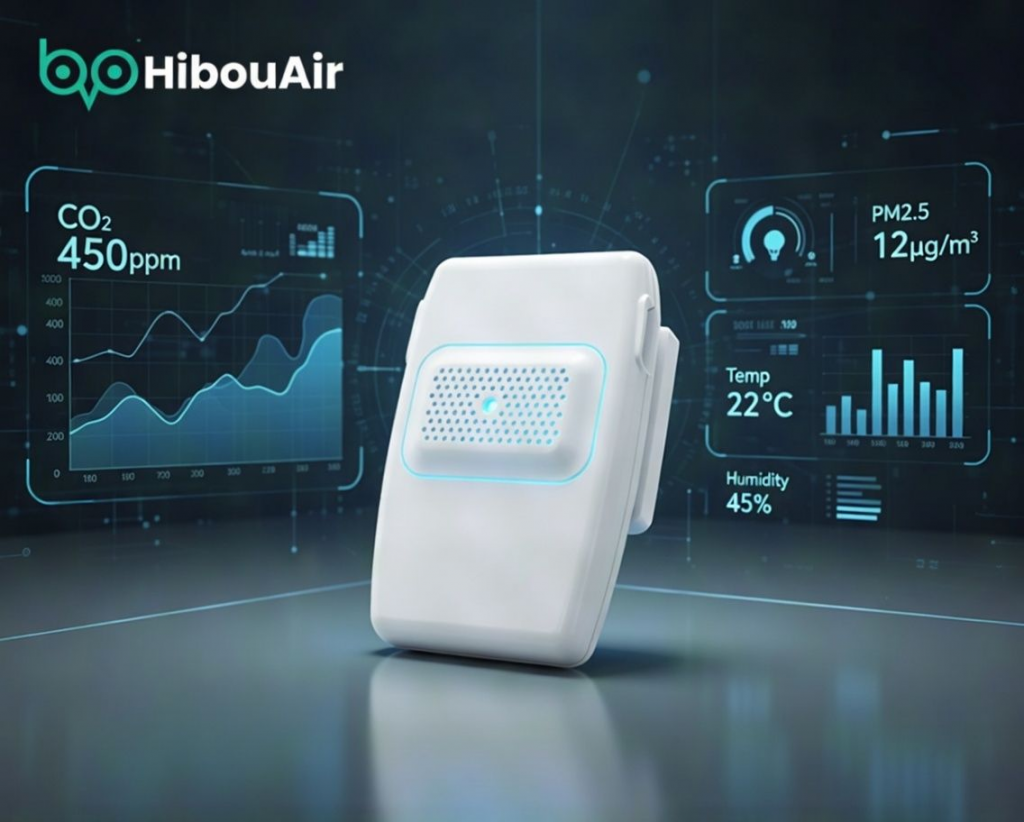
This simplicity makes HibouAir suitable not only for standalone monitoring but also as a core data component within intelligent building optimization systems. 

The Impact 

By combining their TCO optimization software with real-time PM measurements from HibouAir, Filtration Advice has created a solution that bridges engineering modeling and real environmental performance. 

Facility managers and HVAC professionals can now make decisions based on measured particulate levels rather than assumptions. Filters are replaced at the right time, energy costs are better controlled, and sustainability goals are easier to achieve through reduced material waste and optimized operations. 
Share this post on :

Use Case: Supporting University Research on Indoor Air Quality with HibouAir Cloud Monitoring

Air pollution is becoming a serious concern around the world. Wildfires, traffic emissions, and other environmental factors are increasing the level of fine particles in the air. These particles, especially PM2.5, are small enough to enter the lungs and cause health problems.

While outdoor air pollution is often monitored by regional stations, indoor air quality is not always measured in detail. This is a problem because people spend most of their time indoors. To understand real exposure levels, indoor air must be measured directly.

Researchers from the School of Built Environment at the University of Technology Sydney wanted to study this issue more closely. Elaheh Samandi, Arezoo Shirazi, and Sidney Newton carried out a research project called “Measuring the fine particulate exposure levels of building occupants using localized sensors.” Their goal was to understand how outdoor pollution affects indoor air inside a university building in Sydney, Australia.

To collect accurate data over five months, the research team used IoT air quality sensors, including the HibouAir air quality monitoring device.

The Research Approach: Continuous Monitoring Inside the Building

The researchers installed sensors inside different areas of a multi-story university building. They also measured outdoor PM2.5 levels near the building. By doing this, they were able to compare indoor and outdoor air quality over time.

The study ran for five months and included different environmental conditions, such as winter and periods of Hazard Reduction Burning (HRB). These events helped the researchers understand how extreme outdoor pollution affects indoor air.

Using the collected data, the team calculated Indoor-to-Outdoor ratios and something called an Exceedance Index. These measurements helped them understand how much outdoor pollution enters the building and how often indoor air exceeds recommended health limits.

Because they used localized sensors instead of relying only on a regional monitoring station, they were able to see what was really happening inside the building.

Key Findings: Indoor Air Can Be Worse Than Expected

The study revealed several important findings.

During winter, PM2.5 levels increased overnight. This shows that air quality can change even when buildings are not fully occupied. Continuous monitoring is important because pollution does not only happen during working hours.

The researchers also found that areas close to the building entrance had much higher exposure levels. In fact, the indoor space nearest to the entrance exceeded more than double the World Health Organization’s recommended PM2.5 limit for over 80 percent of the study period. This clearly shows that pollution can enter buildings through doors and air intakes.

When the researchers compared their local outdoor sensor data with the nearest regional air quality monitoring station, they found something important. The local outdoor PM2.5 readings were about 2.5 times higher than the regional station’s readings. This shows that regional stations may not always reflect the real pollution levels around a specific building.

The Role of HibouAir in the Study

HibouAir helped make this research possible by providing reliable and continuous PM2.5 measurements inside the building.

The device collected data over the full five-month period. Because it connects to a cloud platform, the researchers were able to store, download, and analyze the data easily. This allowed them to study patterns over time and compare different areas inside the building.

Although this study focused mainly on PM2.5, HibouAir can also measure CO2, PM1.0, PM10, temperature, humidity, and VOCs. This makes it useful for broader indoor air quality research in the future.

The ability to monitor continuously and access data remotely made HibouAir a practical tool for long-term research.

Why Localized Monitoring Is Important

This research clearly shows that regional air quality data is not always enough. Pollution levels can be very different at the local level, especially near busy roads or during events like Hazard Reduction Burning.

Buildings also behave differently depending on design, ventilation systems, and how close they are to pollution sources. Without localized monitoring, it is difficult to understand what occupants are actually breathing.

By using localized sensors like HibouAir, researchers and facility managers can see real exposure levels instead of relying on distant monitoring stations.

With accurate and reliable data, researchers can better understand these patterns and develop strategies to improve indoor air quality. Tools like HibouAir make this possible by providing clear and consistent environmental data.

For readers interested in learning more, the full research article can be accessed here:
https://www.sciencedirect.com/science/article/abs/pii/S0360132323004304

Share this post on :

A Real-World Use Case with HibouAir : Smart Ventilation & Climate Control

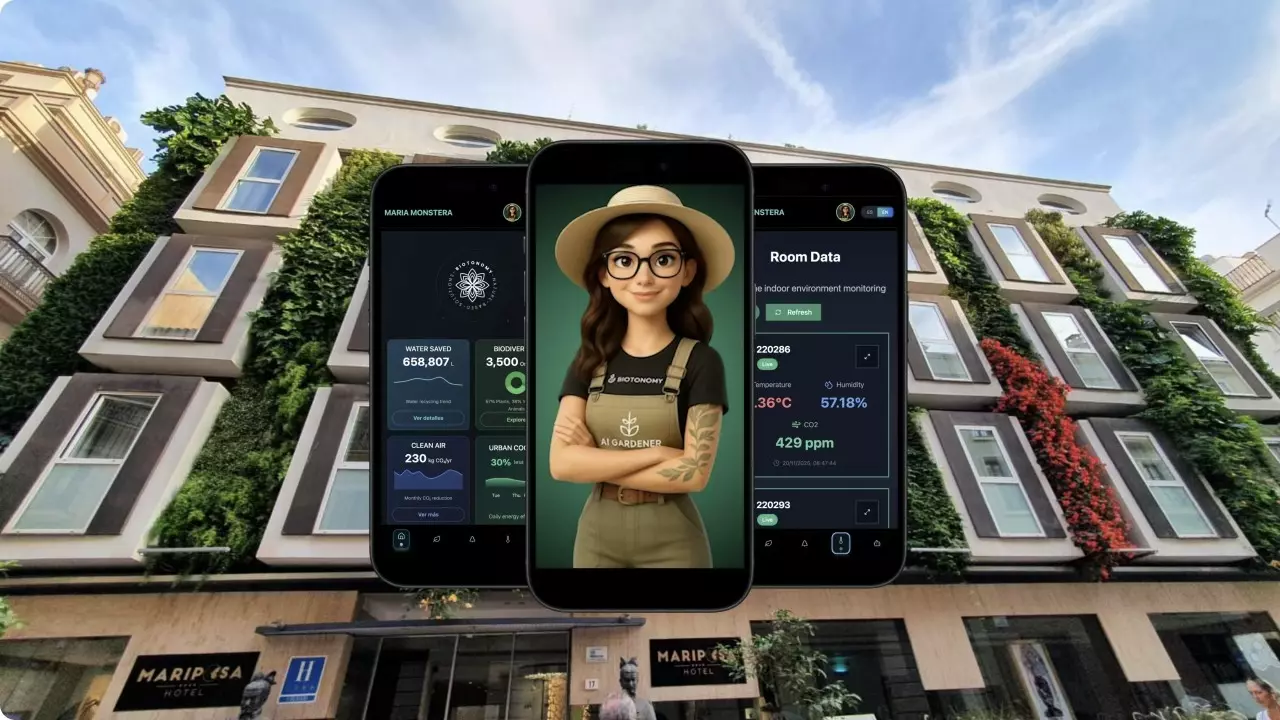
Biotonomy, a company known for its nature-based architecture and sustainable climate-adaptive design, creates buildings and cities that function more like ecosystems than traditional structures. Their work focuses on environments that breathe, adapt, and respond ­– ensuring well-being for both people and nature. One of their innovative installations features a modern hotel in Malaga, Spain, where HibouAir air quality monitoring sensors and a Gateway are deployed throughout the rooms to deliver continuous, real-time environmental data.

This data powers Maria Monstera, an advanced AI dashboard designed to monitor, optimize, and interact with the hotel’s hydroponic vertical garden and indoor climate conditions. Through this integration, the hotel benefits from a fully automated ventilation and climate control system built on responsive, data-driven intelligence.

Real-Time Environmental Intelligence Powered by HibouAir

HibouAir devices installed throughout the hotel rooms measure key environmental parameters and overall room conditions. This real-time data is continuously transmitted to the AI dashboard Maria Monstera, enabling precise, immediate actions that support the health of both the indoor garden system and the guests.

How the AI Dashboard Maria Monstera Uses HibouAir Data

Supporting Plant Health

The AI dashboard Maria Monstera continuously observes important parameters for the hydroponic vertical garden. This includes humidity, temperature, light levels, water quality, and nutrient conditions. By tracking environmental fluctuations and identifying irregularities as soon as they appear, the AI helps maintain stable conditions so that plants remain strong, healthy and stress-free.

Smart Ventilation & Climate Control

Using HibouAir sensor data, the AI dashboard ensures that ventilation and climate control remain responsive and adaptive. Instead of acting as a passive system, the dashboard actively optimizes airflow and humidity. It regulates ventilation openings, adjusts airflow distribution and maintains balanced moisture levels for both people and plants. This approach also helps prevent mold growth and reduces the risk of poor indoor air quality, ensuring healthier indoor conditions throughout the space.

Energy-Efficient Optimization

The AI dashboard adapts lighting, fans and supplementary climate controls based on real-time needs rather than fixed timers. It responds to actual environmental changes and learns daily activity patterns. By doing so, the system reduces unnecessary energy use and introduces cost-efficient operations that evolve over time.

Interactive Visitor Experience

Maria Monstera is also part of an interactive kiosk interface that engages hotel visitors. Through this interface, the AI explains concepts connected to the nature-based installation, such as photosynthesis, water purification, biodiversity and pollination. This creates a more immersive and educational experience, connecting guests directly to the sustainable architectural concept around them.

Proactive Intelligence

The AI dashboard combines HibouAir data with learned behavioral patterns to maintain long-term system stability. It detects early signs of irregularities, highlights possible maintenance needs and suggests improvements that can enhance performance over time. By continuously analyzing trends, the AI ensures that the hydroponic system and indoor climate remain optimized without requiring manual intervention.

A Digital Gardener for Sustainable Spaces

Maria Monstera is positioned as a digital gardener — an intelligent dashboard designed to monitor, interpret and act on environmental data. Its purpose is clear: support maximum plant vitality, ensure efficient energy use and create an engaging experience for visitors. Through continuous data-driven adjustments, it helps maintain a living environment that adapts naturally and responsibly.

This real-world implementation demonstrates how HibouAir sensors can integrate seamlessly into advanced AI-driven environments. By providing accurate, real-time environmental data, HibouAir enables intelligent dashboards like Maria Monstera to manage ventilation, climate stability and plant health in a fully adaptive way. Combined with Biotonomy’s nature-based architecture, the result is a hotel environment that is healthier, more efficient and deeply connected to sustainable design principles.

Share this post on :

Real-World Use Case Powered by HibouAir : Long-Term Air Quality Monitoring in Swedish Neighborhoods

Smart Sensor Devices AB proudly delivers advanced air quality monitoring solutions designed for long-term measurement and reliable environmental insights. One of the companies benefiting from this technology is Fluetec AB, an environmental services provider based in Stockholm, Sweden, focused on improving air quality awareness and transparency across urban communities.

Understanding Air Quality Challenges in Urban Settings

In many city neighborhoods, residents have raised concerns about the impact of soot emissions from wood-burning stoves, especially during colder seasons. These emissions can contribute to elevated particulate matter (PM) levels, affecting both comfort and health. Traditional short-term measurements are often insufficient to capture how air quality fluctuates throughout the day or across different areas.

To address this, Fluetec AB uses the HibouAir Air Quality Monitoring solution to collect accurate, continuous data on critical environmental parameters — including PM1.0, PM2.5, and PM10. This approach allows them to monitor real-world conditions in a reliable and structured way.

Deploying HibouAir Across Multiple Neighborhood Locations

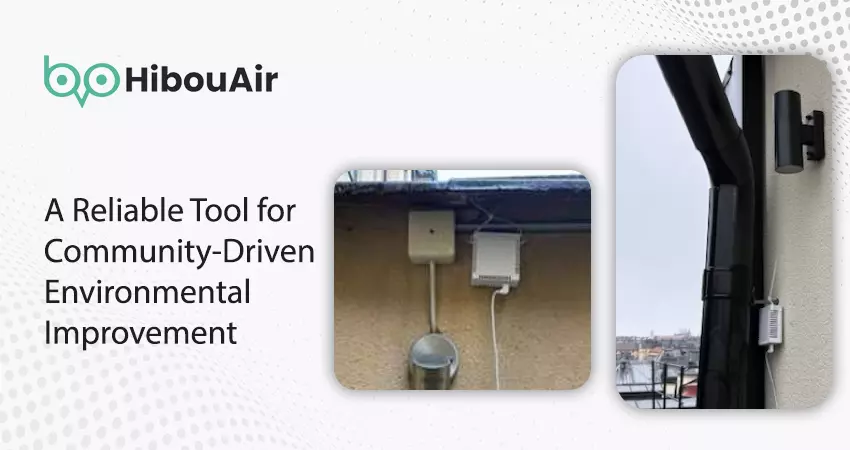
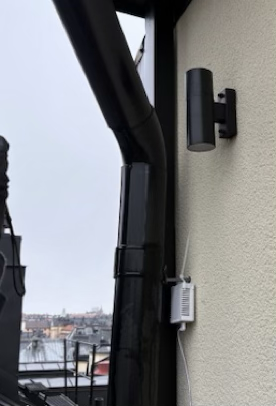
Fluetec deploys multiple HibouAir air quality monitoring devices in strategic outdoor locations to gather representative air quality data. This setup enables them to observe pollution behavior in different areas and identify where PM levels rise the most.

Because HibouAir devices are simple to install and designed for long-term durability, they provide Fluetec with a practical and scalable monitoring network that can operate continuously without extensive maintenance.

Real-Time Data and Long-Term Performance

With HibouAir, Fluetec benefits from real-time access to environmental data, allowing them to track changes as they occur. The long-term reliability of the devices ensures uninterrupted measurement, giving Fluetec the ability to build a comprehensive dataset that reveals daily and seasonal trends.

This consistent flow of information supports environmental monitoring efforts and contributes to ongoing regulatory compliance, especially where particulate matter limits are a concern.

Turning Data Into Actionable Insights

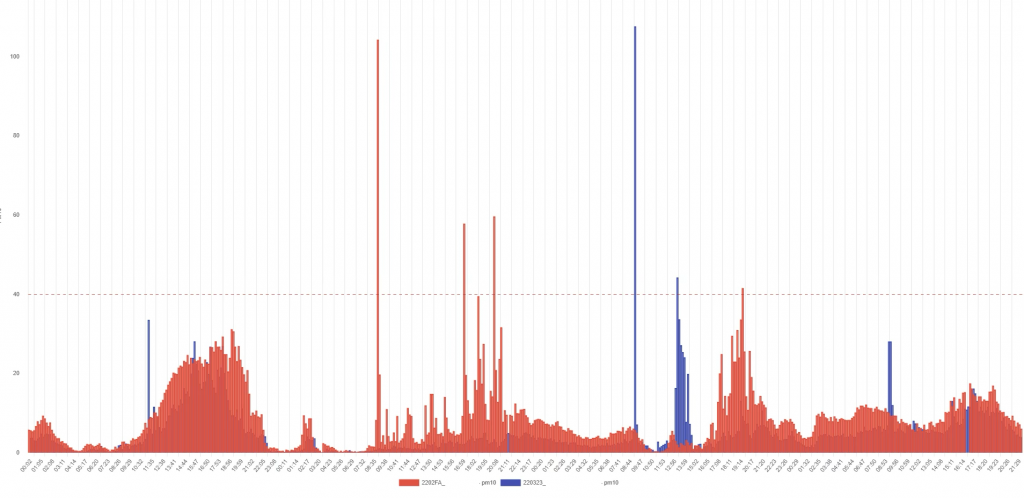
By analysing the collected data through HibouAir’s advanced analytics software, Fluetec can quantify pollution levels across different areas and pinpoint specific times of day when air quality deteriorates. These insights help them better understand the behavior of particulate emissions and identify potential pollution sources.

This data-driven approach enhances transparency, supports cleaner air initiatives, and ultimately contributes to creating a healthier environment for residents living in the monitored areas.

Share this post on :

Contact Us

Call us or simply fill out the form below, and one of our representatives will get back to you as soon as possible.