Integrating Air Quality Monitoring into HVAC Control Strategies

Modern buildings are expected to do more than just maintain temperature – they must support health, productivity, and energy efficiency at the same time. For facility managers and HVAC engineers, this creates a balancing act. Ventilation must be sufficient to ensure good indoor air quality (IAQ), yet controlled enough to avoid unnecessary energy consumption.

This is where integrating air quality monitoring into HVAC control strategies becomes not just beneficial, but essential.

Moving Beyond Fixed Ventilation Approaches

Traditional HVAC systems often rely on static schedules or fixed ventilation rates. While simple to implement, these methods rarely reflect the actual conditions inside a building. A conference room may be empty but still fully ventilated, while a crowded classroom may not receive enough fresh air when it is needed most.

This mismatch leads to two common issues: over-ventilation, which wastes energy, and under-ventilation, which negatively impacts occupant health and comfort. Neither is acceptable in modern facility management.

By incorporating real-time air quality data, HVAC systems can shift from fixed operation to responsive control – adjusting airflow and system behavior based on actual demand.

The Role of Air Quality Data in HVAC Control

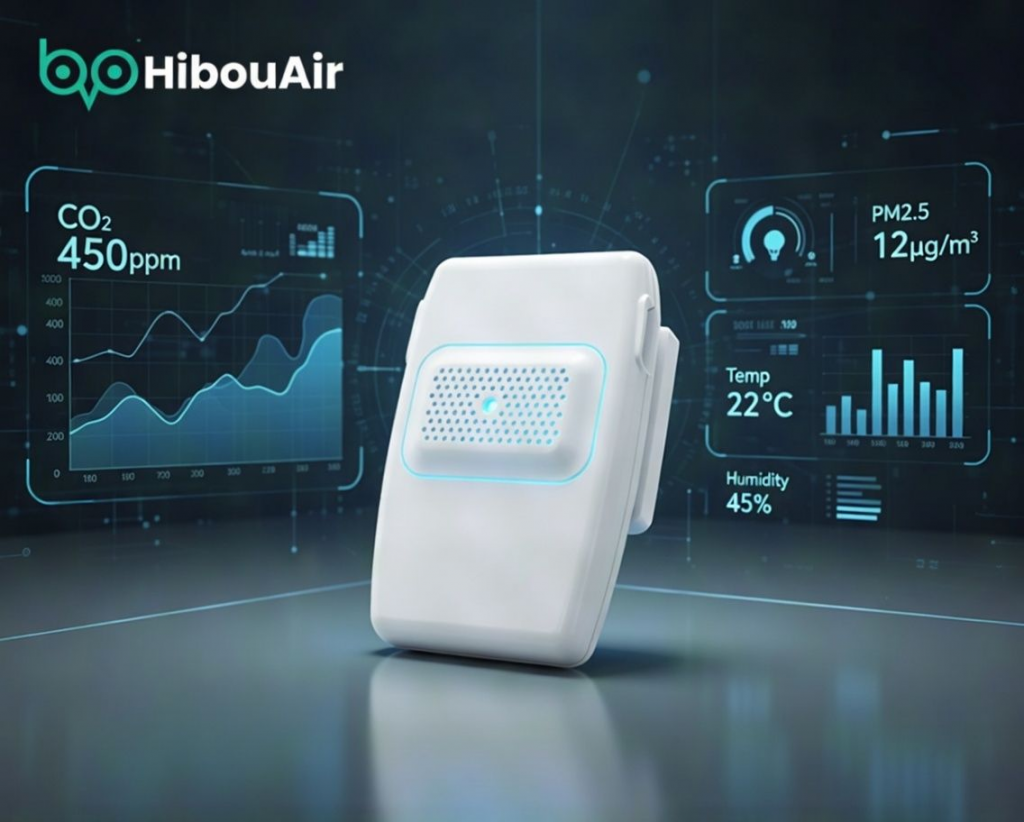
Air quality monitoring provides insight into what is happening inside a space at any given moment. Key parameters such as carbon dioxide (CO2), particulate matter (PM), volatile organic compounds (VOC), temperature, and humidity offer a clear picture of occupancy levels and pollutant buildup.

CO2, for example, is widely used as an indicator of ventilation effectiveness. Rising CO2 levels often signal inadequate fresh air supply in occupied spaces. Similarly, elevated particulate levels may indicate the need for filtration or increased air exchange, while VOC spikes can point to indoor pollution sources.

When these data points are continuously monitored, they can serve as real-time inputs for HVAC control systems, enabling smarter and more precise operation.

From Monitoring to Action: Closing the Control Loop

Collecting air quality data is only the first step. The real value lies in using that data to drive automated decisions.

An integrated approach allows HVAC systems to respond dynamically. As CO2 levels increase, ventilation rates can be adjusted automatically. When air quality improves, airflow can be reduced to conserve energy. This creates a closed-loop system where sensing, decision-making, and control work together seamlessly.

This is where solutions like HibouAir ControlHub® play a critical role. Instead of relying solely on dashboards or alerts, ControlHub® enables direct interaction between air quality measurements and physical HVAC systems. By applying predefined logic or thresholds, it can trigger actions such as adjusting ventilation rates, activating fans, or controlling dampers in real time.

The result is a system that does not just observe conditions – but actively maintains them.

Practical Integration in Real Environments

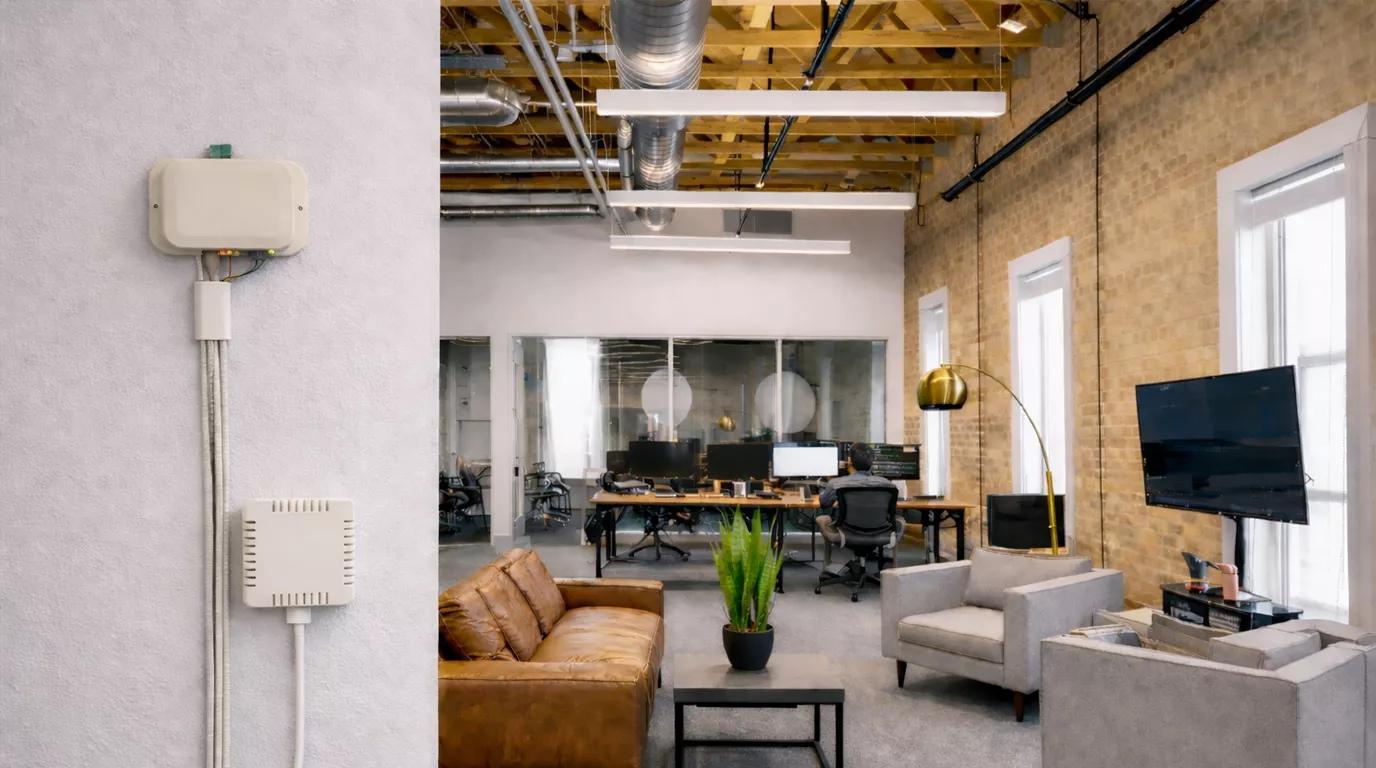
In office buildings, integrating air quality monitoring with HVAC control helps maintain consistent comfort throughout the day. Meeting rooms can automatically increase ventilation during use and scale back when empty, reducing unnecessary energy usage.

In educational settings, such as classrooms, maintaining optimal CO2 levels is directly linked to student concentration and performance. Automated ventilation ensures that air quality remains within acceptable limits without requiring manual intervention.

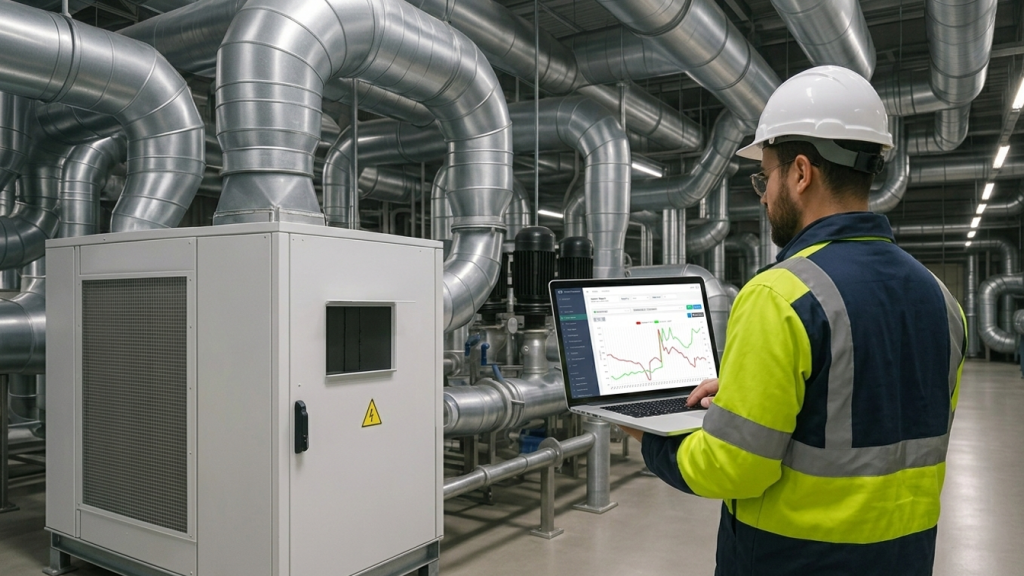
Industrial environments present a different challenge, where pollutants such as dust or chemical vapors may fluctuate throughout the day. Here, real-time monitoring allows ventilation and extraction systems to respond immediately to changes, improving both safety and operational efficiency.
Healthcare facilities, where air quality requirements are stricter, also benefit from dynamic control. Continuous monitoring combined with automated response helps maintain stable conditions, supporting patient care and regulatory compliance.

Energy Efficiency Without Compromise

One of the most significant advantages of integrating air quality monitoring into HVAC control is the ability to optimize energy usage without sacrificing indoor conditions.

Demand-controlled ventilation (DCV) becomes far more effective when driven by accurate, real-time data. Instead of ventilating spaces based on assumptions, systems respond to actual needs. This reduces energy consumption associated with heating, cooling, and air distribution while still maintaining high air quality standards.

For facility managers, this translates into lower operational costs and improved sustainability performance, without the risk of compromising occupant wellbeing.

Integration with Existing Building Systems

A common concern is whether such integration requires a complete overhaul of existing infrastructure. In many cases, it does not. Modern solutions are designed to work alongside existing HVAC and building management systems (BMS), allowing facilities to enhance control without disrupting current operations.

Control interfaces such as analog outputs (e.g., 0–10V) and relay controls enable devices like ControlHub® to communicate directly with ventilation units, fans, and dampers for immediate, localized control. At the same time, integration with existing BMS platforms is made possible through industrial communication protocols such as Modbus.

With support for Modbus RTU and ASCII over RS485/RS422, ControlHub® can be connected directly into established building automation environments where Modbus is already in use. This allows air quality data and control signals to be shared seamlessly between systems, enabling centralized monitoring and coordinated control strategies across the facility.

The combination of local control and BMS integration provides flexibility for both quick deployment and large-scale implementations. Facilities can start with standalone operation and progressively integrate into their broader automation systems, upgrading their control strategies incrementally rather than replacing entire infrastructures.

As expectations for indoor environments continue to evolve, relying on static HVAC operation is no longer sufficient. Integrating air quality monitoring into control strategies allows buildings to respond dynamically, improving both occupant wellbeing and energy efficiency.
Share this post on :

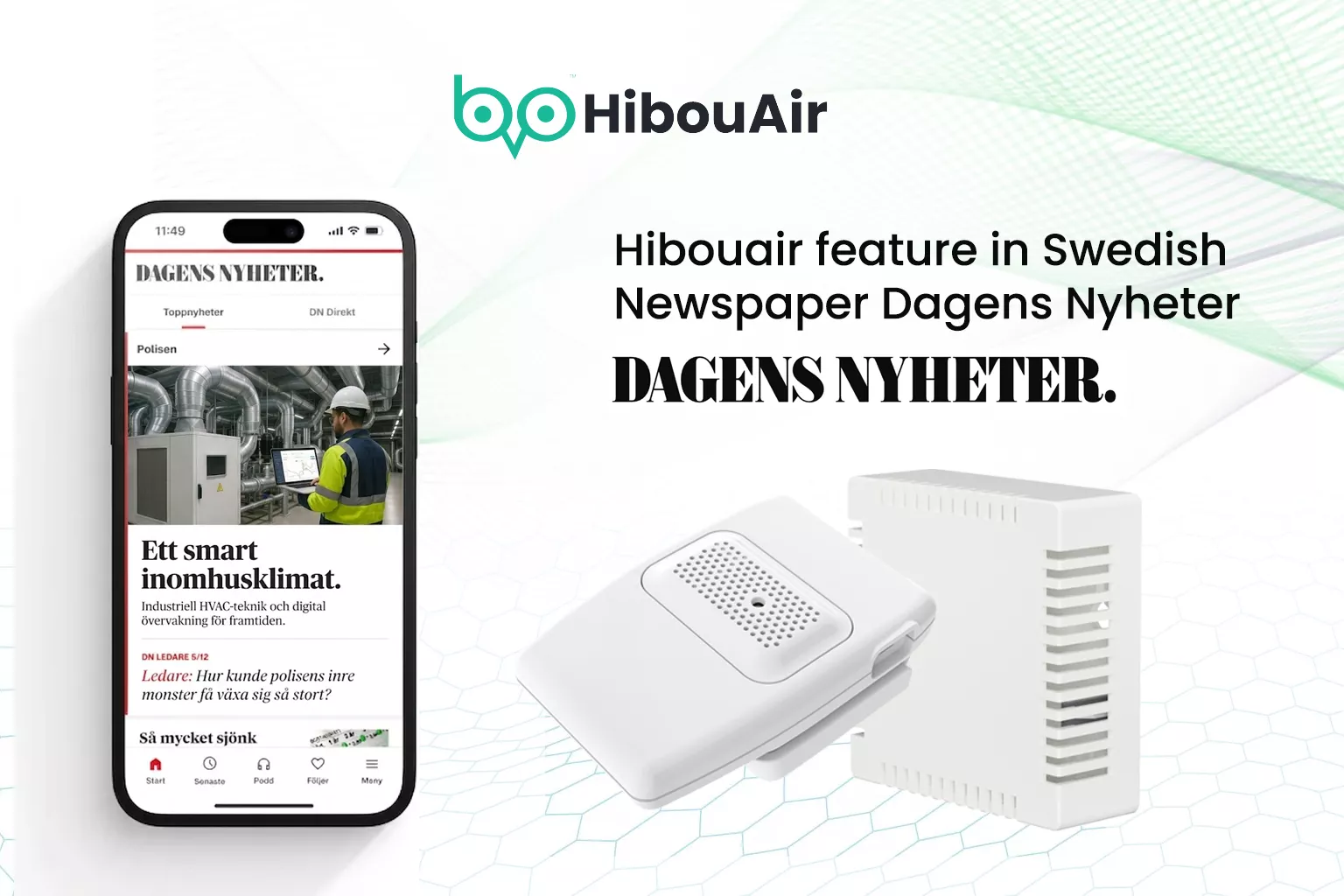
Hibouair feature in Swedish Newspaper Dagens Nyheter

HibouAir is proud to have been featured in Dagens Nyheter (DN), one of Sweden’s most respected and widely read newspapers. The article highlights the growing importance of indoor air quality and how HibouAir is helping shape smarter, healthier, and more energy-efficient buildings.

Recognizing the Importance of Indoor Air Quality

As cities continue to expand and evolve, increasing attention is being given to transportation systems, energy infrastructure, and public services. However, indoor environments – where people spend the majority of their time – have historically received far less focus. The DN feature draws attention to this imbalance and emphasizes that indoor air quality is a critical, yet often overlooked, component of public health and urban development.

Many people have experienced poor air quality in offices, schools, hospitals, and other shared environments, often without realizing the underlying cause. Despite its impact on comfort, productivity, and well-being, indoor air is rarely monitored or actively managed in a systematic way.

How HibouAir Makes Indoor Environments Smarter

The article highlights how HibouAir addresses these challenges by continuously monitoring and analyzing indoor air quality. In many buildings, ventilation systems operate on fixed schedules or maintain constant airflow regardless of actual usage. This approach does not account for variations in occupancy, activity levels, or external weather conditions, all of which significantly influence indoor air quality throughout the day.

As a result, buildings may experience poor air quality during peak periods while simultaneously consuming unnecessary energy when spaces are underutilized. HibouAir introduces a data-driven approach by providing real-time insights into environmental conditions. By measuring factors such as carbon dioxide levels, particulate matter, temperature, humidity, volatile organic compounds, and more, the system enables a deeper understanding of how indoor environments behave over time.

Real-Time Control with HibouAir ControlHub

The DN feature also emphasizes the role of HibouAir ControlHub in transforming insights into action. By connecting air quality data directly to building ventilation systems, ControlHub enables real-time, demand-based adjustments that align ventilation with actual needs.

This intelligent control ensures that indoor environments remain consistently healthy and comfortable while simultaneously reducing unnecessary energy consumption. The ability to respond dynamically to changing conditions creates a balance between occupant well-being and operational efficiency.

Another key advantage is the ease of integration. ControlHub can be implemented within existing building systems without requiring extensive modifications. Once installed, it operates seamlessly in the background, continuously optimizing performance and maintaining a high standard of indoor climate.

Supporting the Vision of Smart Cities

The DN article reinforces the idea that smart cities depend on smart buildings, and that indoor air quality is a fundamental part of this equation. By turning indoor climate from a largely invisible issue into a measurable and manageable factor, HibouAir helps redefine how buildings contribute to urban sustainability.

This approach supports broader goals of energy efficiency, improved occupant comfort, and long-term environmental responsibility. As cities strive to become more sustainable and resilient, solutions like HibouAir play a crucial role in bridging the gap between technology and everyday human experience.

About HibouAir

HibouAir is an advanced indoor air quality monitoring solution developed by Smart Sensor Devices Sweden AB. The system continuously measures a wide range of environmental parameters in real time, providing actionable insights into how indoor spaces function and when intervention is needed.

When combined with ControlHub, HibouAir enables demand-driven ventilation, ensuring that air quality is maintained precisely when and where it is required. This creates healthier indoor environments while optimizing energy usage, making it an essential component of modern, intelligent buildings.

Share this post on :

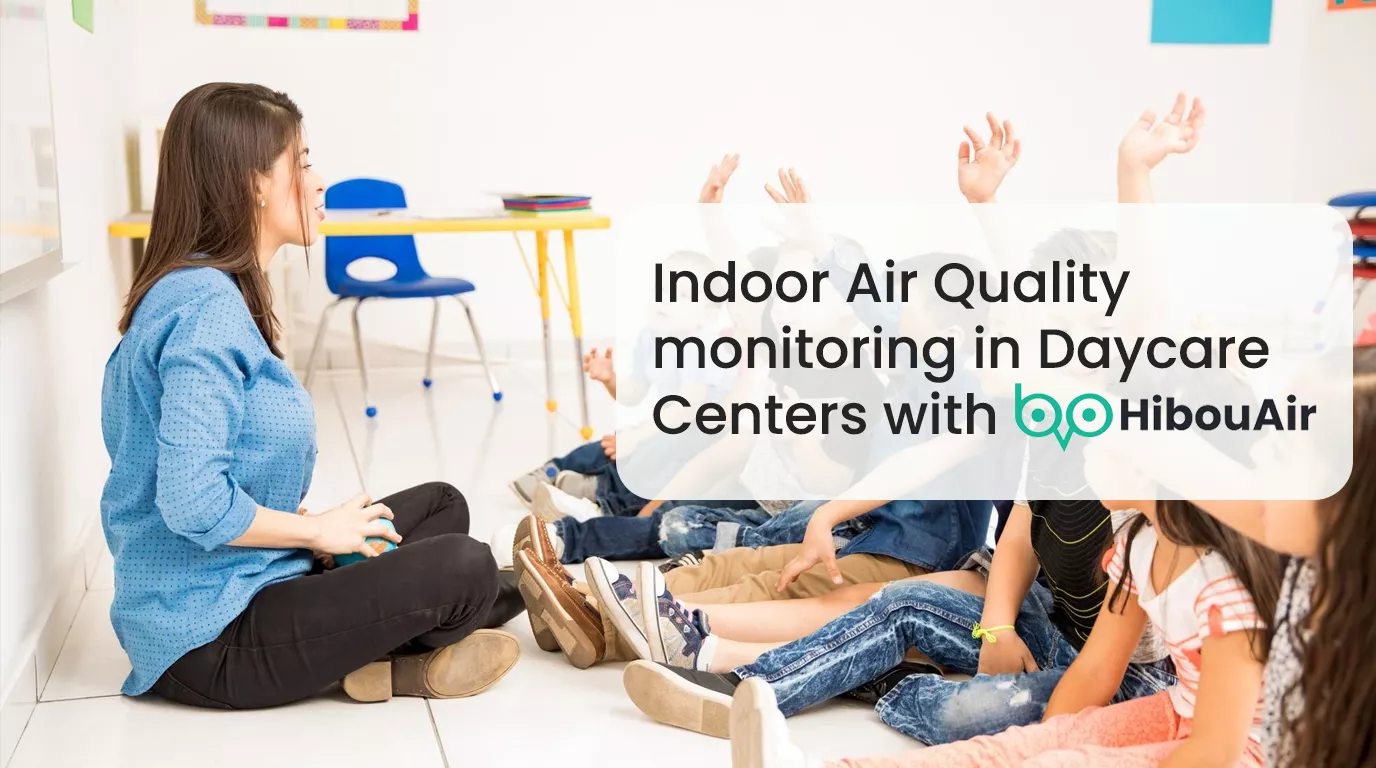
Why Indoor Air Quality in Daycare Centers Matters More Than Ever

Daycare centers are environments where young children spend many hours each day learning, playing, and interacting with others. While nutrition, safety, and education are often the main priorities, indoor air quality is an equally important factor that directly affects children’s health. Because daycare classrooms typically have many children in relatively small spaces, indoor air conditions can change quickly if ventilation is not properly managed.

Children are more sensitive to air pollution than adults because their lungs are still developing and they breathe faster relative to their body size. When indoor air contains high levels of carbon dioxide (CO2), fine particles, or chemical pollutants, children may experience symptoms such as fatigue, coughing, or irritation of the eyes and throat. Maintaining healthy indoor air in daycare environments is therefore essential for both immediate comfort and long-term respiratory health.

Common Indoor Air Quality Challenges in Daycare Centers

Daycare facilities often experience indoor air quality challenges because of high occupancy and constant activity. When many children share the same room, CO2 levels can increase quickly as a result of normal breathing. Elevated CO2 is usually a sign that ventilation is insufficient and can lead to tiredness and reduced concentration among both children and staff.

Particles in the air are another concern. Dust from carpets, outdoor pollution entering through doors or windows, and particles from everyday activities can accumulate indoors. Since children frequently play on the floor and move around actively, these particles can easily become airborne again and increase exposure. In addition, certain materials such as cleaning products, furniture, and art supplies may release volatile organic compounds that can build up indoors if ventilation is not adequate.

The Health Impact of Poor Air Quality on Young Children

Young children are especially vulnerable to environmental conditions, and poor air quality can affect both their health and daily comfort. When indoor environments contain elevated pollutants, children may experience more frequent respiratory symptoms, allergy irritation, or fatigue. These issues can interfere with their ability to participate fully in learning and play activities.

Why Monitoring Indoor Air Quality Is Essential

Many daycare buildings rely on ventilation systems to maintain indoor comfort, but without proper monitoring it is difficult to know whether the air quality actually meets healthy standards. CO2 levels may increase during busy periods, particle levels may change depending on outdoor conditions, and humidity may fluctuate throughout the day.

Real-time air quality monitoring with devices like HibouAir provides visibility into these changes. By measuring parameters such as CO2, particulate matter, temperature, and humidity, facility managers can understand how indoor conditions evolve during daily activities. Monitoring solutions such as HibouAir allow daycare operators to track indoor air quality continuously and identify when action may be needed to maintain healthy environments.

Integrating Air Quality Monitoring With Ventilation Systems

Monitoring indoor air quality becomes even more valuable when it is connected with building ventilation systems. Instead of running ventilation at a fixed rate, demand-controlled ventilation allows airflow to adjust based on real indoor conditions. When CO2 levels rise due to higher occupancy, the ventilation system can automatically increase airflow to restore healthy conditions.

This approach improves indoor comfort while also reducing unnecessary energy use when spaces are less occupied. By using air quality sensors as part of the ventilation strategy, daycare facilities can maintain healthy environments while operating more efficiently.

Using HibouAir ControlHub for Smart Air Quality Management

In daycare centers with multiple rooms or classrooms, managing air quality across the entire building can become challenging. A centralized system such as HibouAir ControlHub helps simplify this process by collecting data from multiple air quality monitors and presenting it in a single interface.

With centralized monitoring, administrators can quickly identify which rooms may require improved ventilation or attention. The system can also support automated responses, such as adjusting ventilation when CO2 levels rise. Over time, historical data helps facility managers understand patterns in occupancy and air quality.

Building Healthier Indoor Environments for Children

Creating healthy indoor environments in daycare centers is an important step toward protecting children’s health and supporting their development. Clean air helps reduce illness, improves comfort, and supports better learning conditions for both children and staff.

By combining real-time air quality monitoring with intelligent ventilation strategies, daycare facilities can maintain healthier indoor spaces throughout the day. Solutions such as HibouAir monitoring devices and ControlHub management systems provide the data and control needed to maintain safe and comfortable environments where children can learn and grow.

Share this post on :

Use Case: Optimizing HVAC Filter Performance with Real-World PM Data Using HibouAir 

In commercial and industrial buildings, HVAC filters are essential for maintaining indoor air quality and protecting both occupants and equipment. However, many facilities still rely on fixed replacement schedules or simple pressure drop readings to decide when filters should be changed. These traditional methods often fail to reflect the real conditions inside a building. 

When filters are replaced too early, companies waste money on materials, labor, and unnecessary downtime. When they are replaced too late, airflow can decrease, energy consumption increases, and indoor air quality may suffer. In both cases, the core problem remains the same: decisions are made based on assumptions instead of actual environmental data. 

This is where Filtration Advice has taken a different approach. 

Data-Driven Filter Optimization 

Filtration Advice has developed an advanced Total Cost of Ownership (TCO) platform designed to optimize HVAC air filtration systems using engineering models and real-world measurements. Rather than focusing only on filter efficiency ratings or theoretical dust loading assumptions, their software analyzes how filters perform over time within actual operating conditions. 

Their TCO platform predicts filter lifecycle, evaluates pressure drop development, estimates energy impact, and identifies the optimal time for replacement. The goal is not simply to replace filters on a schedule, but to maximize performance while minimizing cost and environmental impact. 

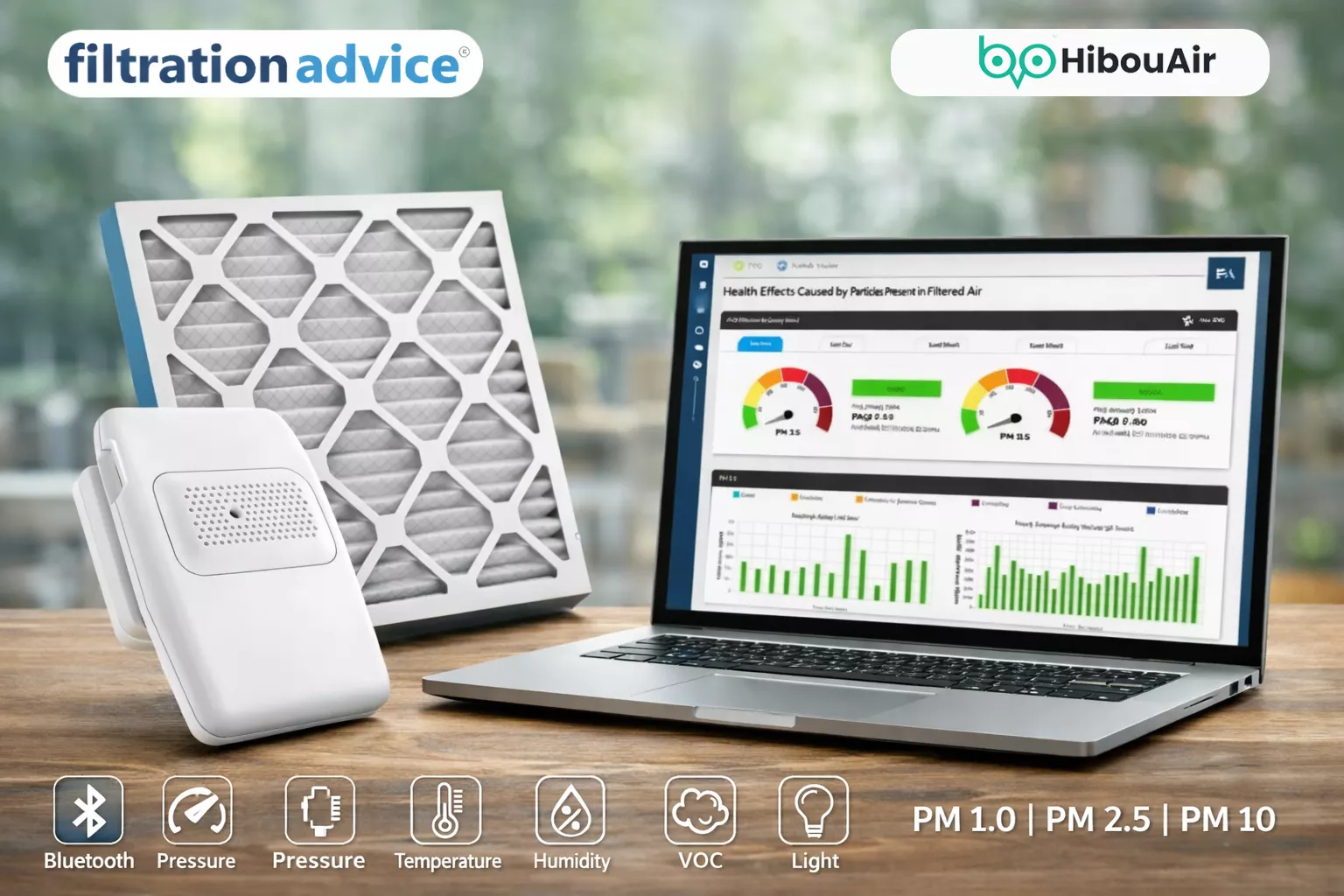
A critical part of making this prediction accurate is understanding the real particulate load in the building. For this purpose, Filtration Advice integrates HibouAir PM sensors into their analytical ecosystem. 

The Role of HibouAir PM Sensors 

HibouAir PM sensors provide continuous and reliable measurements of particulate matter, including PM1.0, PM2.5 and PM10. These measurements represent the actual particle concentration present in the indoor environment, giving Filtration Advice precise data about the dust load that HVAC filters are exposed to. 

By feeding real-time PM data into their TCO software, Filtration Advice can model how quickly filters accumulate particles and how their performance evolves under real conditions. This transforms filter lifecycle prediction from a theoretical estimate into a measurable and data-supported process. 

Instead of assuming an average dust level for a building, the system uses actual environmental readings captured by HibouAir. This allows more accurate forecasting of filter loading behavior and supports smarter maintenance decisions. 

From Monitoring to Performance Intelligence 

Within the Filtration Advice platform, particulate data is not only displayed but analyzed. The system presents graphical views, trend analysis, and air quality indexing that help users understand how particle levels fluctuate over time. Hourly, daily, and long-term averages provide deeper insight into building conditions and filtration performance. 

By correlating particle concentration with HVAC runtime and filter characteristics, Filtration Advice can assess how effectively the system removes airborne particles and how filter performance changes over its operational life. This analytical approach enables predictive maintenance rather than reactive or schedule-based replacement. 

The result is a more intelligent filtration strategy that improves energy efficiency, extends filter lifespan, and enhances indoor air quality management. 

Why HibouAir Was Easy to Integrate 

One of the strengths of HibouAir is its plug-and-play design and reliable data delivery. The PM sensors are designed for continuous monitoring and provide stable, accurate measurements that can be easily integrated into external analytical platforms. 

For Filtration Advice, integrating HibouAir into their TCO ecosystem was a natural step. The sensor acts as the environmental measurement layer, supplying real-world particulate data that supports their lifecycle modeling algorithms. Because HibouAir delivers clean and consistent data output, it fits seamlessly into advanced software environments without complex customization. 

This simplicity makes HibouAir suitable not only for standalone monitoring but also as a core data component within intelligent building optimization systems. 

The Impact 

By combining their TCO optimization software with real-time PM measurements from HibouAir, Filtration Advice has created a solution that bridges engineering modeling and real environmental performance. 

Facility managers and HVAC professionals can now make decisions based on measured particulate levels rather than assumptions. Filters are replaced at the right time, energy costs are better controlled, and sustainability goals are easier to achieve through reduced material waste and optimized operations. 

Share this post on :

Contact Us

Call us or simply fill out the form below, and one of our representatives will get back to you as soon as possible.