


Use Case: Optimizing HVAC Filter Performance with Real-World PM Data Using HibouAir
In commercial and industrial buildings, HVAC filters are essential for maintaining indoor air quality and protecting both occupants and equipment. However, many facilities still rely on fixed replacement schedules or simple pressure drop readings to decide when filters should be changed. These traditional methods often fail to reflect the real conditions inside a building.
When filters are replaced too early, companies waste money on materials, labor, and unnecessary downtime. When they are replaced too late, airflow can decrease, energy consumption increases, and indoor air quality may suffer. In both cases, the core problem remains the same: decisions are made based on assumptions instead of actual environmental data.
This is where Filtration Advice has taken a different approach.
Data-Driven Filter Optimization
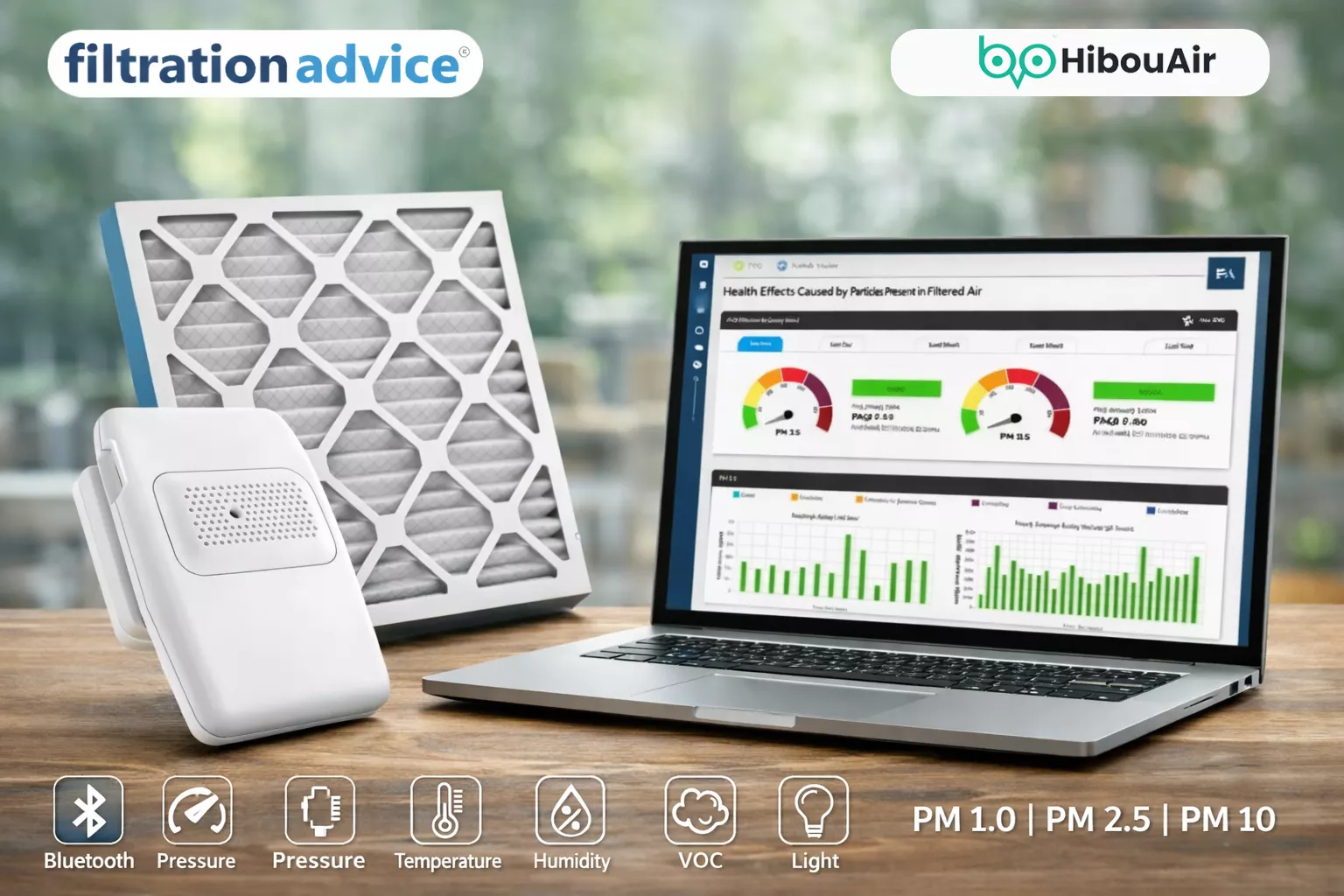
Filtration Advice has developed an advanced Total Cost of Ownership (TCO) platform designed to optimize HVAC air filtration systems using engineering models and real-world measurements. Rather than focusing only on filter efficiency ratings or theoretical dust loading assumptions, their software analyzes how filters perform over time within actual operating conditions.
Their TCO platform predicts filter lifecycle, evaluates pressure drop development, estimates energy impact, and identifies the optimal time for replacement. The goal is not simply to replace filters on a schedule, but to maximize performance while minimizing cost and environmental impact.
A critical part of making this prediction accurate is understanding the real particulate load in the building. For this purpose, Filtration Advice integrates HibouAir PM sensors into their analytical ecosystem.
The Role of HibouAir PM Sensors
HibouAir PM sensors provide continuous and reliable measurements of particulate matter, including PM1.0, PM2.5 and PM10. These measurements represent the actual particle concentration present in the indoor environment, giving Filtration Advice precise data about the dust load that HVAC filters are exposed to.
By feeding real-time PM data into their TCO software, Filtration Advice can model how quickly filters accumulate particles and how their performance evolves under real conditions. This transforms filter lifecycle prediction from a theoretical estimate into a measurable and data-supported process.
Instead of assuming an average dust level for a building, the system uses actual environmental readings captured by HibouAir. This allows more accurate forecasting of filter loading behavior and supports smarter maintenance decisions.
From Monitoring to Performance Intelligence
Within the Filtration Advice platform, particulate data is not only displayed but analyzed. The system presents graphical views, trend analysis, and air quality indexing that help users understand how particle levels fluctuate over time. Hourly, daily, and long-term averages provide deeper insight into building conditions and filtration performance.
By correlating particle concentration with HVAC runtime and filter characteristics, Filtration Advice can assess how effectively the system removes airborne particles and how filter performance changes over its operational life. This analytical approach enables predictive maintenance rather than reactive or schedule-based replacement.
The result is a more intelligent filtration strategy that improves energy efficiency, extends filter lifespan, and enhances indoor air quality management.
Why HibouAir Was Easy to Integrate
One of the strengths of HibouAir is its plug-and-play design and reliable data delivery. The PM sensors are designed for continuous monitoring and provide stable, accurate measurements that can be easily integrated into external analytical platforms.
For Filtration Advice, integrating HibouAir into their TCO ecosystem was a natural step. The sensor acts as the environmental measurement layer, supplying real-world particulate data that supports their lifecycle modeling algorithms. Because HibouAir delivers clean and consistent data output, it fits seamlessly into advanced software environments without complex customization.
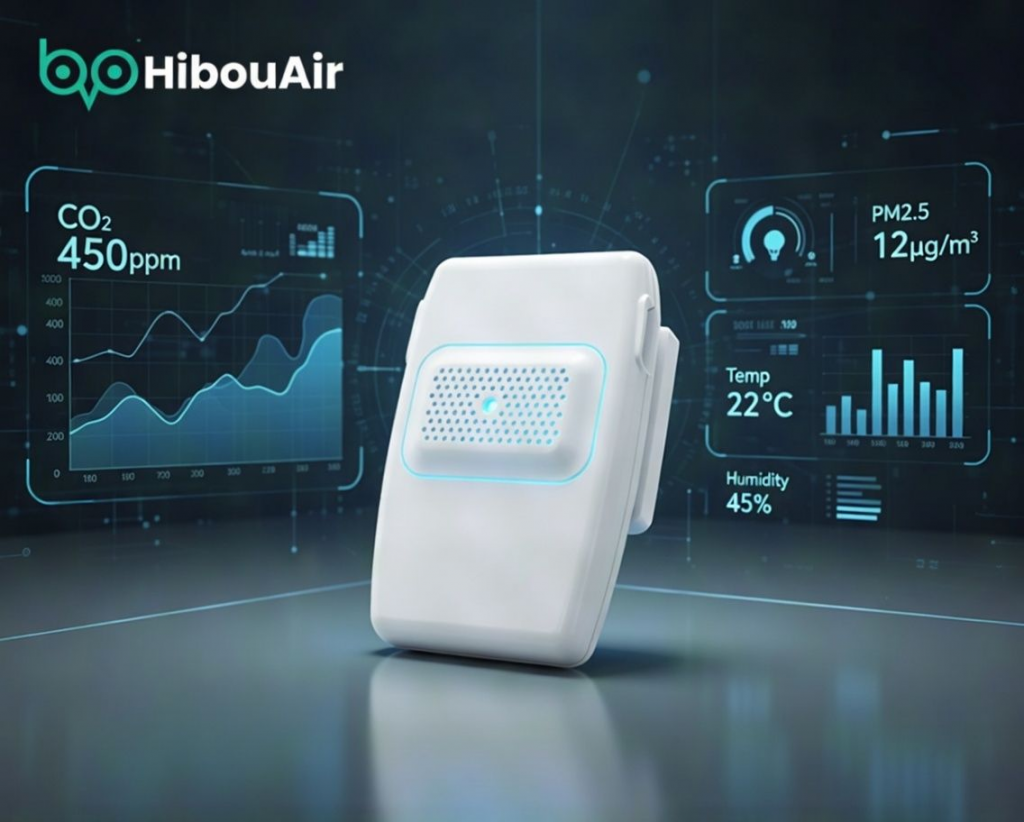
This simplicity makes HibouAir suitable not only for standalone monitoring but also as a core data component within intelligent building optimization systems.
The Impact
By combining their TCO optimization software with real-time PM measurements from HibouAir, Filtration Advice has created a solution that bridges engineering modeling and real environmental performance.
Facility managers and HVAC professionals can now make decisions based on measured particulate levels rather than assumptions. Filters are replaced at the right time, energy costs are better controlled, and sustainability goals are easier to achieve through reduced material waste and optimized operations.