
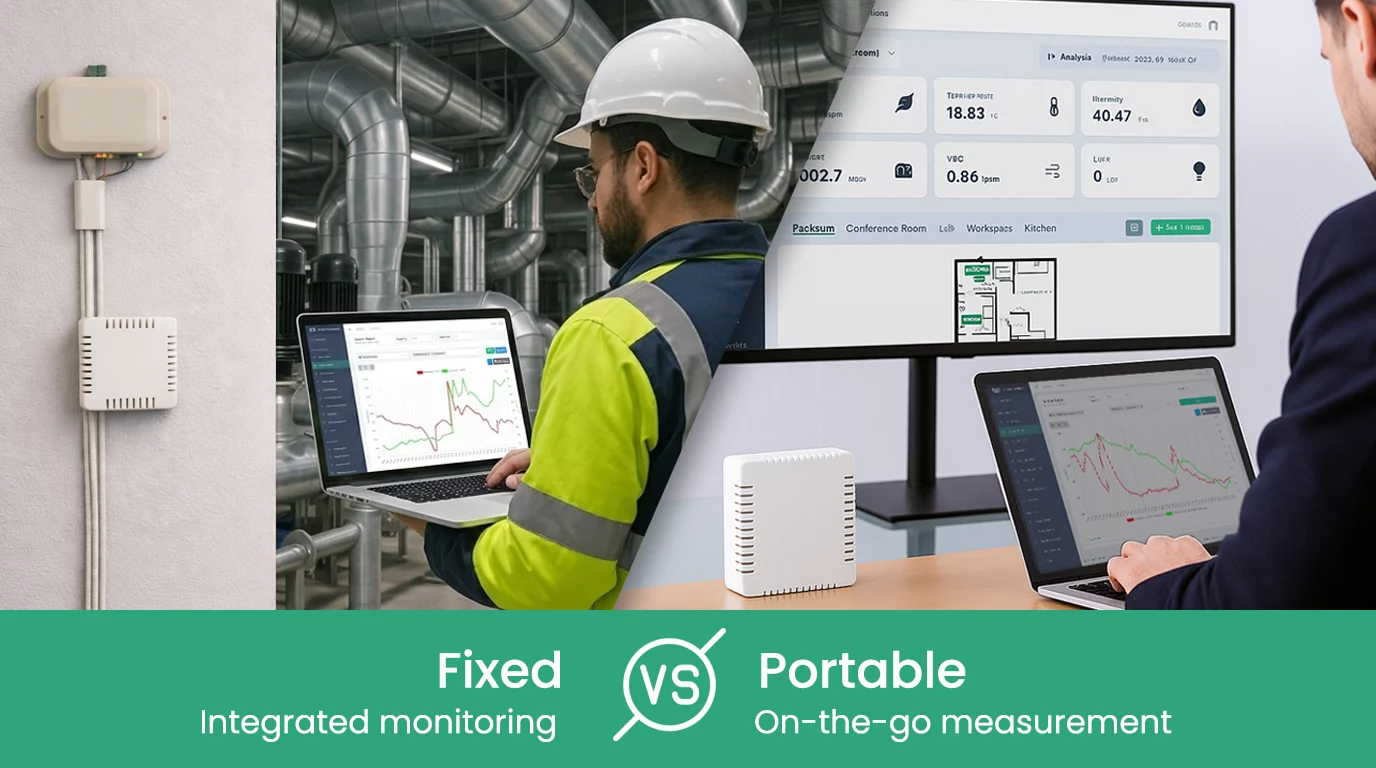
Fixed vs Portable Air Quality Monitors: Which One Do You Really Need?

Indoor air quality is no longer just a “nice to have.” It has become a critical part of how we design workplaces, manage buildings, and protect health. But once organizations decide to monitor air quality, a common question comes up: should you choose a fixed installation or a portable device?

The answer isn’t always straightforward. Both serve important roles, and in many cases, they complement each other rather than compete.

Understanding the Difference

A fixed air quality monitor is installed in a specific location and continuously tracks environmental conditions over time. It becomes part of the building’s infrastructure, often working alongside ventilation or HVAC systems.

A portable air quality monitor, on the other hand, is designed to move. It allows users to measure air quality in different locations, at different times, depending on the need.

At first glance, it may seem like a choice between permanent and temporary. In reality, it’s more about purpose.

Where Fixed Monitoring Makes Sense

Fixed monitoring is most valuable in environments where conditions need to be controlled consistently. Offices, schools, hospitals, and industrial facilities fall into this category. These spaces are occupied daily, and air quality directly impacts comfort, productivity, and health.

In such settings, real-time data becomes actionable. When integrated with systems like ventilation or HVAC, a fixed monitor can help enable demand-controlled ventilation. Instead of running systems at full capacity all the time, airflow can be adjusted based on actual conditions such as CO2 levels or particulate matter. This improves efficiency while maintaining a healthier indoor environment.
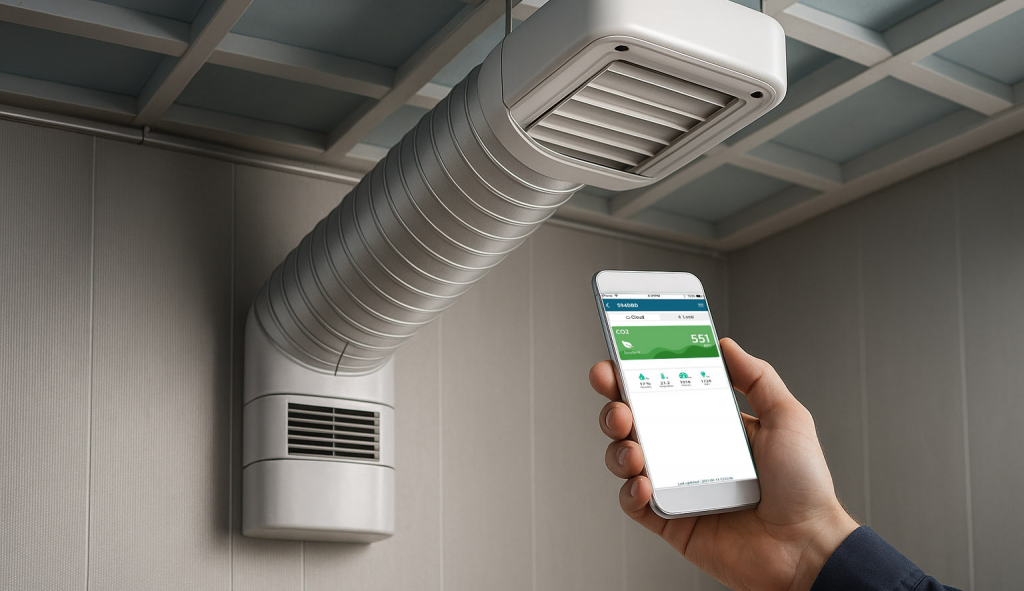
This is where solutions like ControlHub come into play. By connecting air quality data with building systems, it becomes possible to move from passive monitoring to active control. The result is not just awareness, but automation.

Fixed monitoring is also essential for compliance and reporting. Many organizations need to demonstrate that their indoor environment meets certain standards. Continuous data provides that proof.

Where Portable Monitoring Excels

Portable monitors serve a very different but equally important role. They are ideal for flexibility.

Air quality consultants, service providers, and researchers often need to assess multiple locations. A portable device allows them to carry out measurements in offices, warehouses, construction sites, or even outdoor environments without installing permanent equipment.

This is especially useful for troubleshooting. If there is a complaint about poor air quality in a specific room or building, a portable monitor can quickly be deployed to investigate.

Another key advantage is portable monitoring. Not every space needs a permanent installation. For example, during renovations, audits, or short-term projects, portable devices provide valuable insights without long-term commitment.

However, portability alone is not enough. One of the biggest challenges with many portable monitors is that they only show real-time data. You can see what is happening now, but you lose the context of what happened earlier.

This makes it difficult to identify patterns or root causes.

The Missing Piece: Data Over Time

Air quality is not static. It changes throughout the day based on occupancy, activities, ventilation, and external conditions. A single measurement rarely tells the full story.

Without historical data, it becomes almost impossible to answer important questions. Was the issue temporary or recurring? Did conditions worsen during peak hours? How effective were the corrective actions?

Many monitoring solutions fall short here. They provide instant readings but lack the ability to store and analyze data over time.

This is where a more complete approach becomes valuable.

Devices like HibouAir bridge this gap by combining portability with long-term data logging. Instead of relying solely on real-time readings, users can capture data over extended periods, even in locations without network connectivity. The information can later be retrieved and analyzed through mobile or desktop applications.

This approach is particularly useful for service providers who need to monitor a site for days or weeks and then generate a report. It removes the dependency on cloud connectivity while still enabling deep analysis.

Fixed and Portable: Not a Competition

It is tempting to think of fixed and portable monitors as alternatives, but in practice, they often work best together.

A fixed system provides continuous oversight and integration with building operations. A portable device adds flexibility, allowing users to investigate new areas, validate conditions, or conduct temporary studies.

For example, a facility manager might rely on fixed monitors for daily operations, while using a portable unit to investigate a specific complaint or to assess a new area before installing permanent equipment.

This combination creates a more complete monitoring strategy.

A Broader Range of Use Cases

Modern air quality monitoring is no longer limited to a single environment. From small offices to large industrial facilities, the requirements vary widely.

In offices and schools, the focus is often on comfort and productivity. In industrial environments, it may be about safety and compliance. In research or consulting, flexibility and data accuracy become critical.
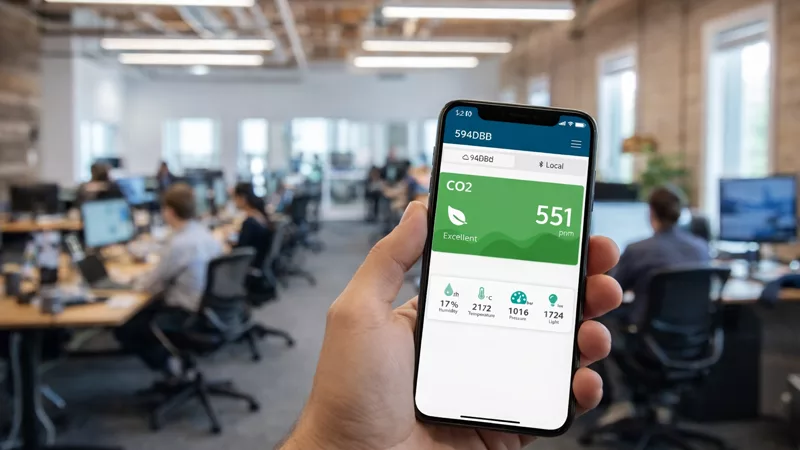
A versatile monitoring solution needs to adapt to all of these scenarios.

That means supporting both fixed and portable use cases, offering reliable data logging, and enabling analysis without unnecessary complexity.

Choosing between fixed and portable monitoring is less about picking one over the other and more about understanding your needs.

If you need continuous control and integration with building systems, fixed monitoring is essential. If you need flexibility and mobility, portable monitoring is the answer.

Share this post on :

Humidity and IAQ: Ideal Ranges, Mold Risk, and Comfort

Indoor air quality is often associated with pollutants like CO2, particulate matter, or VOCs. Yet humidity plays an equally important role, quietly influencing health, comfort, and even the condition of the building itself. When humidity drifts outside the ideal range, it can lead to discomfort, respiratory issues, and long-term structural problems such as mold growth.

Understanding how humidity behaves indoors and how to manage it effectively is essential for maintaining a healthy environment.

Humidity a key parameter Indoor Air Quality

Humidity refers to the amount of moisture present in the air. It directly affects how we feel and how our bodies respond to the environment. Air that is too dry can irritate the skin, eyes, and respiratory system, while overly humid air can feel heavy, uncomfortable, and difficult to breathe.

Beyond comfort, humidity also interacts with other air quality factors. High humidity can increase the presence of airborne pollutants by encouraging biological growth, while low humidity can allow particles and viruses to remain suspended in the air for longer periods.

This makes humidity a key parameter in any serious indoor air quality strategy, not something to be treated as secondary.

Ideal Indoor Humidity Range

For most indoor environments, the recommended relative humidity range is between 40% and 60%. Within this range, people tend to feel comfortable, and the risk of health issues and material damage is minimized.

When humidity falls below 40%, the air becomes dry. This can lead to irritation in the throat and nasal passages, increased susceptibility to infections, and static electricity buildup. On the other hand, when humidity rises above 60%, the environment becomes favorable for mold, dust mites, and bacteria.

Mold Risk and Long-Term Damage

One of the most serious consequences of high humidity is mold growth. Mold thrives in damp environments and can begin to develop when humidity levels remain elevated for extended periods, particularly above 60–65%.

Once established, mold spreads quickly across walls, ceilings, and hidden spaces such as behind furniture or inside ventilation systems. It not only damages materials but also releases spores into the air, which can trigger allergies, asthma, and other respiratory problems.

The challenge with mold is that it often develops unnoticed. By the time it becomes visible, the problem is usually already advanced. Preventing it requires early detection of moisture conditions rather than reacting after damage has occurred.

This is why having access to real-time humidity data through a device like HibouAir indoor air quality monitor can make a meaningful difference. It allows users to identify rising humidity trends before they turn into costly or harmful issues.

Comfort and Productivity

Humidity also has a strong influence on how comfortable a space feels. In offices, classrooms, and homes, poor humidity control can lead to fatigue, headaches, and reduced concentration.

High humidity can make a room feel warmer than it actually is, leading to overuse of air conditioning systems. Low humidity, on the other hand, can cause dryness that affects sleep quality and overall well-being.

Maintaining stable humidity levels contributes not only to physical comfort but also to productivity and performance. In environments where people spend long hours indoors, this becomes especially important.

The Challenge of Manual Control

Traditionally, humidity management relies on manual adjustments opening windows, adjusting HVAC settings, or using standalone humidifiers and dehumidifiers. While these methods can help, they are often reactive and inconsistent.

Indoor conditions can change quickly due to occupancy, weather, or building usage. Without continuous feedback, it is difficult to maintain optimal humidity levels throughout the day.

This is where monitoring systems and automation begin to play a more significant role.

Smarter Monitoring and Control

Modern indoor environments benefit from systems that combine real-time monitoring with intelligent control. Instead of relying on occasional checks, continuous data provides a clear picture of how humidity behaves over time.

A solution such as HibouAir indoor air quality monitor offers ongoing insight into humidity alongside other air quality parameters. This broader context helps users understand whether changes in humidity are linked to occupancy, ventilation, or external conditions.

Taking it a step further, automation can help maintain stability without constant manual intervention. With a control solution like HibouAir ControlHub, humidity thresholds can be used to trigger ventilation systems, fans, or dehumidifiers automatically. When levels rise beyond a defined point, the system responds immediately. As conditions return to normal, it adjusts accordingly.

This approach not only improves air quality but also reduces energy waste by ensuring systems operate only when needed.

Humidity is not an isolated factor. It works together with temperature, ventilation, and pollutant levels to shape the overall indoor environment. Ignoring it can lead to hidden risks, while managing it effectively can significantly improve both health and comfort.

Share this post on :

IAQ in Public Transport Hubs (Airports & Stations): Monitoring Strategies for Large Indoor Spaces

Public transport hubs such as airports, metro stations, and railway terminals are among the most demanding indoor environments to manage. These spaces operate continuously, handle large and fluctuating crowds, and rely heavily on mechanical ventilation systems to maintain comfort and safety. While temperature control is often prioritized, indoor air quality (IAQ) is just as critical – yet still under-monitored in many facilities.

As expectations around health, sustainability, and passenger experience continue to evolve, adopting a structured approach to air quality monitoring in large indoor spaces is becoming essential.

The Challenge of Air Quality in Large Indoor Spaces

Transport hubs present a unique combination of challenges that make IAQ management more complex than in typical buildings. Passenger density can change rapidly, causing spikes in CO2 levels during peak hours. Pollutants such as particulate matter enter from outdoor air, vehicle emissions, and operational activities. In underground or enclosed stations, these pollutants can accumulate quickly due to limited natural ventilation.

The scale of these environments adds another layer of difficulty. A single airport terminal or railway station can contain multiple zones – each with different usage patterns and air quality conditions. Applying a uniform ventilation strategy across all areas often leads to inefficiencies, where some zones are over-ventilated while others remain under-served.

Without accurate, real-time data, facility operators are left relying on assumptions rather than measurable insights.

Why Monitoring IAQ Matters in Transport Hubs

Air quality directly influences both human health and overall experience. Elevated CO2 levels can cause fatigue, reduced concentration, and discomfort – especially in crowded waiting areas. Fine particles and airborne pollutants pose longer-term health risks, particularly for staff who spend extended hours in these environments.

From an operational standpoint, IAQ is also becoming part of how facilities are perceived. Clean, well-ventilated spaces contribute to a sense of safety and quality. Additionally, regulatory frameworks and sustainability initiatives increasingly require measurable environmental performance.

Monitoring IAQ provides the visibility needed to maintain these standards while supporting long-term operational goals.

A Smarter Monitoring Approach for Large Spaces

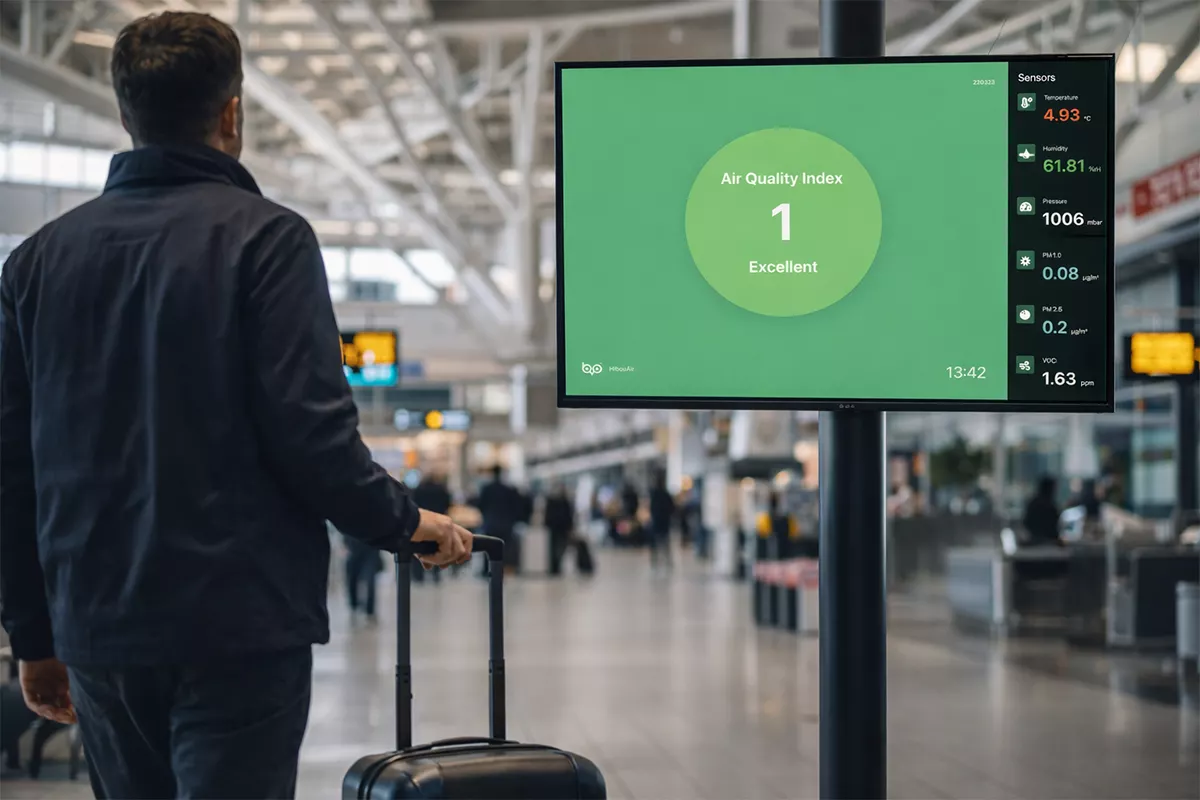
Modern IAQ monitoring strategies focus on distributing sensors across different zones to capture variations in environmental conditions. By measuring parameters such as CO2, particulate matter, VOCs, temperature, and humidity, operators gain a detailed understanding of how air quality changes throughout the facility.

Solutions like HibouAir are designed to support this approach by offering flexible deployment options. Sensors can be installed in key areas such as waiting zones, corridors, and high-traffic sections, providing real-time data that reflects actual usage patterns. This distributed model allows facility managers to identify problem areas quickly and respond with targeted actions rather than blanket adjustments.

The ability to scale across multiple zones without major infrastructure changes makes such solutions particularly suitable for large transport hubs.

The Role of Cloud-Based Monitoring

In large, multi-zone environments, centralized visibility is essential. Cloud-based platforms enable facility teams to monitor all deployed sensors from a single interface, regardless of location.

With a cloud-enabled setup using systems like HibouAir, operators can access real-time data, review historical trends, and receive alerts when air quality thresholds are exceeded. This level of visibility is especially valuable in transport hubs where operations teams may oversee multiple terminals or stations simultaneously.

Remote monitoring also supports better decision-making over time. By analyzing trends – such as peak occupancy periods or recurring pollution patterns – facility managers can refine their ventilation strategies to balance air quality with energy efficiency.

Integrating IAQ Data with Existing HVAC Systems

Monitoring alone is only part of the solution. The real impact comes when air quality data is used to influence how building systems operate.

In many transport hubs, HVAC systems are already connected to Building Management Systems (BMS) that support industrial communication protocols such as Modbus. Instead of replacing these systems, modern solutions can integrate alongside them.

By combining air quality sensors with a control interface such as HibouAir ControlHub, real-time environmental data can be translated into actionable control signals. This allows ventilation systems to respond dynamically – for example, increasing airflow when CO2 levels rise in crowded areas and reducing it when conditions stabilize.

This approach enables facilities to move from static operation to adaptive control without requiring a complete system overhaul.

From Monitoring to Automation: The Role of ControlHub

A key advantage of integrating systems like HibouAir ControlHub is the ability to create a closed-loop control environment. In this setup, sensors continuously monitor air quality, while the control unit evaluates the data and adjusts HVAC components accordingly.

ControlHub can communicate with ventilation systems using various methods, including analog signals, relay outputs, and industrial protocols such as Modbus over RS485. This flexibility makes it suitable for integration with existing infrastructure in transport hubs, where different systems may already be in place.

By using HibouAir ControlHub alongside sensor data, facilities can automate responses to changing conditions, ensuring that air quality is maintained consistently while avoiding unnecessary energy use.

Air quality in public transport hubs is no longer a secondary concern. As these spaces continue to grow in scale and complexity, traditional ventilation strategies are no longer sufficient on their own.

Share this post on :

Contact Us

Call us or simply fill out the form below, and one of our representatives will get back to you as soon as possible.