
Why Indoor Air Quality Deserves Global Health Priority – and How HibouAir Helps

Now a days the invisible threat of indoor air pollution is becoming one of the most urgent yet underestimated public health challenges. According to the World Economic Forum, indoor air pollution contributes to an alarming 3.2 million premature deaths annually. As people spend 60–90% of their lives indoors, the air inside our homes, schools, and workplaces can often be more polluted than the air outside.

From cooking and cleaning to simply heating our living spaces, everyday activities release airborne pollutants like particulate matter, volatile organic compounds (VOCs), nitrogen dioxide, and greenhouse gases. These pollutants can accumulate rapidly in tightly sealed or poorly ventilated buildings — even in modern, energy-efficient structures — and affect not just physical health, but also mental well-being, cognitive performance, and sleep quality.

A Global Problem in Every Household

Whether in a rural cottage or an urban high-rise, indoor air pollution affects communities across the globe. The sources may differ — from solid fuel stoves in the Global South to gas cooking appliances in Western countries — but the outcome is the same: poor indoor air that poses serious health risks.

Unfortunately, while outdoor air pollution often takes center stage in regulatory discussions, indoor air quality remains dangerously overlooked. The result? Vulnerable populations — including children, the elderly, and low-income families — are left unprotected in the very spaces they rely on for safety.

What Can Be Done?

The World Economic Forum highlights several strategies to tackle this growing crisis:

Affordable Indoor Air Monitoring: High-cost monitoring equipment has been a barrier for many households. However, new generations of sensors and IoT devices are making air quality data more accessible.

Clean Energy Adoption: Transitioning to cleaner cooking and heating methods, such as electric alternatives, is essential but requires financial and infrastructural support.

Infrastructure Improvements: Poor ventilation is a major contributor to indoor pollution buildup. Better building design and policy-driven standards are crucial to creating healthier environments.

Policy Equality for Indoor Air: Indoor air deserves the same regulatory focus as outdoor pollution if we truly want to protect public health.

How HibouAir Supports the Shift Toward Cleaner Indoor Environments

At HibouAir, we believe that clean air is a human right — not just a luxury. Our smart air quality monitoring system is designed to make indoor air visible, measurable, and actionable. Equipped with advanced sensors, HibouAir monitors key parameters such as CO2 levels, Particulate Matter (PM1.0, PM2.5, PM10), VOC (Volatile Organic Compounds), Temperature and Humidity, Pressure and Noise (in select models).

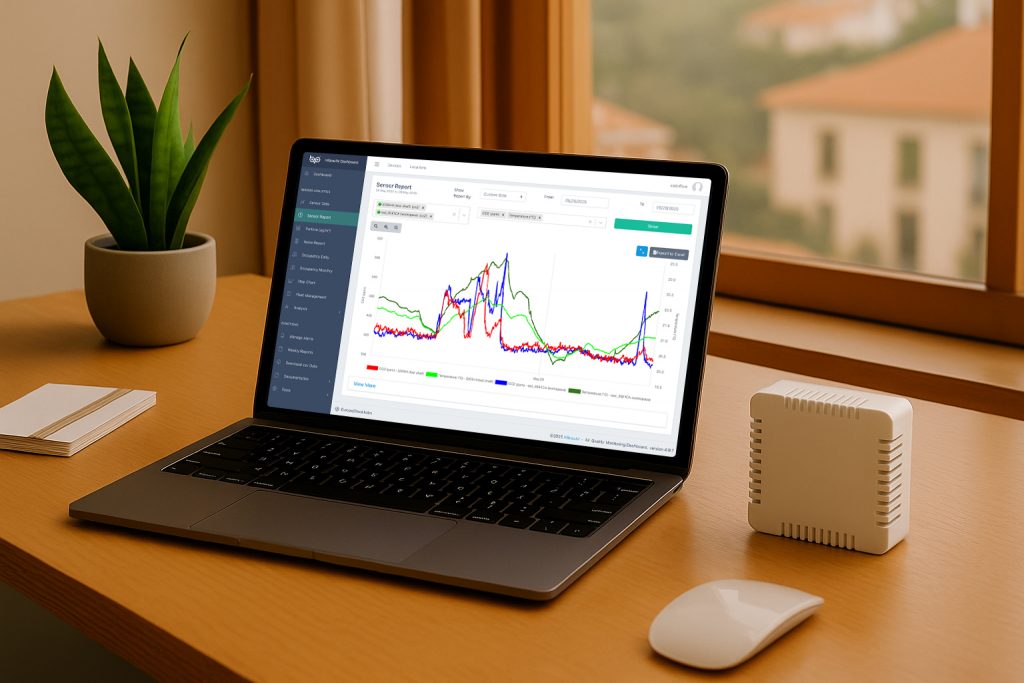
Data from HibouAir is instantly accessible through a mobile app, desktop application, and our secure online dashboard, allowing users to view real-time readings, track historical trends, and make informed decisions to improve their indoor environment. All collected data is stored securely using Amazon cloud services with certified data protection practices.

Whether you’re a homeowner, office manager, school administrator, or healthcare provider, HibouAir empowers you to take control of the air you breathe — without requiring technical expertise.

The Path Forward

Indoor air quality should not be an afterthought. As highlighted by the World Economic Forum, it must be part of a coordinated, global health strategy. Solutions like HibouAir are a crucial step in this journey, helping bridge the gap between awareness and action by making clean indoor air achievable for everyone.

Share this post on :

Why Air Quality Monitoring Matters in India – And How HibouAir Can Help

India, with its vibrant cities and cultural diversity, faces a pressing challenge—air pollution. According to multiple air quality reports, some of the world’s most polluted cities are in India, and yet the focus is often only on outdoor air. What many overlook is that indoor air, where people spend nearly 90% of their time, can be just as harmful. In offices, classrooms, homes, and factories across the country, people are unknowingly breathing in air that affects their health, productivity, and overall well-being.

The Importance of Indoor Air Quality Monitoring

The importance of monitoring indoor air quality (IAQ) cannot be overstated, especially in a country like India where a combination of dense urban environments, limited ventilation, and cultural practices contribute to elevated levels of indoor pollutants. Whether it’s the use of incense, cooking fumes, poor HVAC systems, or external air seeping indoors, the impact on human health is significant. Without proper monitoring, it’s impossible to understand the quality of the air we’re breathing or take steps to improve it. Poor IAQ can lead to fatigue, frequent headaches, respiratory problems, and a decrease in cognitive performance—all of which are particularly concerning for students, employees, and vulnerable populations.

Why Air Quality Monitoring Is Crucial in India

Monitoring indoor air becomes even more critical in India during specific times of the year. One such example is the festive season, especially around Diwali, when the widespread use of firecrackers and increased vehicle emissions result in a sharp drop in air quality.

Combined with the onset of winter and agricultural stubble burning in northern states, pollution levels often reach dangerous thresholds. In such conditions, staying indoors may seem safer, but without clean indoor air, the risks persist. This is where real-time air quality monitoring plays a life-saving role by helping people understand what they’re exposed to and when to take precautionary measures like improving ventilation or using air purifiers.

HibouAir – A Smart Way to Monitor Air Quality

HibouAir offers a smart, scalable solution for understanding and improving indoor air quality. Designed in Sweden, this compact and reliable device is now making its way into the Indian market to address the growing need for real-time air monitoring. What sets HibouAir apart is its comprehensive range of built-in environmental sensors. Every HibouAir device—whether it’s the CO2, PM, or DUO variant—measures core parameters such as temperature, humidity, air pressure, and volatile organic compounds (VOCs), providing a solid foundation for indoor air assessment. The CO2 variant includes an additional carbon dioxide sensor, which is crucial for evaluating ventilation and occupancy levels. The PM variant is equipped with sensors that detect particulate matter—PM1.0, PM2.5, and PM10—commonly linked to urban dust, smoke, and industrial pollution. For the most complete picture, the DUO version combines both CO₂ and PM sensors alongside the other environmental metrics, offering an all-in-one solution for detailed air quality analysis.

Use Cases Across Indian Sectors

The applications for HibouAir in India are broad and practical. In office spaces, the device helps maintain a healthy work environment by monitoring CO2 buildup, which can cause drowsiness and reduce productivity if left unchecked. Educational institutions benefit by ensuring that classrooms and study areas remain safe for children, who are particularly sensitive to air quality. In industries and manufacturing units, monitoring dust and volatile compounds ensures worker safety and helps comply with occupational health regulations. Even at home, where families seek comfort and safety, HibouAir provides peace of mind by highlighting hidden air quality issues that could otherwise go unnoticed.

HibouAir Dashboard – Real-time Insights, Anytime

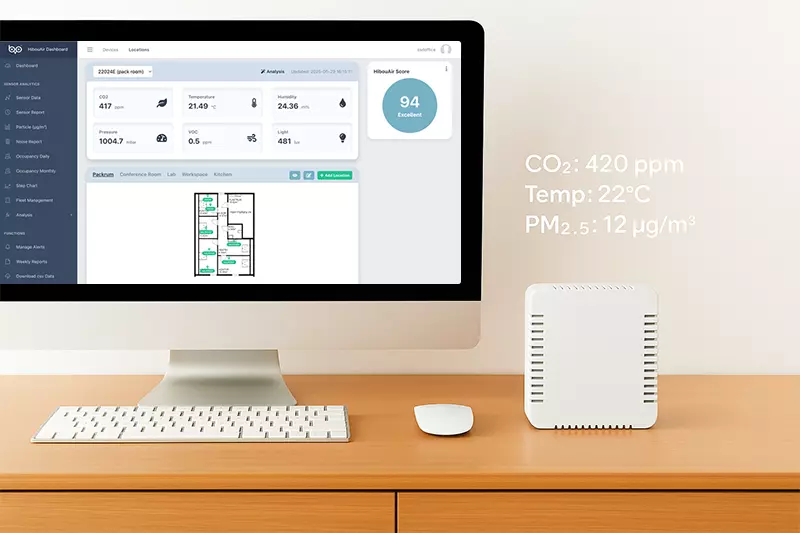
To complement its hardware, HibouAir provides a complete digital ecosystem that enables users to access, visualize, and act on their air quality data in real time. At the core is the HibouAir smart analytical dashboard, a powerful web-based platform that allows individuals and facility managers to monitor live sensor readings, analyze historical trends, and generate detailed reports. The dashboard also supports smart alerting, enabling users to set custom thresholds and receive notifications whenever air quality drops below acceptable levels. With multi-device management, it’s easy to oversee conditions across multiple rooms, floors, or even buildings—making it a perfect solution for educational institutions, corporate offices, and industrial facilities.

In addition to the web dashboard, HibouAir also offers a mobile application, designed to deliver real-time air quality data directly to your smartphone. Whether you’re at your desk or on the go, the app keeps you informed with instant access to live metrics and alert notifications, helping you respond to air quality changes as they happen. For users who prefer desktop integration, HibouAir provides a desktop application that brings air quality monitoring to your computer with the same intuitive interface and access to advanced data tools. Together, these platforms offer a seamless, multi-device experience—ensuring that you’re always connected to the air you breathe.

If you’re a school administrator in Bengaluru, a facility manager in Mumbai, or a homeowner in Delhi, HibouAir can make a measurable difference in how you understand and improve your indoor environment. With localized support, user-friendly tools, and powerful features, HibouAir is ready to help India breathe better—one room at a time.

Share this post on :

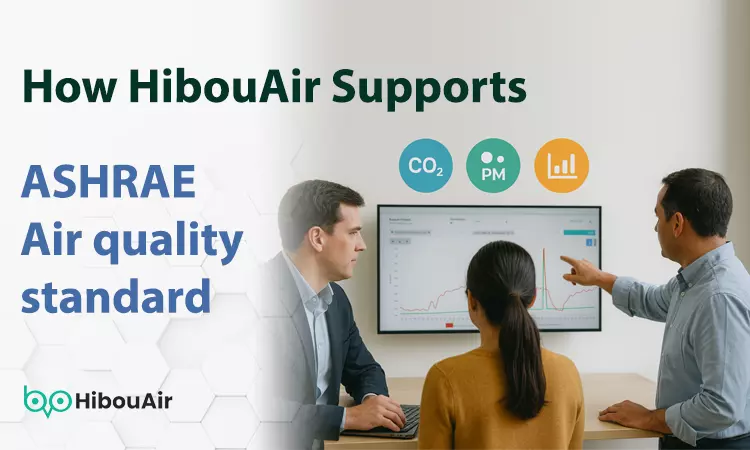
How HibouAir Supports ASHRAE Indoor Air Quality Standards

Ensuring healthy indoor environments has become a global priority, driven by growing awareness of air quality’s impact on human health and productivity. One of the most influential organizations in this space is the American Society of Heating, Refrigerating, and Air-Conditioning Engineers (ASHRAE), whose standards for indoor air quality (IAQ) have become the benchmark for ventilation design and acceptable indoor conditions worldwide.

Understanding ASHRAE Standards 62.1 and 62.2

ASHRAE Standard 62.1, titled Ventilation for Acceptable Indoor Air Quality, defines the minimum ventilation rates and other measures necessary to ensure healthy indoor air in commercial and institutional buildings. It addresses critical indoor contaminants such as carbon dioxide (CO₂), volatile organic compounds (VOCs), and fine particulate matter (PM2.5 and PM10). The standard provides both prescriptive ventilation rates and performance-based requirements to help building operators achieve acceptable indoor air. In the residential sector, ASHRAE Standard 62.2 focuses on ventilation and IAQ for homes and low-rise residential buildings, setting out similar goals for occupant health and comfort. These standards are referenced widely in building codes across North America and beyond, shaping the ventilation and air quality requirements of millions of buildings. Source: ASHRAE Standard 62.1-2022, ASHRAE Standard 62.2-2022

How HibouAir Enhances ASHRAE Compliance

At HibouAir, our indoor air quality monitors are designed to help facility managers, building owners, and homeowners align with these ASHRAE standards. By providing real-time measurements of critical indoor air pollutants—including CO₂, particulate matter, temperature, humidity, air pressure, and VOCs—HibouAir makes it easier to verify whether a building meets acceptable IAQ targets. While ASHRAE standards establish the guidelines, continuous monitoring is the key to maintaining them over time. HibouAir’s connected sensors deliver accurate, consistent data, empowering operators to react swiftly when levels deviate from recommended thresholds.

Data-Driven Ventilation and Energy Efficiency

Another area where HibouAir supports ASHRAE compliance is by enabling data-driven ventilation strategies. Since ASHRAE 62.1 and 62.2 emphasize both ventilation rates and contaminant limits, real-time monitoring allows facilities to optimize HVAC systems, avoiding both under-ventilation, which compromises health, and over-ventilation, which wastes energy. By leveraging HibouAir data, building managers can tune ventilation systems more precisely, satisfying both ASHRAE guidelines and energy efficiency objectives. Studies have shown that dynamic ventilation controls based on IAQ monitoring can reduce energy consumption while maintaining air quality Source: ASHRAE Journal, March 2022.

Indoor Air Quality and ESG Reporting

In the era of ESG (Environmental, Social, and Governance) reporting, indoor air quality also connects to broader sustainability and health goals. Many organizations now publicly commit to meeting standards like ASHRAE 62.1 as part of their ESG programs. HibouAir provides the data transparency needed for such reporting, allowing organizations to demonstrate their commitment to healthy, safe, and sustainable indoor spaces.

Preparing for the Future of Indoor Air Quality

As building standards evolve, continuous, verifiable air quality monitoring will become even more critical. The HibouAir indoor air quality monitor stands ready to support that mission by offering advanced sensing technologies that align with global best practices, including ASHRAE’s respected standards. By integrating HibouAir into your building or facility, you can take proactive steps toward healthier, more productive environments while remaining confident that your indoor air strategies support ASHRAE’s trusted benchmarks.

For those seeking further details, you can consult the full ASHRAE standards documentation available directly from ASHRAE at ashrae.org.

Share this post on :

Join Us at Sensors Converge 2025 – Showcasing Smart Air Quality Solutions with HibouAir

We’re excited to announce that HibouAir will be exhibiting at Sensors Converge 2025, taking place from June 24–26 at the Santa Clara Convention Center, California. This premier event is North America’s largest electronics show, bringing together the latest in sensing, processing, and connectivity technologies.

Meet Our Expert: Awanish Mishra – Smart Sensor Solutions Partner, USA

Visit us at the event and connect with Awanish Mishra, who will be available on-site to discuss how HibouAir’s cutting-edge air quality monitoring solutions are driving innovation across:

  • Smart Cities
  • Smart Healthcare
  • Smart Industrial Environments
  • AI & Data Centers
  • General AI Applications

Whether you’re developing sustainable urban infrastructure or enhancing air quality insights in industrial or healthcare settings, our plug-and-play sensor technology is designed to support real-time environmental intelligence with precision and simplicity.

Why You Shouldn’t Miss This

Sensors Converge 2025 is set to be a powerhouse of innovation, bringing together over 5,000 attendees, 250+ exhibitors, and 100+ expert speakers for three days of hands-on learning, networking, and discovery. Held at the Santa Clara Convention Center from June 24–26, 2025, the event offers an unmatched opportunity to connect with a global community of engineers, technologists, and industry leaders who are shaping the future of smarter, cleaner, and more connected systems.

What is HibouAir

HibouAir is a smart sensor platform that delivers reliable, real-time insights into environmental conditions, helping organizations build safer, healthier, and more efficient spaces. Designed with simplicity and scalability in mind, HibouAir’s plug-and-play air quality monitoring devices measure key indoor and outdoor parameters such as particulate matter (PM2.5, PM10), CO₂ levels, temperature, humidity, pressure, and volatile organic compounds (VOCs). These smart sensors provide accurate data without the need for complex calibration or infrastructure, making them ideal for deployment in smart cities, healthcare facilities, industrial environments, educational institutions, and data centers. HibouAir’s solutions enable data-driven decisions, support regulatory compliance, and empower businesses and governments to monitor and improve air quality for a healthier tomorrow.

Share this post on :

Introducing HibouAir DUO – Air Quality Monitor with combined CO2 & Particulate Matter (PM)

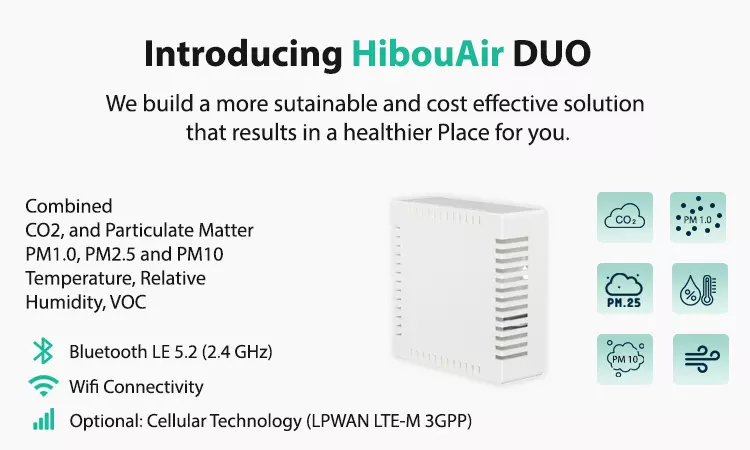
Smart Sensor Devices is proud to introduce the latest addition to our air quality monitoring portfolio – the HibouAir DUO SSD002/3. This new smart device combines CO2 and PM (Particulate Matter) sensors into one compact unit, designed to deliver accurate, real-time monitoring of indoor air quality in homes, offices, schools, healthcare facilities, and industrial spaces.

With increasing awareness around indoor air health and stricter compliance standards globally, the HibouAir DUO provides a powerful, easy-to-deploy solution for anyone seeking visibility into environmental quality. It supports multiple connectivity options—Bluetooth Low Energy (BLE), Wi-Fi, and Cellular (LPWAN LTE-M 3GPP)—making it versatile for fixed, mobile, and remote applications.

Key Advantages of HibouAir DUO

Monitoring indoor air quality is most effective when both CO2 and particulate matter (PM1.0, PM2.5, PM10) are measured together. The HibouAir DUO captures these pollutants in real time, providing users with a comprehensive view of air quality that would otherwise require two separate devices. This dual-sensor integration reduces hardware costs, simplifies installation, and improves decision-making for ventilation, air filtration, and overall indoor safety.

It also monitors VOC, temperature, and humidity, making it an all-in-one solution for indoor environmental intelligence.

Connectivity that Matches Your Use Case

The HibouAir DUO is available in three models to suit your connectivity needs:

  • HibouAir DUO BLE – Bluetooth-only version for local monitoring. Requires a gateway to push data to the cloud. Ideal for custom setups or integration with local systems.
  • HibouAir DUO Wi-Fi – Combines BLE and Wi-Fi for direct cloud connection. No gateway needed. Ideal for smart buildings and fixed indoor environments.
  • HibouAir DUO Cellular – BLE + Cellular (LTE-M) version for fully independent deployments. Sends data to the cloud from any location—no Wi-Fi required. Perfect for remote or mobile use cases.

All models support cloud integration with an analytics dashboard, enabling users to monitor data trends, receive alerts, and make informed environmental decisions.

Designed for Smarter Indoor Spaces

The HibouAir DUO is engineered to adapt to a wide range of indoor environments. From classrooms and offices to gyms, kitchens, and labs—this smart device helps maintain healthier air quality, supporting better focus, safety, and productivity.

Its compact form factor (88 × 88 × 33 mm, 130g), external power adapter for continuous operation, and modern design make it easy to deploy and operate without disrupting your space.

Learn More or Purchase

Visit the product page to explore full specifications, download datasheets, and place an order. For volume pricing or integration inquiries, please contact our sales team at sales@hibouair.com.

Share this post on :

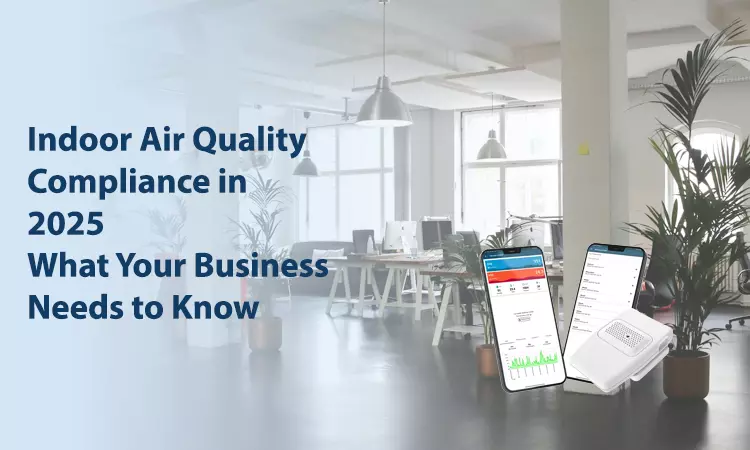
Indoor Air Quality Compliance in 2025: What Your Business Needs to Know

As the global landscape of workplace health and environmental responsibility continues to evolve, indoor air quality (IAQ) has taken center stage in 2025. What was once viewed as a comfort feature is now increasingly recognized as a critical factor in occupational safety, regulatory compliance, and environmental, social, and governance (ESG) reporting.

For facility managers, auditors, ESG officers, and business leaders, the question is no longer whether to monitor indoor air quality—but how to do so effectively, consistently, and in alignment with the growing wave of compliance requirements emerging across regions.

Why Indoor Air Quality is a Compliance Issue in 2025

Indoor environments can harbor a wide range of pollutants including carbon dioxide (CO2), fine particulate matter (PM1.0, PM2.5 and PM10), volatile organic compounds (VOCs), and excess humidity. These pollutants are directly linked to health outcomes such as headaches, respiratory irritation, fatigue, and in some cases, long-term conditions such as asthma or heart disease.

According to the World Health Organization’s 2021 air quality guidelines, exposure to PM2.5 should not exceed 5 µg/m³ on average per year, and even short-term exposure should be limited to 15 µg/m³ over 24 hours. Although these guidelines are not enforceable by themselves, they increasingly inform national and corporate indoor air standards.

In 2023, the International Labour Organization (ILO) emphasized in its occupational health report that clean indoor air is a “non-negotiable” element of safe workplaces. IAQ has become part of the broader conversation around environmental safety, employee well-being, and workplace compliance.

The Regulatory Landscape for IAQ in 2025

Governments and local authorities across the globe are tightening air quality regulations, particularly for buildings where people spend long hours—such as offices, schools, healthcare facilities, and commercial spaces.

European Union

The European Union has taken a progressive stance on indoor environmental quality. Updates to the Energy Performance of Buildings Directive (EPBD) in 2023 explicitly called for the integration of indoor air quality sensors in new and renovated buildings. Member states are now expected to promote smart monitoring infrastructure, including for CO2 and PM levels, as part of national building codes.

Additionally, France mandates CO2 monitoring in all classrooms, while Germany has incorporated IAQ thresholds into its broader environmental safety regulations. These country-specific laws are converging with broader EU-level mandates, making IAQ an integral part of the compliance checklist in Europe.

References:

United States

While the United States lacks a centralized federal standard for indoor air quality (IAQ), OSHA clearly recognizes its importance. According to OSHA, poor IAQ can lead to headaches, fatigue, respiratory irritation, and long-term health risks like asthma or cancer. Factors such as poor ventilation, humidity, mold, and airborne chemicals are common contributors.

Although no specific IAQ standard exists, OSHA’s General Duty Clause (Section 5(a)(1)) requires employers to maintain workplaces free from recognized hazards. This clause has been used to address air-related issues, particularly when poor ventilation or exposure to contaminants poses a risk.

Some states, including California and New Jersey, have introduced their own IAQ regulations, reflecting a broader trend toward air quality accountability in schools and public buildings. For businesses and audit professionals, monitoring IAQ is increasingly essential to meet both legal expectations and stakeholder demands.

The EPA Indoor Environments Division has expanded its IAQ Tools for Schools program into broader public sector awareness initiatives. Additionally, states like California have introduced IAQ performance metrics into their energy and public health codes, including CO₂ limits and mandatory ventilation rates.

References:

Sweden and Nordic Regions

Countries like Sweden, Denmark, and Norway are well known for their strong emphasis on indoor environmental standards. The Swedish Work Environment Authority (Arbetsmiljöverket) outlines clear requirements for indoor air quality in schools, offices, and healthcare facilities. These include minimum air exchange rates, temperature limits, and thresholds for airborne particulates.

References:

ESG and IAQ: Reporting for Responsibility and Risk

Beyond legal compliance, indoor air quality is becoming an important metric within the ESG frameworks that companies use to assess and communicate environmental and social performance. Investors, insurers, and regulators now expect a higher level of transparency regarding how organizations maintain safe and healthy indoor spaces.

Frameworks such as the Sustainability Accounting Standards Board (SASB), Global Reporting Initiative (GRI), and Task Force on Climate-Related Financial Disclosures (TCFD) do not mandate specific air quality thresholds, but they encourage reporting on environmental factors, especially those that impact employee well-being and operational risk.

In high-risk industries—such as manufacturing, logistics, education, and healthcare—indoor air metrics like CO2 concentration, PM2.5 levels, and VOC exposure are increasingly considered material issues in ESG audits.

References:

How HibouAir Aligns with Compliance and ESG Strategy

The HibouAir Standalone Air Quality Monitoring Device offers a compelling solution for organizations that need reliable indoor air data without complex installation or external infrastructure.

Designed for plug-and-play use, the device captures key indoor air parameters including CO2, PM1.0, PM2.5, PM10, VOCs, temperature, humidity, pressure, light, and noise. Data is stored locally and can be accessed through a mobile or desktop application using Bluetooth—making it ideal for auditing professionals, facility managers, and ESG reporting teams.

Because HibouAir’s Standalone solution operates independently of cloud networks or Wi-Fi, it fits especially well into privacy-sensitive environments such as schools, government buildings, or confidential workplaces. The ability to export time-stamped data enables users to generate compliant, audit-ready reports with minimal technical overhead.

For more on device specs, you can refer to:

Taking the First Steps Toward Compliance

For organizations that have not yet integrated IAQ monitoring into their compliance or ESG strategy, 2025 is the time to act. The steps are straightforward:

Begin by conducting a baseline audit using portable tools like HibouAir. Once data is collected, analyze it against recommended exposure limits from WHO, national workplace safety authorities, or your own internal standards. Based on the results, adjust HVAC schedules, investigate sources of pollution, and document improvements. Integrate this process into quarterly ESG and operational health reports to demonstrate your commitment to employee well-being and environmental transparency.

With regulations tightening and stakeholder expectations rising, proactive air quality management offers more than risk reduction—it builds trust, enhances resilience, and positions your organization as a forward-thinking leader in indoor environmental health.

Share this post on :

Enhance Your Environmental Audit Reports with Data from HibouAir Standalone solution

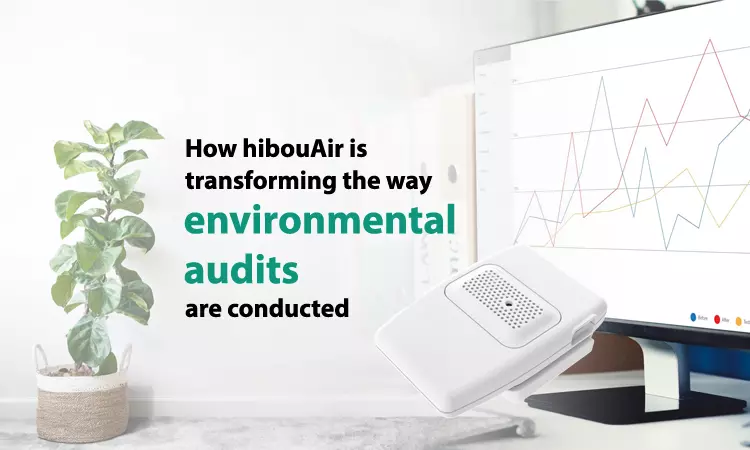
Environmental audits have become an essential part of ensuring healthy indoor environments in workplaces, educational institutions, public buildings, and homes. Professionals in this field are increasingly expected to deliver not only observations but also accurate, actionable data. If you’re offering indoor environmental audits, including the HibouAir Standalone Air Quality Monitoring Device into your toolkit can transform your service delivery.

HibouAir’s Role in Modernizing Indoor Air Quality Audits

Traditional air quality audits often rely on bulky equipment, wired networks, and time-consuming calibration. The HibouAir Standalone Solution changes that by offering an easy-to-deploy, plug-and-play monitoring device that begins logging environmental data the moment it’s powered on. It operates completely independently of Wi-Fi or cloud systems, making it ideal for temporary audits, sensitive environments, or locations with limited infrastructure.

With HibouAir, environmental consultants can offer rapid assessments across multiple spaces—without compromising the accuracy or reliability of their data.

What Is the HibouAir Standalone Solution?

The HibouAir Standalone Solution is a compact, multi-sensor indoor air quality monitoring device. It is equipped with sensors that track key environmental parameters such as CO2, PM1.0, PM2.5, PM10, VOCs, temperature, humidity, ambient pressure, ambient light, and noise.

What sets this solution apart is its ability to store up to 7 days of historical data locally on the device. This data can be accessed using a mobile phone. The standalone solution is entirely self-contained—requiring no network, no installation, and no calibration—making it ideal for audit professionals who need speed, flexibility, and privacy in their work.

Features Built for Professional Audit Workflows

HibouAir is designed with audit workflows in mind. Professionals often move between locations, assessing multiple rooms or buildings within a short timeframe. With HibouAir, you can simply place the device at the target location and let it collect data over several hours or days.

Once the monitoring period is complete, the data can be retrieved wirelessly. The mobile app allows you to view time-series charts, detect patterns, and export data in formats suitable for reports and compliance documentation. Whether you’re addressing poor ventilation, high CO2 levels, or elevated particulate matter, the data offers concrete evidence that supports your professional recommendations.

In addition to air pollutants, HibouAir also captures ambient noise levels, providing insights into sound disturbances that often go unnoticed. For instance, elevated decibel readings may indicate background noise caused by an HVAC system, nearby elevator shaft, or external traffic filtering through poor insulation. By identifying when and where noise peaks occur, auditors can help clients recognize its source and impact—whether it’s employee distraction, reduced comfort, or acoustic compliance issues. This data supports better acoustic planning and more informed environmental health strategies.

Use Case: A Short-Term Audit in an Office Environment

Imagine you’ve been commissioned to assess the indoor air quality of a small office space. Instead of setting up complex equipment or relying on third-party cloud services, you bring a HibouAir Standalone device, place it on a desk, and let it run for three days.

Upon your return, you retrieve the data and find that CO2 levels spike after lunch, likely due to inadequate ventilation. You also notice VOC levels rising in the late afternoon, possibly due to office cleaning supplies or equipment usage. With this information, you prepare a report for your client that includes actionable insights: improved ventilation scheduling, adjustment of cleaning routines, or even layout changes.

Your audit is complete, accurate, and entirely powered by a single compact device.

Adding Value to Your Audit Services

Including HibouAir into your audits enables you to provide more than observational assessments—it allows you to deliver quantified evidence. This positions you not just as an inspector, but as a trusted advisor equipped with modern, professional tools.

For clients in healthcare, education, real estate, or corporate environments, air quality insights are increasingly valuable for regulatory compliance, employee well-being, and sustainability reporting. With HibouAir, you can meet those needs while offering new service tiers—such as short-term audits, seasonal rechecks, or continuous monitoring subscriptions.

Stay ahead of the curve. Make your audits smarter, faster, and backed by reliable data—with HibouAir.

Share this post on :

Why Ignoring Office Air Quality Could Be Costing Your Business More Than You Think

In the modern workplace, the focus is often on productivity, efficiency, and innovation. However, an equally critical yet sometimes overlooked factor is indoor air quality. The air you breathe in the office is not just a matter of comfort but a crucial component of overall business health. Neglecting office air quality can pose significant risks to your business, from decreased employee productivity to increased health-related expenses. Here’s why investing in air quality monitor, like HibouAir, is essential for your business’s success.

The Impact of Poor Air Quality on Employee Health

Increased Sick Leave: Poor air quality is directly linked to respiratory problems, allergies, and chronic illnesses. High levels of particulate matter (PM) such as PM 1.0, PM 2.5, and PM 10, can lead to conditions like asthma and bronchitis. Employees suffering from such ailments are more likely to take sick leave, which can disrupt workflow and reduce productivity.

Reduced Cognitive Function: Studies have shown that elevated CO2 levels and poor ventilation can impair cognitive functions. This includes decreased concentration, slower decision-making, and reduced problem-solving abilities. In a workplace setting, this can translate to lower efficiency and creativity, impacting the overall performance of the team.

Long-Term Health Risks: Prolonged exposure to poor air quality can lead to serious health conditions such as cardiovascular diseases and even cancer. The presence of volatile organic compounds (VOCs) and elevated levels of noise pollution can contribute to chronic stress and long-term health issues, leading to increased healthcare costs and insurance claims.

The Financial Implications of Neglecting Air Quality

  1. Increased Operational Costs: Addressing health issues arising from poor air quality often means increased healthcare costs and insurance premiums. This not only affects the health of employees but also puts a financial strain on the company. Investing in air quality monitoring and improvement can be more cost-effective in the long run.
  2. Decreased Productivity: The impact of poor air quality on cognitive function and overall health leads to reduced productivity. Employees who are unwell or struggling with concentration are less likely to perform at their best, which can affect project timelines, customer satisfaction, and ultimately, the bottom line.
  3. Potential Legal and Compliance Issues: In some jurisdictions, there are regulations and standards for indoor air quality. Neglecting these standards can result in legal issues and fines. Ensuring compliance not only avoids these risks but also demonstrates a commitment to employee well-being and corporate responsibility.
  4. Increased Productivity: On the flip side, investing in a high-quality air monitoring system and improving office air quality can lead to significant gains in productivity. A healthier work environment contributes to enhanced cognitive function, better concentration, and overall improved employee performance. Employees in a well-ventilated, comfortable environment are likely to be more engaged, creative, and efficient. This boost in productivity can translate into faster project completion, higher quality work, and better overall business outcomes.

How Can Businesses Make Offices Healthier for Employees?

Creating a healthier office environment is not just about enhancing comfort; it’s a strategic move to boost productivity, employee well-being, and overall business success. Here are several actionable strategies businesses can implement to make their offices healthier for employees:

  1. Invest in Air Quality Monitoring Monitoring and improving air quality is foundational to a healthy office environment. Implementing a sophisticated air quality monitor like HibouAir provides real-time data on key environmental parameters such as CO2 levels, particulate matter (PM), volatile organic compounds (VOCs), and more. By regularly assessing these metrics, businesses can address issues like poor ventilation or high pollutant levels before they affect employees’ health.
  2. Enhance Ventilation: Proper ventilation is crucial for maintaining good indoor air quality. Ensure that your office has an effective ventilation system that introduces fresh air and removes stale air. Regular maintenance and integration of HibouAir to HVAC systems can also help in preventing the buildup of dust and mold, which can negatively impact air quality.
  3. Control Temperature and Humidity: Maintaining an optimal temperature and humidity level is essential for comfort and health. Extreme temperatures and high humidity can lead to discomfort and health issues. Integrating HibouAir with thermostats and humidifiers/dehumidifiers to regulate these factors, ensuring a consistent and comfortable environment.
  4. Reduce Noise Pollution: Excessive noise can be a significant source of stress and distraction. Implementing sound-absorbing materials like acoustic panels, carpets, and upholstered furniture can help mitigate noise levels. Creating quiet zones or designated areas for focused work with the help of HibouAir noise monitoring can also help employees concentrate better and reduce auditory stress.
  5. Educate Employees on Health and Safety: Providing training and resources on health and safety practices can empower employees to take proactive steps in maintaining a healthy work environment. Educate staff on the importance of air quality, ergonomics, and stress management techniques. Regular workshops and informational sessions can keep health and safety top of mind.

Enhancing Office Air Quality with HibouAir

HibouAir offers a range of features to help businesses monitor and improve air quality, ensuring a healthier work environment:

  1. Comprehensive Monitoring : HibouAir provides advanced monitoring of several key environmental parameters:
    • CO2 Levels: Ensures proper ventilation by tracking CO2 concentrations.
    • Particulate Matter (PM): Measures PM 1.0, PM 2.5, and PM 10 to detect harmful airborne particles.
    • VOCs: Detects volatile organic compounds that can impact health.
    • Ambient Conditions: Monitors pressure, temperature, humidity, and light to maintain optimal comfort.
    • Noise Levels: Assesses noise pollution to reduce stress and improve focus.
  2. Seamless Integration with Mobile and Desktop Applications: To make air quality data easily accessible and actionable, HibouAir integrates with both mobile and desktop applications:
    • HibouAir Mobile Application: Available on iOS and Android, this app allows you to monitor air quality in real-time from anywhere ensuring you’re always informed and can take timely action.
    • HibouAir Desktop Application: For a more comprehensive view, the desktop air quality monitoring solution provides a detailed interface to monitor and manage air quality. This is particularly useful for facilities managers and IT staff who need to track multiple sensors or analyze data over time.
  3. Smart Analytical Dashboard: HibouAir’s smart analytical dashboard is a powerful tool for data analysis and decision-making:
    • Data Visualization: The dashboard provides clear and interactive visualizations of air quality data, helping you understand trends and patterns at a glance.
    • Historical Data Analysis: Access historical data to identify long-term trends and recurring issues, enabling more informed decisions about ventilation and air quality improvements.
    • Customizable Alerts: Set up customized alerts and notifications based on specific thresholds or conditions, allowing for proactive management of air quality issues.
    • Actionable Insights: The dashboard offers actionable insights and recommendations based on the data collected, helping you make data-driven decisions to improve office air quality.
  4. Easy Public Data Access: For organizations that prioritize transparency, HibouAir provides options for exporting and sharing air quality data with the public or within your organization. This can be particularly useful for:
    • Employee Awareness: Sharing real-time air quality data with employees can increase awareness and trust, demonstrating your commitment to their health and well-being.
    • Regulatory Compliance: Publicly accessible data can help ensure compliance with environmental regulations and standards, making it easier to demonstrate adherence to health and safety guidelines.

Neglecting office air quality is not just a matter of comfort—it’s a significant risk to your business’s health, productivity, and financial stability. Investing in air quality monitoring with HibouAir can prevent these risks by providing you with real-time data to maintain a healthy and productive work environment. By proactively managing air quality, you safeguard the well-being of your employees, enhance productivity, and ultimately protect your business’s success.

For more information on how HibouAir can transform your office environment, contact us today. Ensure your business thrives with clean, healthy air.

Share this post on :

Choosing the Right HibouAir Solution for Your Air Quality Monitoring Needs

Air quality is no longer a concern reserved just for environmental agencies or government bodies. Today, organizations, businesses, schools, healthcare facilities, and even individual homeowners are realizing the importance of tracking indoor and outdoor air conditions to ensure health, productivity, and regulatory compliance. HibouAir provides a range of solutions designed to meet the diverse needs of these users, but knowing which solution is right for your situation is crucial to maximizing value and effectiveness.

Understanding the HibouAir Solution Lineup

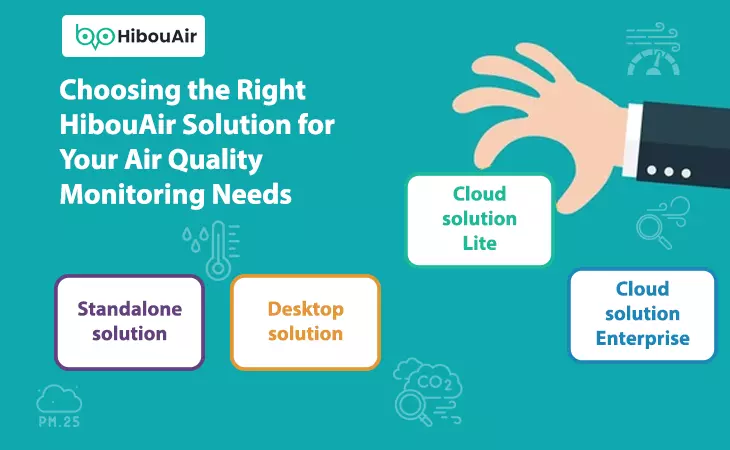
HibouAir offers four primary solution types:

While all of them revolve around the same core promise — providing accurate, real-time & historial air quality data — they differ in how data is collected, transmitted, and accessed, as well as in the scale they are designed to serve.

Cloud Solution Lite

The Cloud Solution Lite is designed for users who want a straightforward, plug-and-play setup. The device itself comes equipped with a built-in Wi-Fi chip, allowing it to connect directly to the cloud without the need for any intermediate gateway. This makes it ideal for small to medium-sized businesses, schools, or even individual users who need access to the powerful HibouAir dashboard with analytics, historical data, and visualizations, but without the complexity or cost of managing additional hardware. For example, a small office building looking to monitor CO2, particulate matter, temperature, and humidity in a few rooms can install a few Wi-Fi-enabled HibouAir devices and immediately start collecting and analyzing data via the cloud platform. The simplicity and low upfront cost make this a popular choice for decentralized or ad-hoc deployments.

Cloud Solution Enterprise

The Cloud Solution Enterprise, on the other hand, is purpose-built for large organizations with multiple devices spread across wider facilities. In this setup, the devices communicate over Bluetooth Low Energy (BLE) to a centralized BLE gateway. This gateway then securely sends aggregated data to the cloud. The key advantage here is scalability: one gateway can manage several devices, reducing Wi-Fi congestion and simplifying device management. This is particularly useful in environments like hospitals, large corporate offices, manufacturing plants, or multi-building campuses where dozens or even hundreds of sensors need to be monitored in a unified, manageable way. IT teams appreciate the reduced networking complexity, while facility managers benefit from centralized monitoring, alerting, and reporting across all locations.

Desktop Solution

For those who require a non-cloud approach, the Desktop Solution offers an excellent alternative. This solution involves connecting the HibouAir device directly to a local PC or Mac, typically via USB or Bluetooth, where dedicated software provides live readings and local data storage. This approach is favored by research labs, universities, or organizations with strict data privacy requirements that prohibit cloud storage. It allows users to carry out experiments, track local air quality trends, or archive data for later analysis entirely within their own controlled IT environment.

Standalone Solution

Finally, the Standalone Solution is designed for portable, in-field, or minimalistic use cases. Here, the HibouAir device operates independently, sometimes with a local display or via a Bluetooth-connected mobile app, without requiring a constant connection to a PC or cloud service. This is ideal for quick air quality checks, on-site assessments, or environments where internet or computer access is not available. Think of environmental consultants visiting remote locations, construction site managers checking dust and particulate levels, or field researchers needing rapid on-the-spot measurements.

Matching Solutions to Use Cases

Let’s look at some detailed use cases to illustrate how these solutions serve different needs.

A small co-working space that wants to assure tenants of healthy indoor air can install a few Cloud Solution Lite devices.

With the built-in Wi-Fi, the devices can send data directly to the HibouAir cloud dashboard, allowing managers to monitor CO2 levels, humidity, and temperature, and take action if thresholds are exceeded. There is no need to purchase or configure extra hardware, and the intuitive dashboard makes it easy for non-technical staff to interpret the data.

In contrast, a large multinational corporation with multiple office floors across several buildings would benefit more from the Cloud Solution Enterprise.

By using BLE gateways, the IT team can manage hundreds of HibouAir sensors without overwhelming the corporate Wi-Fi infrastructure. The enterprise dashboard provides role-based access, automated reports, and integration with existing building management systems, helping the facilities team maintain optimal indoor conditions, improve employee well-being, and meet regulatory standards across all locations.

A university research lab conducting experiments on indoor air pollutants might opt for the Desktop Solution.

By keeping data entirely local, they can ensure compliance with strict research data protocols, avoid any external data transmission, and customize their analysis with specialized desktop tools. The direct connection to a PC also allows for precise time-stamped recording of events during controlled experiments.

Lastly, an environmental consultant working on a government air quality assessment project in a rural area might prefer the Standalone Solution.

Without relying on cloud connectivity or local infrastructure, the consultant can carry the device on-site, take measurements, and later transfer data via Bluetooth to a mobile app or laptop. This level of flexibility is crucial in environments where mobility and simplicity are top priorities.

Final Thoughts

Choosing the right HibouAir solution depends on understanding the scale, infrastructure, and specific needs of your organization or project. Whether you need the simplicity of a Wi-Fi-connected Lite solution, the scalability of an enterprise BLE gateway setup, the control of a desktop-only system, or the flexibility of a portable standalone device, HibouAir offers a tailored approach to fit your requirements. By selecting the right solution, you ensure not only accurate air quality data collection but also efficient management, meaningful insights, and long-term value. If you’re unsure which option is best for you, reach out to the HibouAir team for personalized advice and recommendations tailored to your unique needs.

Share this post on :

Why Air Quality Monitoring is Essential for Hotels: Enhancing Guest Comfort and Operational Efficiency

Air quality plays a crucial role in ensuring the comfort, well-being, and overall experience of guests at hotels. With growing awareness about health and wellness, more travelers now expect hotels to prioritize indoor air quality, especially in shared spaces like lobbies, conference rooms, gyms, and dining areas.

Why Is Air Quality Monitoring Essential at Hotels?

Hotels are high-traffic environments with a variety of indoor spaces that need proper air quality management. Poor air quality can negatively impact guest comfort and staff productivity, resulting in poor reviews and decreased customer retention.

Guests expect a clean and refreshing atmosphere during their stay, and hotels must meet these expectations to maintain high service standards. Moreover, in facilities like gyms, pools, spas, and children’s playrooms, maintaining optimal air quality becomes even more critical. These environments can often suffer from high levels of humidity, dust, CO2, and volatile organic compounds (VOCs), which may pose health risks if not managed properly.

Who Is at Risk?

Certain guests and staff members may be more susceptible to poor air quality. These include:

Guests using the gym: Intense physical activity increases respiration, meaning individuals are more likely to inhale pollutants if the air quality is poor. Proper ventilation and air monitoring in the gym are essential.

Children in playrooms: Children are more vulnerable to air pollutants like VOCs and particulate matter (PM), making it vital to maintain clean air in their play spaces.

Spa and pool areas: These areas often suffer from high humidity, which can lead to mold growth, negatively impacting air quality. Monitoring these environments can help reduce health risks for guests and staff.

Dining areas and conference rooms: Crowded spaces with poor ventilation may result in high levels of CO2, which can cause discomfort, drowsiness, and reduced productivity for guests attending business meetings or conferences.

Benefits of Air Quality Monitoring for Hotels

Improved Guest Experience

When guests feel comfortable and breathe easy in your hotel, they are more likely to leave positive reviews and return in the future. High air quality contributes to better sleep, improved energy levels, and overall well-being, making their stay more enjoyable.

Increased Operating Efficiency

By monitoring air quality in real time, hotels can optimize HVAC systems, ensuring they operate efficiently and only when needed. This reduces energy consumption and can lead to significant cost savings over time. A smart air quality monitoring system like HibouAir allows hotels to maintain optimal conditions without wasting resources.

Staff Productivity and Well-Being

Poor air quality doesn’t just affect guests; it can also impact staff productivity. Maintaining clean, fresh air in back-office spaces can boost staff morale, reduce sick days, and increase overall efficiency.

Enhanced Reputation and Marketability

As health and wellness become increasingly important to travelers, hotels that prioritize air quality can market themselves as a healthier and more responsible choice. This can set you apart from competitors and attract guests who value a cleaner and safer environment during their stay.

HibouAir: A Smart Solution for Hotels

HibouAir offers an advanced, multi-sensor air quality monitoring system that continuously tracks essential environmental parameters, including CO2, particulate matter (PM1.0, PM2.5, PM10), ambient temperature, pressure, humidity, VOCs, noise, and light. The device is simple to install and provides real-time air quality data through a mobile application, giving hotel staff instant insights into the air quality of different rooms and spaces.

With the HibouAir cloud dashboard, hotel management can view historical data, analyze trends, and receive real-time alerts for any changes in air quality. This allows for proactive management, ensuring that air quality stays within optimal levels. The data can be displayed on various charts, making it easy to identify problem areas and implement solutions quickly.

Key Benefits of HibouAir for Hotels:

Real-Time Data: Access live air quality information from any location through the mobile app or cloud dashboard.

Smart Alerts: Receive alerts for poor air quality, allowing you to act immediately.

Detailed Analytics: Use the cloud dashboard to analyze air quality trends and optimize your HVAC systems accordingly.

User-Friendly: HibouAir is easy to set up and use, with plug-and-play functionality and no need for complex installations.

Versatility: Suitable for any indoor space, whether it’s the lobby, gym, spa, or children’s playroom.

Investing in air quality monitoring with HibouAir can help hotels provide a healthier, more comfortable environment for both guests and staff. By improving air quality, hotels can enhance guest satisfaction, increase operational efficiency, and elevate their marketability as a wellness-conscious brand. Whether it’s ensuring cleaner air in the gym, dining areas, or conference rooms, HibouAir offers a smart, efficient solution that can take your hotel’s guest experience to the next level.

Share this post on :

Contact Us

Call us or simply fill out the form below, and one of our representatives will get back to you as soon as possible.