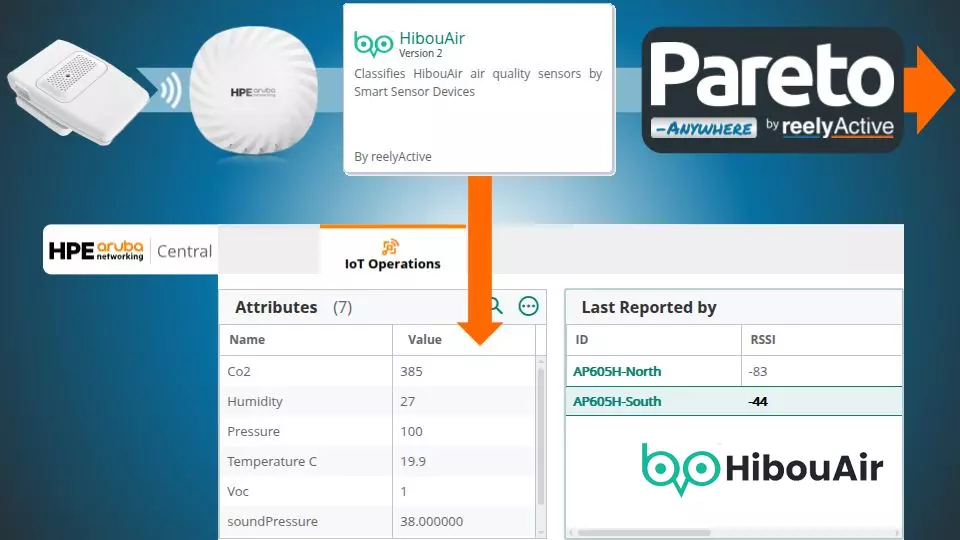
HibouAir Now Seamlessly Integrates with HPE Aruba IoT Operations – Powered by Pareto Anywhere from reelyActive

At HibouAir, we believe that reliable, real-time air quality data should be easy to access—no matter what network infrastructure you’re using. That’s why we’re thrilled to announce that HibouAir can now be effortlessly integrated into HPE Aruba’s IoT Operations platform, making our wireless environmental sensors more accessible than ever for enterprise users.

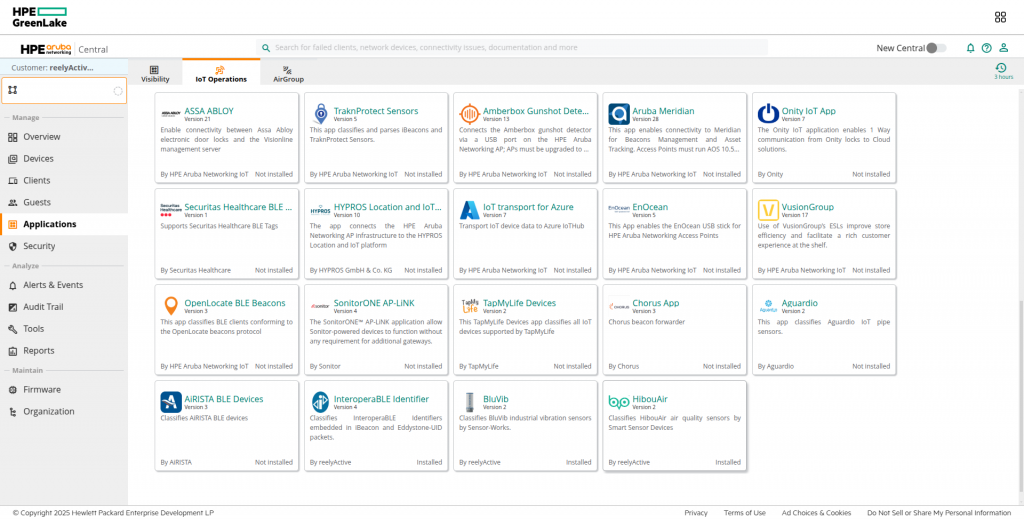
And we couldn’t have done it without the incredible team at reelyActive, who developed and maintain the official HibouAir classifier app for Aruba Central.

A Big Step for Compatibility

Thanks to this integration, any organization using HPE Aruba access points (APs) running AOS 10 can now discover HibouAir sensors on their network—with no additional gateways or complex setup.

By simply selecting the HibouAir classifier app in Aruba Central, IT teams can:

  • Instantly recognize and categorize HibouAir sensors
  • View live air quality readings in the Aruba Central dashboard
  • Forward real-time sensor data to a wide range of platforms using Aruba’s IoT Transport feature

This makes it easier than ever to measure and test indoor air quality, track environmental metrics like CO₂ and PM2.5, and make informed decisions—all using your existing network infrastructure.

Why It Matters

Traditionally, integrating non-IP IoT devices (like Bluetooth sensors) into enterprise systems required dedicated gateways or vendor-specific platforms. This often limited flexibility, increased costs, and created silos in data collection.

With this new classifier app developed by reelyActive, those barriers are removed. Now, HibouAir sensors can “speak the same language” as the enterprise IT infrastructure, bringing new levels of visibility and control to IT teams and facility managers.

Powered by Open-Source Innovation

Another exciting aspect of this integration is the optional connection to Pareto Anywhere, reelyActive’s open-source middleware. With IoT Transport options like WebSockets, sensor data can be forwarded from Aruba Central to Pareto Anywhere—either on-premises or in the cloud—where it can be processed, visualized, and integrated into custom dashboards or other enterprise tools.

This flexibility means you’re not locked into any one vendor or platform, allowing you to choose the setup that works best for your organization.

One Network, Endless Possibilities

Whether you’re managing a school, office, healthcare facility, or industrial site, this new integration allows you to use the existing Wi-Fi infrastructure to start collecting and acting on real-time air quality data with minimal effort.

Ready to Try It?

If you’re already using Aruba Central and have access points running AOS 10, you can find the HibouAir classifier app in the IoT Operations apps list. Once selected, your HibouAir sensors will be automatically recognized, and their data will appear in the Aruba Central interface.

Need help getting started? Feel free to explore the integration guide on reelyActive’s website for more information.

About HibouAir

HibouAir is a compact, wireless air quality monitoring solution designed to make indoor spaces healthier and smarter. With real-time environmental data, plug-and-play setup, and strong interoperability, HibouAir is trusted across industries to improve well-being and sustainability.

About reelyActive

reelyActive builds open, interoperable solutions for real-time physical context. As an HPE Aruba Networking technology partner, they are pioneering new ways to connect the physical world to digital systems—enabling a truly open and intelligent IoT ecosystem.

Share this post on :

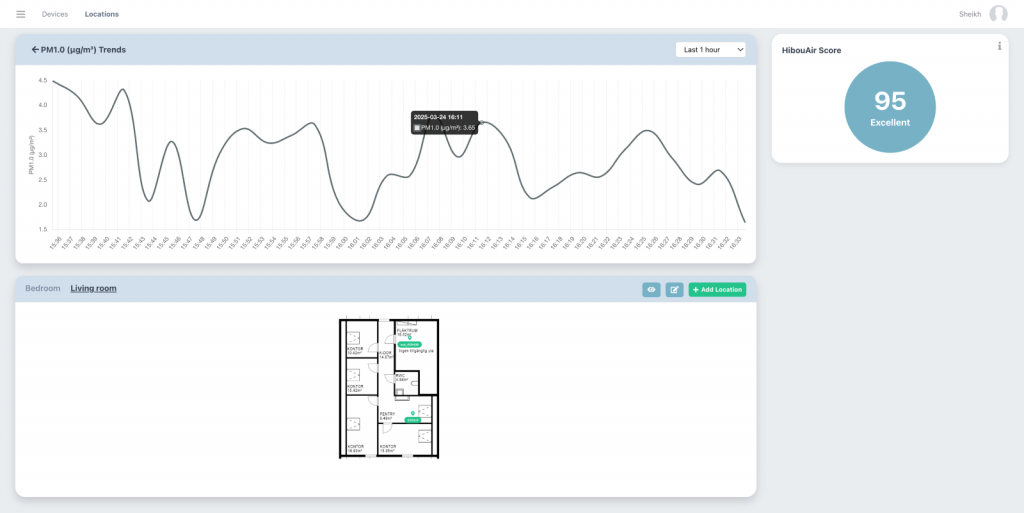
HibouAir Dashboard Now Includes AI-Powered Air Quality Analysis and Simplified Location Management 

At HibouAir, our mission has always been to make air quality monitoring simple, smart, and actionable. Today, we’re excited to introduce two powerful new features to the HibouAir Dashboard that take this mission even further: 

 – AI-Based Air Quality Analysis 

 – Enhanced Location Management 

These updates are designed to help users—regardless of their technical background—better understand their indoor air environment and take quick, informed action. 

Understand Your Air Instantly with AI Analysis 

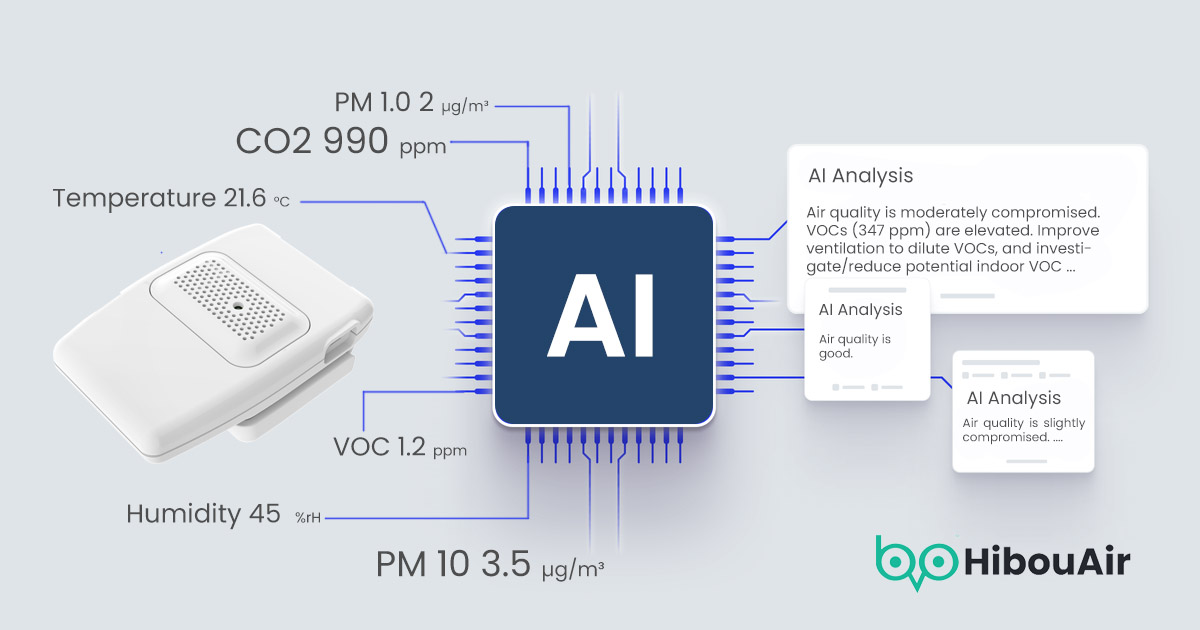
Interpreting air quality metrics like CO₂, VOCs, PM2.5, and humidity can be confusing without a background in environmental science. With our new AI Analysis feature, those complex numbers are translated into clear, human-friendly insights. 

Whether you’re a school administrator, office manager, or simply a concerned parent—our AI assistant helps you answer: 

  • “How good is the air quality right now?” 
  • “Which parameter is problematic?” 
  • “What action should I take?” 

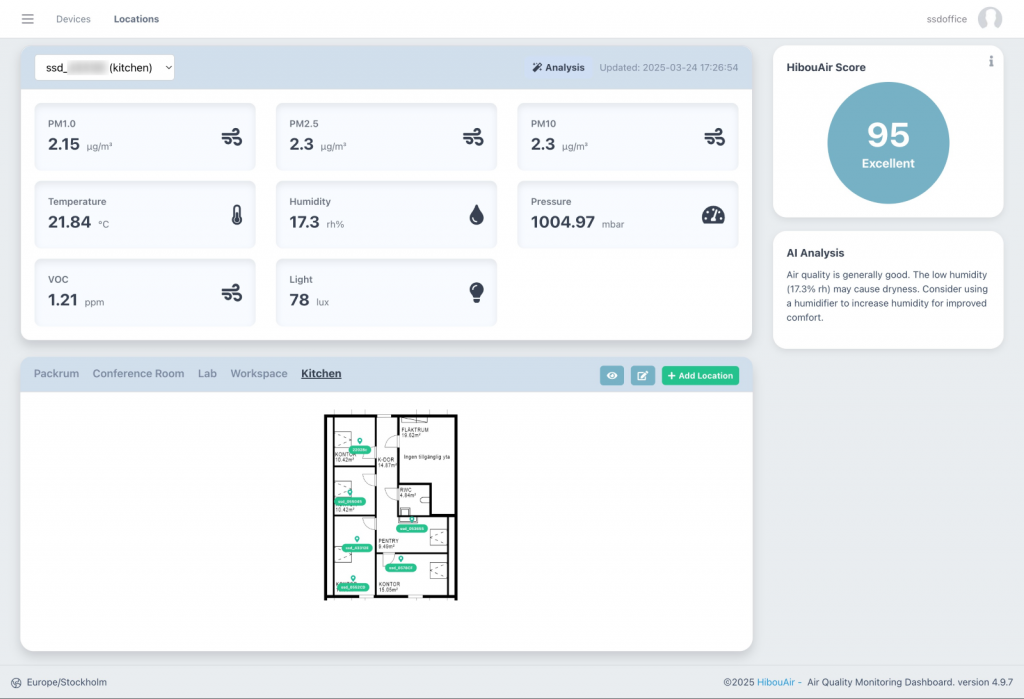
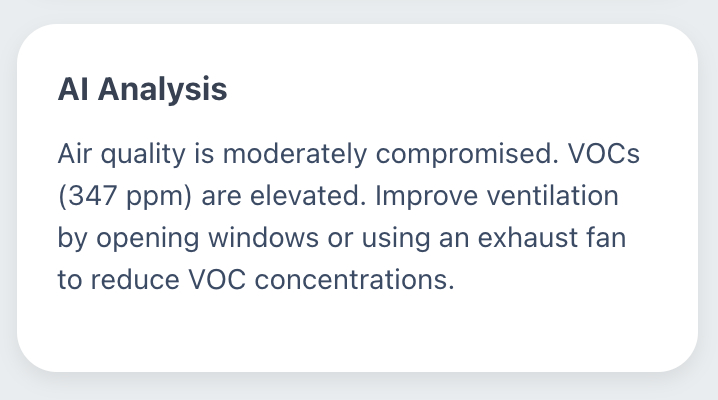
The AI analyzes the latest readings from your HibouAir device and instantly provides a brief summary of air quality conditions, highlighting only the problematic parameters and offering concise, actionable recommendations—like improving ventilation or identifying potential VOC sources. 

Simplified Location & Device Management 

As the number of devices and rooms grows, so does the need for efficient navigation. That’s why we’ve introduced a redesigned Location Management system that allows you to view and manage your air quality devices more effectively. 

Now, you can: 

  • Group devices by location so it’s easy to monitor entire floors, buildings, or campuses at a glance. Whether it’s a school, office, or factory, this helps organize your data meaningfully. 
  • Switch between rooms effortlessly with just a click. The new layout keeps room-level data accessible without overwhelming you. 
  • Access all air quality metrics in one centralized view, eliminating the need to jump between screens. Every reading, every device, every room—all in one place. 

This means less time managing and more time making decisions. 

Air quality isn’t just about data—it directly impacts health, cognitive performance, and productivity. However, without the right tools, interpreting environmental metrics can be overwhelming. 

That’s why these new features matter. 

With AI-driven analysis, users no longer need to guess what numbers like 419 ppm CO₂ or 347 VOC mean. Instead, the system provides a clear, quick assessment and advice—making air quality actionable. 

The new Location view gives users the power to manage multiple spaces with ease, ensuring faster identification of air quality issues across buildings, and better decision-making at scale. Whether you’re a facilities manager overseeing dozens of rooms, or a business leader monitoring employee well-being—this new experience simplifies how you engage with your environment. 

Try It Now 

Login to your HibouAir Dashboard today to experience the AI-powered insights and improved location management system. See the air you breathe—clearly, intelligently, and all in one place. 

Share this post on :

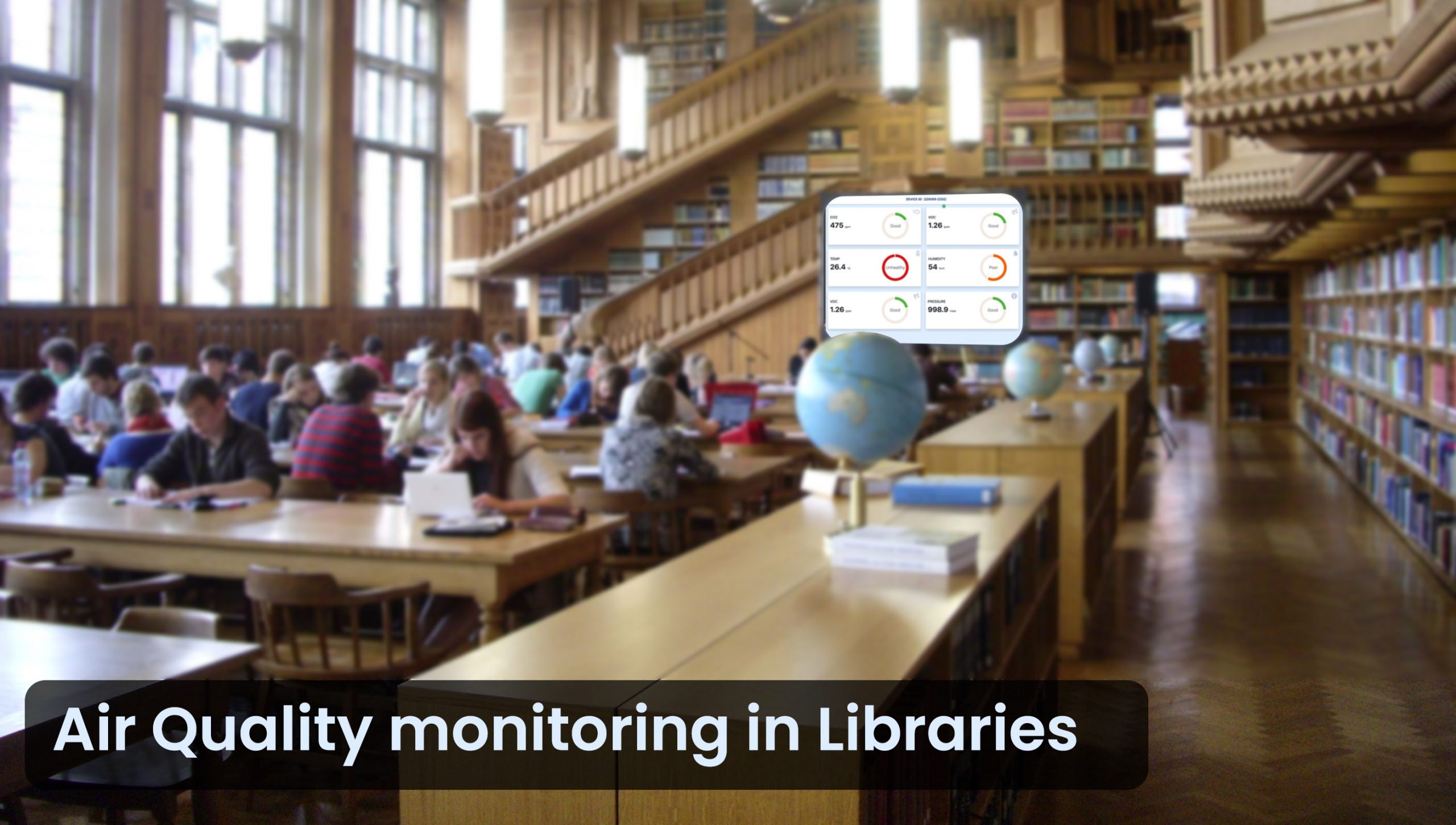
Why Libraries Need Air Quality Monitoring for Protecting Books and Readers

Libraries are treasured spaces that contains invaluable books, manuscripts, and documents, serving as hubs of knowledge and learning. However, maintaining an optimal environment for both visitors and collections requires careful management of indoor air quality. Poor air quality can lead to health concerns for patrons and staff while also causing long-term damage to books and archival materials. By implementing air quality monitoring solutions, libraries can preserve their collections and ensure a comfortable environment for their visitors.

What Causes Poor Air Quality in Libraries?

Several factors contribute to poor air quality in libraries. Many libraries are housed in older buildings with outdated ventilation systems, leading to stagnant air and the accumulation of pollutants. High occupancy levels further exacerbate the issue, as large numbers of visitors contribute to increased CO2 levels and decreased air circulation. Additionally, books, carpets, and furniture trap dust, mold spores, and other allergens, negatively impacting indoor air quality. To protect books and archives, libraries often maintain controlled environments with minimal airflow, which can inadvertently lead to a buildup of pollutants. Chemical emissions from furniture, carpets, adhesives, and cleaning agents introduce volatile organic compounds (VOCs) into the air, which can cause respiratory issues over time. Furthermore, libraries located in urban areas or near busy roads may suffer from outdoor pollution seeping in through windows and ventilation systems, further degrading indoor air quality.

The Impact of Air Quality on Libraries

Several factors contribute to indoor air quality challenges in libraries, including:

  • Particulate Matter (PM): Fine dust, mold spores, and pollutants can accumulate on books and shelves, accelerating paper degradation and discoloration.
  • Humidity and Temperature Fluctuations: Excessive humidity encourages mold growth, while dry conditions can make paper brittle over time.
  • Carbon Dioxide (CO2) Levels: High occupancy in enclosed spaces can lead to elevated CO2 levels, reducing air circulation and causing discomfort and drowsiness among visitors.
  • Volatile Organic Compounds (VOCs): Chemicals from furniture, carpets, and cleaning agents can release harmful VOCs, impacting indoor air quality.
  • Airborne Pollutants: Outdoor pollution entering the library through ventilation systems can introduce harmful contaminants, affecting both patrons and book collections.

Why Air Quality Monitoring is Essential for Libraries

Air quality monitoring allows libraries to proactively address environmental challenges before they cause significant damage. By continuously tracking key parameters such as CO2 levels, humidity, and particulate matter, libraries can take preventive measures to:

  • Protect Books and Archival Materials: Air quality monitors play a critical role in preserving library collections by detecting and tracking fluctuations in temperature and humidity, which are essential for preventing damage to books, documents, and other valuable items. By continuously monitoring these environmental factors, librarians can take proactive measures to maintain optimal conditions and avoid degradation. Additionally, air quality monitors act as an early warning system, triggering alerts when temperature or humidity levels become too high or low, allowing corrective action to be taken swiftly. These monitors also help detect and measure harmful air pollutants, such as particulate matter, which can contribute to the deterioration of library materials over time.
  • Enhance Visitor Comfort and Well-being: Maintaining optimal air quality can improve focus, reduce fatigue, and create a healthier environment for readers and staff.
  • Improve Ventilation Efficiency: Identifying air quality issues allows facility managers to optimize HVAC systems and airflow, ensuring proper ventilation and cost savings.
  • Comply with Preservation Standards: Many libraries and archives follow strict environmental guidelines to protect rare collections, making air quality monitoring a crucial part of their conservation strategy.

HibouAir: A Smart Air Quality Monitoring Solution for Library Environments

To effectively monitor and manage air quality in libraries, HibouAir provides an advanced, real-time air quality monitoring system. HibouAir continuously tracks key environmental parameters such as CO2, particulate matter, temperature, humidity, and VOC levels, providing actionable insights to library administrators. With its easy-to-use interface and real-time data visualization, HibouAir empowers libraries to maintain a clean, safe, and well-preserved indoor atmosphere. Data from HibouAir is easily accessible through various platforms, including mobile applications, desktop applications, and web-based solutions. Both real-time and historical data can be accessed through an intuitive user interface, allowing library staff to make informed decisions quickly and efficiently.

By implementing HibouAir, libraries can enhance the longevity of their collections, improve the well-being of visitors, and create a comfortable reading environment. Investing in air quality monitoring is not just a technological upgrade but a commitment to preserving knowledge and ensuring a healthier library experience for all.

Share this post on :

How Air Quality Monitors Contribute to Green Building 

Green buildings are designed to be energy-efficient, environmentally sustainable, and health-conscious. They prioritize reduced resource consumption, minimal environmental impact, and enhanced indoor comfort. One of the most critical aspects of green buildings is indoor air quality (IAQ), which significantly affects occupant health, productivity, and overall well-being. 

Air quality monitors, such as HibouAir, play a crucial role in ensuring that green buildings maintain high IAQ standards. By providing real-time data on air pollutants, temperature, and humidity, these monitors help optimize ventilation, energy use, and overall building performance. 

What is a Green Building? 

A green building is a structure designed to minimize environmental impact while enhancing occupant comfort and efficiency. It incorporates sustainable construction materials, energy-efficient systems, water conservation strategies, and indoor environmental quality improvements. The core principles of green building include: 

  • Energy efficiency through smart lighting, insulation, and HVAC systems. 
  • Sustainable materials that reduce environmental impact. 
  • Water conservation through rainwater harvesting and efficient plumbing. 
  • Indoor environmental quality improvements, including air quality monitoring. 
  • Waste reduction by using recyclable and durable materials. 

How to Achieve Green Building Certification 

Several international organizations set guidelines and certifications to ensure buildings meet green standards. Some of the most recognized certifications include: 

  • LEED (Leadership in Energy and Environmental Design) – Focuses on energy efficiency, sustainability, and IAQ. 
  • WELL Building Standard – Prioritizes health and well-being through air, water, and comfort standards. 
  • BREEAM (Building Research Establishment Environmental Assessment Method) – Evaluates energy, IAQ, and environmental impact. 
  • RESET Air Certification – Focuses specifically on real-time air quality monitoring and IAQ performance. 

Green buildings must follow stringent ventilation, material selection, and energy efficiency guidelines to meet these certifications. Air quality monitoring is a key factor in achieving and maintaining compliance with these standards. 

Importance of Air Quality in Green Buildings 

Indoor air quality has a direct impact on occupant health, productivity, and comfort. Poor IAQ can lead to respiratory issues, fatigue, and decreased cognitive function. Green buildings aim to mitigate indoor pollution through efficient ventilation, air filtration, and non-toxic materials. Key pollutants that must be monitored include: 

How Air Quality Monitors like HibouAir Support Green Building Initiatives 

Real-Time Air Quality Monitoring 

HibouAir continuously track IAQ metrics such as CO2 levels, particulate matter (PM), VOCs, temperature, and humidity. This real-time data helps facility managers take immediate action when pollution levels rise, ensuring optimal air quality in green buildings. 

Smart Integration with Building Automation Systems 

HibouAir can be integrated into Building Management Systems (BMS) or HVAC systems, allowing automated responses to changing air conditions. These integrations enable dynamic adjustments, such as increasing ventilation rates when CO2 levels are high, activating air purifiers when PM levels exceed safety limits, and controlling humidity levels to prevent mold growth. 

Energy Efficiency and Smart Ventilation 

Maintaining good air quality while saving energy is a priority in green buildings. IAQ data from HibouAir helps optimize ventilation based on actual air quality needs rather than running HVAC systems at full capacity all the time. This leads to reduced energy consumption by preventing unnecessary ventilation, lower operational costs with an extended HVAC lifespan, and better thermal comfort by balancing fresh air intake and temperature regulation. 

Ensuring Compliance with Green Building Standards 

Air quality monitoring plays a critical role in helping green buildings maintain compliance with environmental and health-based certifications. Continuous IAQ data allows for accurate documentation and reporting, pollutant spikes can be detected for timely corrective action, and long-term IAQ compliance is ensured through historical data analysis. 

Improved Health and Productivity 

Studies show that better indoor air quality enhances cognitive function and productivity. In workplaces, schools, and residential green buildings, IAQ monitoring contributes to a healthier and more comfortable environment, reducing sick days and improving well-being. 

Wireless and Scalable Solution 

HibouAir, offer wireless and compact designs, making them easy to deploy across multiple locations in a building. Whether for a single office space or an entire complex, their scalability ensures effective air quality monitoring without complex installations. 

As green buildings continue to evolve, maintaining high indoor air quality remains a top priority. Air quality monitors like HibouAir provide a smart, reliable, and energy-efficient solution to track and improve IAQ,  while promoting health and well-being. By integrating HibouAir into green building strategies, developers and facility managers can create cleaner, healthier, and more energy-efficient environments for occupants. 

Share this post on :

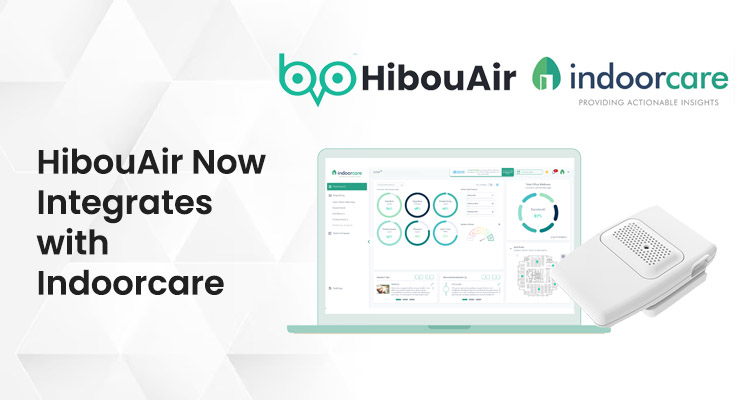
HibouAir Now Integrates with Indoorcare: A Cloud-Based SaaS Platform for Smart IAQ Management

The air quality of our environments plays a pivotal role in health, comfort, and productivity. Effective indoor air quality (IAQ) management is more crucial than ever. Poor indoor air quality can lead to cognitive decline, increased sick days, and long-term health complications.

To further enhance air quality management, we are excited to announce that HibouAir can now be integrated with Indoorcare, combining high-precision IAQ monitoring with powerful AI-driven analytics.

What is Indoorcare?

Indoorcare is a cloud-based SaaS platform that integrates with third-party IAQ monitoring devices to provide real-time data analytics, recommendations, and reporting. It transforms complex data into meaningful insights, helping organizations track, manage, and optimize indoor air quality across multiple locations. The platform aligns with global air quality standards and focuses on well-being factors, including comfort, cognitive function, productivity, and physical health.

Key Features of Indoorcare:

  • Advanced Dashboard & Analytics: Real-time monitoring and visualization of IAQ data.
  • Total Office Wellness Score: A holistic view of indoor environmental health.
  • Multi-Location Management: Compare and analyze air quality across different sites.
  • AI & Predictive Capabilities: Identify and mitigate potential air quality issues.
  • Customizable Alerts & Reporting: Tailored insights for decision-makers.
  • Building Health & Energy Efficiency: Optimize HVAC performance while reducing energy consumption.
  • Alignment with WELL & ESG Goals: Support sustainability initiatives with actionable air quality insights.

HibouAir: A Reliable IAQ Monitoring Solution

HibouAir is an advanced indoor air quality monitoring device designed to provide real-time, accurate insights into the quality of the air we breathe. Equipped with high-precision sensors, HibouAir continuously measures key environmental parameters, including carbon dioxide (CO2), particulate matter (PM 1.0, PM 2.5, and PM 10), temperature, humidity, volatile organic compounds (VOCs), atmospheric pressure, and noise levels. By offering comprehensive and reliable data, HibouAir enables individuals and organizations to make informed decisions about maintaining a healthy and comfortable indoor environment.

With its robust and reliable data collection, HibouAir has become a trusted solution for individuals and organizations seeking to maintain a healthier indoor environment.

Seamless Integration with Indoorcare

The integration of HibouAir with Indoorcare enhances IAQ monitoring by providing:

  • Real-Time Data & Insights: Immediate access to crucial air quality parameters.
  • AI-Generated Recommendations: Actionable steps to improve indoor environments.
  • Trend Analysis & Risk Assessment: Identify patterns affecting health and productivity.
  • Proactive IAQ Management: Make informed decisions backed by reliable data.

Why This Integration Matters

This collaboration provides businesses and institutions with an efficient, AI-driven approach to IAQ management, ensuring compliance with health standards and improving overall well-being. Whether you manage office spaces, schools, hospitals, or commercial buildings, this integration empowers you to create healthier, smarter indoor environments.

By combining HibouAir’s high-precision sensors with Indoorcare’s AI-powered analytics, users now have a comprehensive solution that simplifies air quality monitoring and management.

Get Started Today

If you are looking to enhance indoor air quality management, now is the perfect time to leverage the HibouAir + Indoorcare integration. To learn more about this solution and how it can benefit your organization, visit our website or contact us today.

Together, we can create healthier indoor spaces with smart, data-driven air quality management solutions!

Share this post on :

Strengthening the Commitment to Health and Well-being Through Air Quality Standards

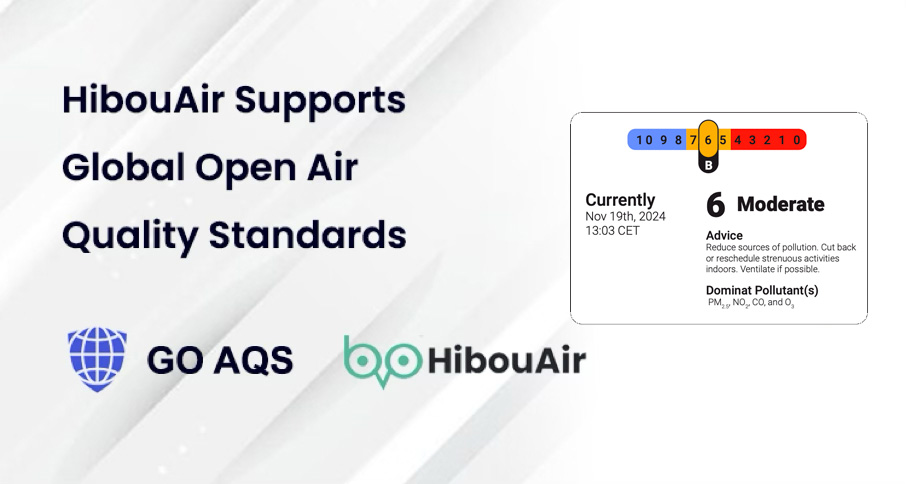
At HibouAir, our mission has always been centered around providing accurate, reliable, and accessible air quality monitoring solutions. After all, the air we breathe directly impacts our health, well-being, and overall quality of life. In line with this commitment, we are proud to endorse the Global Open Air Quality Standards (GO AQS) initiative, which is dedicated to establishing universal, science-backed air quality standards for both indoor and ambient environments.

Furthermore, Axel Hammar, Founder & CEO of Smart Sensor Devices AB (the company behind HibouAir), is serving as an Ambassador for GO AQS, leveraging his expertise to shape the future of air quality monitoring and standards worldwide. This partnership reflects our shared vision of making clean air a fundamental right for everyone.

HibouAir’s Endorsement and Integration with GO AQS

GO AQS was founded to unify the many differing air quality guidelines worldwide, creating universal, open standards for air monitoring. By endorsing this initiative, HibouAir aligns itself with a movement that prioritizes:

  • Choice & Flexibility – Users can seamlessly integrate HibouAir with other monitoring solutions, eliminating concerns about data lock-in.
  • Enhanced Innovation – Open standards promote collaboration and accelerate the development of cutting-edge air quality monitoring technologies.
  • Comprehensive Air Quality Analysis – Standardized data ensures more accurate, holistic insights into global air quality trends.

As one of the endorsed air quality monitors on the GO AQS platform, HibouAir is reinforcing its commitment to making air quality data more accessible, interoperable, and actionable for individuals and organizations worldwide.

A Personal Perspective: Why Indoor Air Quality Matters

In our increasingly urbanized and technology-driven world, people spend nearly 90% of their time indoors—at home, in offices, schools, and public spaces. Yet, many of us remain unaware of the invisible threats that lurk in the air we breathe every day. Poor indoor air quality can lead to serious health issues, ranging from allergies and respiratory problems to long-term conditions like asthma and cardiovascular diseases.

This is why the work we do at HibouAir, in collaboration with GO AQS, is not just about technology—it’s about protecting lives. Standardized and accessible air quality data empower individuals and communities to make informed decisions that can prevent health complications, enhance productivity, and ultimately improve quality of life.

We believe that everyone deserves the right to breathe clean air, and achieving this requires global collaboration, innovation, and transparency. By contributing to the establishment of universal air quality standards, we are ensuring a healthier future for all.

Leadership Participation in GO AQS

As a leader in the air quality monitoring industry, HibouAir takes its role seriously in supporting standardized, reliable, and transparent air quality data. With Axel Hammar’s involvement as an Ambassador, we are not only endorsing GO AQS but actively shaping its mission. His leadership reinforces our dedication to ensuring high-quality air monitoring is not just a privilege, but a standard across the world.

Through this partnership, HibouAir is helping to drive forward the Global Open Indoor Air Quality Standards (GO IAQS) and Global Open Ambient Air Quality Standards (GO AAQS), supporting a future where air quality is universally monitored, improved, and prioritized.

Our Continued Commitment to GO AQS Standards

At HibouAir, we firmly believe that access to clean air is a fundamental right, not a luxury. Our partnership with GO AQS is a testament to this belief. By aligning our technologies and data practices with evolving global standards, we aim to provide more reliable, interoperable, and impactful air quality solutions.

We look forward to continuing our collaboration with GO AQS and the broader air quality community to set new benchmarks for transparency, innovation, and public health. Because when it comes to air quality, every breath matters.

For more details about GO AQS and our endorsement, visit GO AQS Endorsements and GO AQS Committee.

By taking a more personal approach, this revised article connects air quality standards to real-world health concerns, emphasizing why clean air matters for everyone—not just as a technological challenge, but as a critical public health issue.

Share this post on :

What is Particulate Matter (PM) and How It Affects Indoor Air Quality? 

Indoor air quality plays a crucial role in our health and well-being, yet it is often overlooked. Many pollutants contribute to poor indoor air, but one of the most significant and harmful is particulate matter (PM). These tiny airborne particles can come from a variety of sources and pose serious health risks, especially when inhaled over long periods. Understanding what PM is, how it affects indoor air quality, and how to monitor it effectively is essential for maintaining a healthy indoor environment. 

Understanding Particulate Matter (PM) 

Particulate matter refers to a mixture of solid particles and liquid droplets suspended in the air. These particles vary in size, composition, and origin, but they are mainly categorized based on their diameter: PM1.0, PM2.5, and PM10. PM10 includes larger particles like dust, pollen, and mold spores, which are typically filtered out by our respiratory system. However, PM2.5 and PM1.0 are much smaller and can penetrate deep into the lungs, potentially entering the bloodstream. These finer particles often originate from combustion processes such as vehicle emissions, industrial pollution, cooking, and smoking. 

Unlike gases like carbon dioxide (CO2) and volatile organic compounds (VOCs), PM consists of physical particles that can remain suspended in the air for extended periods. This makes them a major concern for indoor air pollution, particularly in enclosed spaces where ventilation is limited. 

How Does Particulate Matter Impact Indoor Air Quality? 

Indoor air pollution is often more concentrated than outdoor air due to the accumulation of pollutants in confined spaces. PM can enter indoor environments through open windows, doors, and ventilation systems, especially in urban areas where outdoor pollution is high. However, indoor sources of PM also contribute significantly. Activities such as cooking, burning candles or incense, using fireplaces, smoking, and even dusting can release particulate matter into the air. 

Once PM particles are airborne, they remain suspended for long periods, especially in poorly ventilated areas. Over time, they settle on surfaces but can easily become airborne again through movement or air circulation. Without proper air filtration, PM levels can rise, leading to poor indoor air quality that affects respiratory health and overall well-being. 

Health Risks Associated with Particulate Matter Exposure 

Exposure to high levels of PM can have both immediate and long-term health effects. In the short term, individuals may experience eye irritation, coughing, sneezing, throat discomfort, and difficulty breathing. Those with preexisting conditions such as asthma or allergies are particularly vulnerable to worsening symptoms. 

Long-term exposure to fine particulate matter, especially PM2.5 and PM1.0, is associated with serious health conditions, including chronic respiratory diseases, cardiovascular disorders, weakened immune function, and even neurological effects. These fine particles are small enough to bypass the body’s natural defenses, reaching the lungs and bloodstream, where they can contribute to lung diseases, heart disease, and an increased risk of stroke. Studies have also linked prolonged exposure to PM with cognitive decline, stress, and reduced sleep quality. 

How to Monitor and Improve Indoor Air Quality? 

Maintaining good indoor air quality requires an understanding of pollutant sources and proactive steps to reduce PM exposure. The most effective way to manage air quality is through real-time air quality monitoring, allowing individuals to track pollution levels and take necessary actions. 

A high-quality air quality monitor like HibouAir provides continuous data on PM levels, CO2, VOCs, temperature, and humidity. By using precise sensors, HibouAir helps users identify sources of pollution and make informed decisions to improve air quality. For those particularly concerned about PM exposure, the HibouAir PM Sensor is designed specifically to track particulate matter in real time. 

Proper ventilation is another key factor in reducing PM levels indoors. Regularly opening windows, using air purifiers with HEPA filters, and ensuring proper maintenance of HVAC systems can help filter out fine particles and prevent accumulation. Additionally, minimizing indoor sources of pollution—such as reducing the use of candles, avoiding smoking indoors, and using eco-friendly cleaning products—can make a significant difference in maintaining a cleaner and healthier indoor environment. 

Why Choose HibouAir for Air Quality Monitoring? 

When it comes to indoor air quality solutions, HibouAir stands out as an advanced yet easy-to-use device designed for homes, offices, schools, and industrial spaces. Unlike traditional air quality monitors that require complex setups, HibouAir offers a plug-and-play experience, allowing users to start monitoring their environment instantly. 

One of the biggest advantages of HibouAir is its real-time data tracking and analytics, enabling users to observe air quality trends, receive alerts, and make data-driven decisions. The HibouAir Standalone Monitor is perfect for those who need a simple yet powerful air quality monitoring solution without relying on Wi-Fi or cloud services. For businesses and smart buildings, HibouAir Cloud Solutions provide historical data logging and advanced analytics to ensure compliance with air quality regulations and create a healthier workspace. 

Particulate matter is an invisible yet serious threat to indoor air quality, with long-term health implications that should not be ignored. Without proper monitoring, PM levels can accumulate unnoticed, leading to poor respiratory health and increased risk of chronic diseases. Investing in an air quality monitoring system like HibouAir allows individuals and businesses to proactively manage air quality, reduce pollution sources, and create a safer indoor environment. 

Take control of your indoor air today! 

Related Articles from Our Blog 

Share this post on :

Why an Air Quality Monitoring Device Is Essential for Your Health and Home

Imagine stepping into your home after a long day, expecting to take a refreshing breath—only to unknowingly inhale pollutants that could be harming your health. Indoor air pollution is often 2 to 5 times worse than outdoor air, exposing you to allergens, toxins, and harmful particles every day. The good news? You can take control of your air quality with a smart air quality monitoring device like HibouAir.

Here’s why investing in an air quality monitor is one of the best decisions you can make for your well-being.

Protect Your Health from Hidden Pollutants

Poor air quality can cause allergies, headaches, respiratory issues, and even long-term health problems such as asthma and heart disease. An air quality monitor provides real-time data on harmful pollutants like:

✔ PM2.5 (fine particulate matter) – tiny particles that can penetrate deep into your lungs
✔ VOCs (volatile organic compounds) – harmful chemicals from cleaning products, furniture, and paints
✔ CO2 (carbon dioxide) – high levels can cause fatigue, dizziness, and poor concentration
✔ Humidity levels – excess moisture can lead to mold, while dry air can irritate your skin and throat

By understanding what’s in your air, you can take action to improve your indoor environment and safeguard your health.

Keep Your Family Safe and Comfortable

If you have children, elderly family members, or pets, air quality becomes even more critical. High levels of indoor pollution can trigger asthma attacks, allergies, and respiratory problems, especially in sensitive individuals.

With an air quality monitor, you can:

✔ Detect harmful gases and pollutants before they affect your loved ones
✔ Monitor air humidity to prevent mold growth and maintain a comfortable environment
✔ Ensure clean air for babies and children, who are more vulnerable to poor air quality

Your home should be a safe haven—an air quality monitor helps you keep it that way.

Improve Focus, Productivity, and Sleep

Did you know that high CO2 levels can make you feel sluggish, tired, and unable to concentrate? Poor air quality is often an overlooked factor affecting work performance and sleep quality.

With a real-time air quality monitor, you can:

✔ Optimize ventilation for better oxygen flow and mental clarity
✔ Reduce CO2 buildup in offices and bedrooms, helping you stay energized
✔ Create an ideal sleeping environment, free from allergens and pollutants

Whether you work from home or want to wake up feeling refreshed, clean air makes all the difference.

Save Money on Energy Bills and Home Repairs

Ignoring air quality issues can lead to costly problems down the line. A monitor helps you detect air imbalances early, so you can:

✔ Prevent mold growth by keeping humidity levels in check
✔ Improve HVAC efficiency by monitoring air purity and avoiding clogged filters
✔ Reduce energy costs by knowing when to ventilate or adjust temperature settings

By taking proactive measures, you avoid expensive repairs and medical bills.

Easy-to-Use, Smart Technology at Your Fingertips

Worried about complicated setups? Don’t be. Modern air quality monitors like HibouAir are designed to be:

✔ User-friendly – Simply plug in, set up, and start tracking air quality instantly
✔ Portable and versatile – Use it at home, in the office, gym, or even in a baby’s nursery
✔ Smartphone compatible – Monitor air trends and receive real-time alerts on your phone

With intuitive controls and a sleek design, monitoring air quality has never been easier.

Take Charge of Your Indoor Environment Today

Breathing clean air isn’t a luxury—it’s a necessity. An air quality monitor empowers you with real-time insights, so you can take instant action to improve your environment.

✔ Know when to open a window for fresh air
✔ Decide when to use an air purifier for better air quality
✔ Adjust humidity levels to maintain comfort and health
✔ Breathe Easier with HibouAir – Get Yours Today!

Don’t wait until poor air quality affects your health or comfort. The HibouAir Air Quality Monitor is your first step toward a cleaner, safer, and healthier home.

Your health and well-being are priceless.

Isn’t it time you took control of the air you breathe? 

Breathe easier. Live better.

Share this post on :

HibouAir and Pareto Anywhere: A Powerful Integration for Smarter Air Quality Monitoring

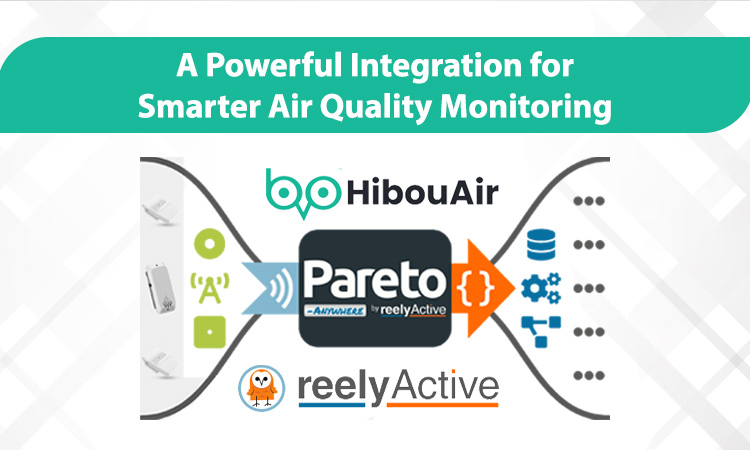
In an increasingly connected world, seamless data integration and real-time analytics are essential for effective air quality monitoring. At Smart Sensor Devices, we are committed to enabling easy access to air quality data through HibouAir, our advanced wireless monitoring solution. To enhance interoperability and flexibility, we are excited to announce that HibouAir now integrates with Pareto Anywhere, the open-source middleware platform by reelyActive.

This integration empowers businesses, researchers, and smart infrastructure developers to process real-time air quality data with greater ease, flexibility, and scalability.

What is Pareto Anywhere?

Pareto Anywhere is a powerful open-source middleware that processes ambient data from Bluetooth Low Energy (BLE) devices in real time. Designed for context-aware computing, it enables organizations to collect, interpret, and relay data from IoT sensors, providing a standardized and flexible way to connect environmental monitoring devices to various analytics platforms.

By supporting Pareto Anywhere, HibouAir sensors can now seamlessly transmit air quality data to any BLE-compatible infrastructure, allowing users to choose their preferred connectivity setup and data processing solutions.

How HibouAir Works with Pareto Anywhere

HibouAir is a wireless air quality monitoring device that continuously collects and transmits key environmental parameters. With Pareto Anywhere, this data can be effortlessly processed and integrated into IoT dashboards, analytics systems, and automation workflows.

Supported Air Quality Parameters:
HibouAir transmits the following environmental data via BLE, all of which can be processed using Pareto Anywhere:

  • Carbon Dioxide Concentration (CO2) – Measures indoor air quality and ventilation efficiency.
  • Volatile Organic Compounds (VOC) – Detects harmful airborne chemicals and pollutants.
  • Ambient Temperature – Monitors thermal comfort in real-time.
  • Relative Humidity – Helps track moisture levels and prevent mold growth.
  • Ambient Light  – Provides data on light levels in an environment.
  • Ambient Pressure – Captures barometric pressure variations.
  • Sound Pressure – Monitors ambient noise levels.

This broad spectrum of monitored parameters makes HibouAir an essential tool for smart buildings, industrial environments, educational institutions, and healthcare facilities.

Key Benefits of HibouAir & Pareto Anywhere Integration

Pareto Anywhere allows users to process HibouAir’s BLE data in real-time without vendor lock-in. It supports a variety of cloud and edge computing solutions, giving users full control over their data pipeline.

The middleware enables seamless connectivity with any BLE infrastructure and any data analytics platform, ensuring easy integration into existing IoT ecosystems.

Organizations can leverage real-time analytics to make data-driven decisions that improve indoor environments, optimize ventilation, and ensure compliance with air quality standards.

Whether for a single office or a multi-building smart city project, Pareto Anywhere ensures efficient data handling across multiple HibouAir devices.

By supporting open standards and interoperability, HibouAir with Pareto Anywhere provides a future-proof air quality monitoring solution that can evolve with emerging technologies.

A Smarter Future for Air Quality Monitoring

The integration of HibouAir with Pareto Anywhere marks a significant step toward smart, real-time air quality monitoring. By using BLE connectivity, open-source middleware, and IoT-driven insights, this partnership provides organizations with flexibility and control over their environmental data.

Whether you’re a building manager, researcher, or IoT developer, this integration enables you to take full advantage of air quality data, ensuring healthier and more efficient indoor environments.

Take a look at our HibouAir devices that support BLE.

Share this post on :

How Air Quality Affects Mental Health

Air quality is often associated with physical health issues such as asthma and cardiovascular diseases, but its impact on mental health is a growing area of concern. The air we breathe—whether indoors or outdoors—can profoundly influence our mood, cognitive abilities, and overall mental well-being. Poor air quality indoors, where many of us spend most of our time, can silently harm our mental health through pollutants such as carbon dioxide (CO₂), particulate matter (PM1.0, PM2.5, PM10), volatile organic compounds (VOCs), and even factors like noise, humidity, and temperature fluctuations.

The Link Between Air Pollution and Mental Health

Air Pollution and Cognitive Decline

Exposure to air pollution, particularly fine particulate matter (PM2.5), has been linked to cognitive impairments such as reduced memory, attention, and problem-solving skills. A study published in The Lancet found that prolonged exposure to polluted air can accelerate cognitive decline, especially in older adults, increasing the risk of conditions such as dementia and Alzheimer’s disease.

Mood Disorders and Airborne Toxins

Air pollution doesn’t just harm the body—it can also exacerbate mood disorders like depression and anxiety. Research in JAMA Psychiatry highlighted that individuals exposed to high levels of nitrogen dioxide (NO2) and fine particulate matter were at greater risk of developing depressive symptoms. Pollutants such as volatile organic compounds (VOCs) and carbon monoxide (CO) interfere with the brain’s chemical balance, impacting serotonin levels and mood regulation.

Stress and Irritability

Poor air quality can act as a chronic stressor. Polluted air often leads to systemic inflammation, releasing cytokines—proteins that signal stress in the body. This inflammatory response can heighten feelings of irritability, fatigue, and stress, compounding the challenges for those already struggling with mental health issues.

Effects on Children’s Development

Children are particularly vulnerable to the effects of air pollution. Studies show that exposure to polluted air during critical developmental periods can impair brain development, leading to behavioral disorders and learning difficulties. A study in Environmental Health Perspectives emphasized the correlation between traffic-related air pollution and increased cases of attention deficit hyperactivity disorder (ADHD) in children.

Carbon Dioxide (CO₂): Its Role in Mental Well-Being

Elevated levels of CO₂ in indoor spaces, often caused by inadequate ventilation, can impair cognitive function and decision-making. A study published in Environmental Health Perspectives found that high CO₂ concentrations reduced performance in tasks requiring strategic thinking and problem-solving (source). Prolonged exposure to elevated CO₂ levels may lead to symptoms like headaches, fatigue, and irritability, all of which can contribute to stress and anxiety. This highlights the importance of monitoring CO₂ levels in indoor spaces like offices and homes.

Particulate Matter (PM1.0, PM2.5, PM10): A Silent Threat

Particulate matter (PM), especially the finer particles (PM2.5 and PM1.0), can penetrate deep into the lungs and even cross the blood-brain barrier, triggering neuroinflammation. Research in The Lancet revealed that exposure to PM2.5 accelerates cognitive decline and increases the risk of conditions like dementia. Indoors, these particles often originate from cooking, smoking, or outdoor air infiltration. Long-term exposure can also exacerbate depression and anxiety by causing oxidative stress in the brain.

Volatile Organic Compounds (VOCs): Hidden Indoor Pollutants

VOCs, emitted by household products such as paints, cleaning agents, and furniture, can interfere with the brain’s chemical balance, leading to mood disturbances. Studies have shown that long-term exposure to VOCs increases the risk of depression and anxiety. VOCs are particularly concerning in poorly ventilated indoor environments, emphasizing the need for real-time monitoring to minimize exposure.

Noise: A Stressor That Affects Mental Health

While not a chemical pollutant, noise pollution—especially indoors—has been linked to increased levels of cortisol, the stress hormone. Chronic exposure to noise from household appliances, traffic, or construction work can lead to sleep disturbances, heightened stress, and irritability. Research from Environmental Health Perspectives highlights how noise pollution can exacerbate mental health disorders like anxiety and depression (source).

Temperature and Humidity: Their Role in Psychological Comfort

Temperature and humidity significantly affect psychological comfort and mental health. High indoor temperatures can contribute to irritability, fatigue, and even aggression, while low temperatures are associated with lethargy and depressive symptoms. Similarly, imbalanced humidity levels can worsen respiratory issues, indirectly affecting mental well-being. Maintaining optimal temperature and humidity indoors is crucial for mental health, especially in extreme weather conditions.

The Science Behind Air Quality and Mental Health

The mechanisms linking poor air quality to mental health are rooted in biological processes:

  • Neuroinflammation: Pollutants such as PM2.5 can penetrate the brain and trigger inflammation, impairing mood regulation and cognitive function (source).
  • Oxidative Stress: Exposure to VOCs, PM, and CO₂ generates free radicals, causing oxidative stress that disrupts neurotransmitter balance (source).
  • Sleep Disruptions: Pollutants like VOCs and ozone can irritate the respiratory system, leading to poor sleep quality, which in turn exacerbates mental health issues (source).

Indoor Air Quality: Why Monitoring Matters

Given that people spend about 90% of their time indoors, monitoring air quality is essential to protecting mental health. Devices that measure CO₂, PM levels, VOCs, noise, temperature, humidity, and pressure can provide insights into potential stressors in the environment.

For instance:

  • High CO₂ levels indicate poor ventilation, which can be addressed by increasing airflow or using air purifiers.
  • Elevated PM levels signal the need for better filtration or reduced indoor activities that generate particles, such as smoking.
  • Excessive VOC levels suggest minimizing the use of chemical-laden products and ensuring proper ventilation during their use.

HibouAir: Empowering You to Take Control

Understanding the mental health implications of indoor air quality begins with accurate data. HibouAir, equipped with advanced sensors for CO₂, PM1.0, PM2.5, PM10, VOCs, temperature, humidity, noise, and pressure, provides real-time air quality insights. Whether you’re seeking immediate solutions or long-term patterns, HibouAir helps you create a healthier indoor environment for both body and mind. By maintaining optimal air quality, you can significantly enhance your mental well-being and overall quality of life.

Addressing the link between air quality and mental health is not just about improving physical health—it’s about fostering a healthier mind. Taking proactive steps to monitor and improve indoor air quality can have a transformative effect on your mental well-being.

Share this post on :

Contact Us

Call us or simply fill out the form below, and one of our representatives will get back to you as soon as possible.