In the age of smart homes and automation, our desire for a healthier, more comfortable living environment is growing rapidly. We now have the ability to monitor and control various aspects of our homes using Home Assistant, an open-source home automation platform. A vital aspect of our living conditions that often goes unnoticed is the air quality. To address this, the integration of HibouAir, an air quality monitoring device, into your Home Assistant dashboard can provide you with invaluable real-time data on crucial parameters, offering not only awareness but also the potential for enhanced automation and control.
HibouAir is an air quality monitoring device that offers a comprehensive range of data points, including: CO2 levels, Atmospheric Pressure, Temperature and Relative Humidity, VOC (Volatile Organic Compounds), Light, Particulate matter includes PM1.0, PM2.5, and PM10 etc
How to Integrate HibouAir with Home Assistant
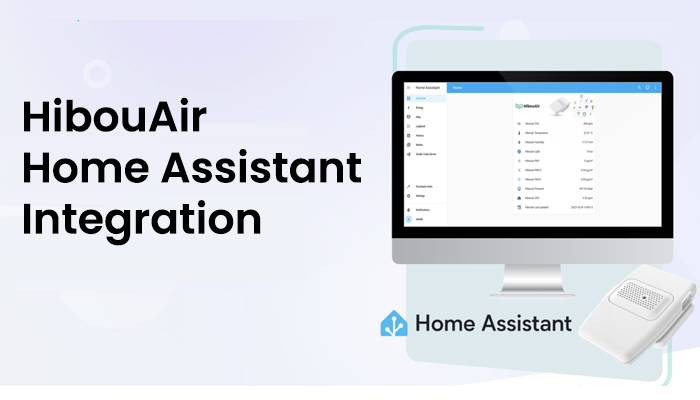
The integration of HibouAir into Home Assistant is relatively straightforward and can be done using GitHub repositories. If you’re looking for a detailed, step-by-step guide, check out this tutorial on integrating HibouAir with Home Assistant using BleuIO.
Once installed, the HibouAir device can send real-time data to your Home Assistant dashboard, giving you a clear picture of your indoor environment.
Home Assistant developers and users can benefit from real-time air quality data. This awareness is crucial for maintaining a healthy living space and responding to any issues promptly. CO2, Particulate matters,Temperature are key factors in determining the comfort level of your home. With HibouAir’s data, developers can create automation routines to adjust these parameters automatically for an optimal living environment. For example, When HibouAir detects high CO2 levels, Home Assistant can automatically trigger ventilation systems or open windows to improve indoor air quality. Integrating HibouAir with your heating and cooling systems allows Home Assistant to maintain an optimal temperature and humidity, reducing energy consumption. If VOC or PM levels exceed safe thresholds, your Home Assistant can send alerts or trigger air purifiers to clean the air.
HibouAir’s integration with Home Assistant offers a wealth of opportunities for both developers and users to create a healthier, more comfortable, and efficient living environment.
The quality of the air we breathe is a crucial factor in maintaining our overall health and well-being. While most people are aware of the importance of clean outdoor air, it’s easy to overlook the significance of indoor air quality (IAQ). Recent studies have drawn a concerning connection between poor IAQ and the increased risk of developing dementia. To combat this threat and take control of your indoor environment, it’s essential to employ effective solutions such as the HibouAir indoor air quality monitor.
The Link Between Indoor Air Quality and Dementia
Research has shown that long-term exposure to high levels of indoor air pollutants can significantly increase the risk of cognitive decline and neurodegenerative diseases like dementia. Several indoor pollutants, such as volatile organic compounds (VOCs), particulate matter, and chemicals emitted from household products, have been identified as contributing factors to this increased risk.
In recent years, a growing body of research has shed light on the alarming connection between air pollution and neurological illnesses, particularly dementia. These studies emphasize the urgency of addressing indoor air quality concerns and highlight the importance of monitoring devices like HibouAir.
A systematic review and meta-analysis published in The BMJ (British Medical Journal) explored the impact of air pollutants on the risk of dementia. This comprehensive study brought together a wealth of existing research, providing a more in-depth understanding of the detrimental effects of poor air quality on cognitive health. The results were clear: exposure to air pollutants significantly increases the risk of dementia. Source : Ambient air pollution and clinical dementia: systematic review and meta-analysis | The BMJ
An analysis of more than 50 studies found a direct correlation between exposure to particulate matter and an increased risk of dementia. Shockingly, the risk of dementia was shown to increase by 4% for every 2 micrograms/cubic meter increase of particulate matter in the air annually. This statistic underscores the urgency of addressing air quality to protect our cognitive health. Source : Air Pollution May Be Increasing the Risk of Dementia | Time
Public health scientists at Harvard University conducted an in-depth analysis of several studies, revealing a particularly concerning aspect of air pollution. Inhaling toxic air pollutants known as PM 2.5 was found to significantly increase the risk of dementia. These findings further emphasize the role of fine particulate matter in the development of cognitive disorders, making it imperative to monitor and mitigate such pollutants in our indoor environments. Source : Air pollution may raise risk of dementia, analysis shows – The Washington Post
The Role of Indoor Air Quality Monitors
While adopting the above practices is essential, having real-time data on your indoor air quality can empower you to make informed decisions and take timely action. This is where the HibouAir indoor air quality monitor comes into play.
HibouAir is a cutting-edge device designed to monitor and analyze the quality of the air in your home continuously. It measures key parameters like CO2, VOC levels, particulate matter (PM 1.0, PM 2.5, PM 10), humidity, temperature, pressure and more, providing you with a comprehensive overview of your indoor environment. With its user-friendly interface, smartphone and desktop app, you can easily access and interpret the data, making it a valuable tool for safeguarding your health.
The device can alert you to any sudden spikes in indoor pollutants, helping you identify and mitigate potential sources of pollution promptly. Whether it’s a malfunctioning household appliance, increased humidity, or high VOC emissions from cleaning products, HibouAir keeps you informed so you can take action to protect yourself and your loved ones.
In an era where the importance of maintaining good health has become increasingly apparent, we must not neglect the air we breathe indoors. The link between poor indoor air quality and the risk of developing dementia is a serious concern that cannot be ignored. By implementing measures to improve IAQ and incorporating advanced indoor air quality monitoring devices like HibouAir into our homes, we can take proactive steps to reduce this risk and ensure a healthier and more comfortable living environment for ourselves and future generations. Don’t wait until it’s too late; prioritize your indoor air quality today.
HibouAir, the plug and play air quality monitoring solution developed by Smart Sensor Devices, is now at your fingertips on Digi-Key, the premier online marketplace for electronic components and technology solutions.
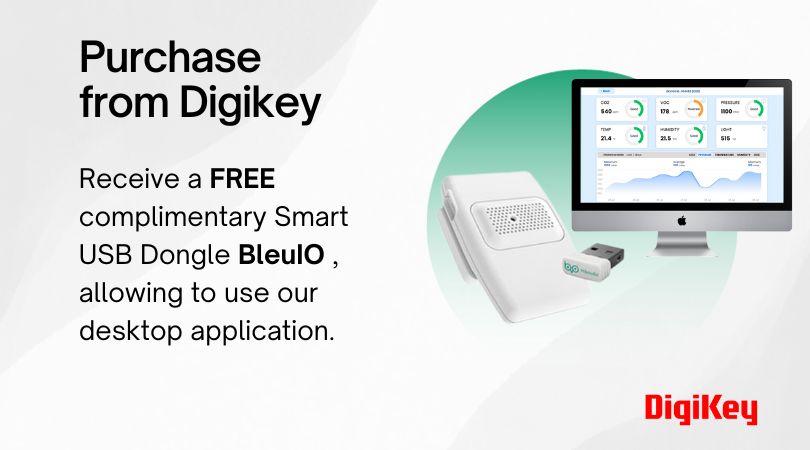
There’s more! When you make a purchase from Digi-Key, you’ll receive a FREE complimentary Smart BLE USB dongle BleuIO. This unlocks an exclusive opportunity for you to use our desktop application.
The Smart Bluetooth Low Energy USB Dongle BlueIO designed to seamlessly integrate with the HibouAir desktop applications and deliver real-time air quality insights.
BleuIO acts as the bridge between the HibouAir desktop application and the HibouAir air quality monitor, enabling your computer to establish a wireless connection with the device. Once plugged into your computer’s USB port, the application starts scanning for nearby HibouAir monitors within its range. This process is quick and automatic, ensuring that you can begin monitoring your indoor air quality without any hassle.
In addition to real-time monitoring, BleuIO enables you to access historical air quality data through the desktop application. The generous 7-day data storage capacity of the HibouAir monitor means that you can review past air quality trends and patterns. This historical data is invaluable for tracking long-term changes in your indoor environment and identifying potential issues that need attention.
“Through our distribution partnership with Digi-Key, we are making it easier for the maker community worldwide to quickly and reliably access our air quality monitoring solutions,” said Axel Hammar, Founder & CEO of Smart Sensor Devices in Sweden AB.
About HibouAir:
HibouAir is an affordable indoor air quality monitor with a user-friendly setup that delivers real-time air quality data for your surroundings. This home air quality monitor not only provides data on the concentration of elements like CO2, PM, and volatile organic compounds (VOCs) but also offers insights into other vital parameters such as humidity, temperature, atmospheric pressure, and light levels, which collectively influence your ambient environment.
About Digi-Key Electronics:
Digi-Key Electronics, headquartered in Thief River Falls, Minn., USA, is a globally authorized, full-service distributor of electronic components. With a catalog of more than five million products, over 1.3 million items readily available for immediate shipment, and partnerships with over 650 renowned manufacturers, Digi-Key is your one-stop shop for electronic components. Their extensive online resources, including EDA and design tools, datasheets, reference designs, instructional articles and videos, multimedia libraries, and more, make them an invaluable resource for electronics enthusiasts. Plus, you can count on their 24/7 technical support via email, phone, and webchat. For a comprehensive look at their product offering, visit www.digikey.com.
Incorporating cutting-edge features, offering versatile applications, and delivering unparalleled performance, HibouAir is a true game-changer in the air quality monitoring field. Seize the moment and grab your very own HibouAir, available for purchase exclusively on Digi-Key.
As we step into a new school year, concerns about indoor air quality in classrooms and other shared spaces have never been more critical. The ongoing battle against COVID-19 has highlighted the urgent need to reevaluate our indoor environments. To shed light on the importance of healthy buildings and the role of innovative air quality monitoring devices, we turn to Joseph Allen, the director of the Healthy Buildings program at the Harvard T.H. Chan School of Public Health.
The Sick Building Era:
Joseph Allen, the director of the Healthy Buildings program at the Harvard T.H. Chan School of Public Health mentions the concept of “sick buildings.” He emphasizes that, for too long, our buildings have been designed and operated without taking into account the latest health science. Poor ventilation and insufficient airflow have created indoor environments that do not support human well-being. When COVID-19 emerged, the consequences of these outdated building practices became evident, as the virus thrived in indoor spaces with inadequate air circulation.
Transitioning to Healthy Buildings:
To address this issue, Joseph Allen advocates transitioning from the “sick building era” to the “healthy building era.” He outlines four straightforward strategies that every building should pursue to improve indoor air quality and overall health:
1. **Building Tune-Up:** Regular maintenance to ensure optimal performance.
2. **Increased Outdoor Air Ventilation:** Bringing in more fresh outdoor air.
3. **Enhanced Filtration:** Upgrading to higher-efficiency filters (e.g., MERV 13).
4. **Portable Air Cleaners:** Utilizing plug-and-play devices with HEPA filters.
Moreover, he highlights the importance of monitoring indoor air quality using sensors, which can measure various parameters, including carbon dioxide and airborne particles. These sensors enable building owners and occupants to proactively address air quality issues.
HibouAir: Revolutionizing Indoor Air Quality Monitoring:
In this context, devices like HibouAir have emerged as invaluable tools for monitoring and improving indoor air quality. HibouAir is an air quality monitoring device that provides real-time data on indoor environments without the need for Wi-Fi, gateways, or cloud connectivity. Its sensors cover a wide range of parameters, including pressure, temperature, humidity, VOCs, CO2, and various particulate matter sizes (PM1.0, PM2.5, PM10).
HibouAir’s key features include:
– Real-time data accessible via mobile and desktop applications.
– Plug-and-play simplicity for easy installation.
– Storage of up to seven days’ worth of air quality data for in-depth analysis.
– Empowering users to take proactive steps to create healthier indoor environments.
In an era where indoor air quality is paramount, Joseph Allen’s insights from the Harvard T.H. Chan School of Public Health reinforce the importance of transitioning to healthy buildings. Devices like HibouAir offer practical solutions by providing real-time air quality data, allowing individuals and organizations to take informed actions to improve the air they breathe indoors. As we continue to battle health challenges, investing in technologies like HibouAir is a crucial step toward a healthier, safer future for all.
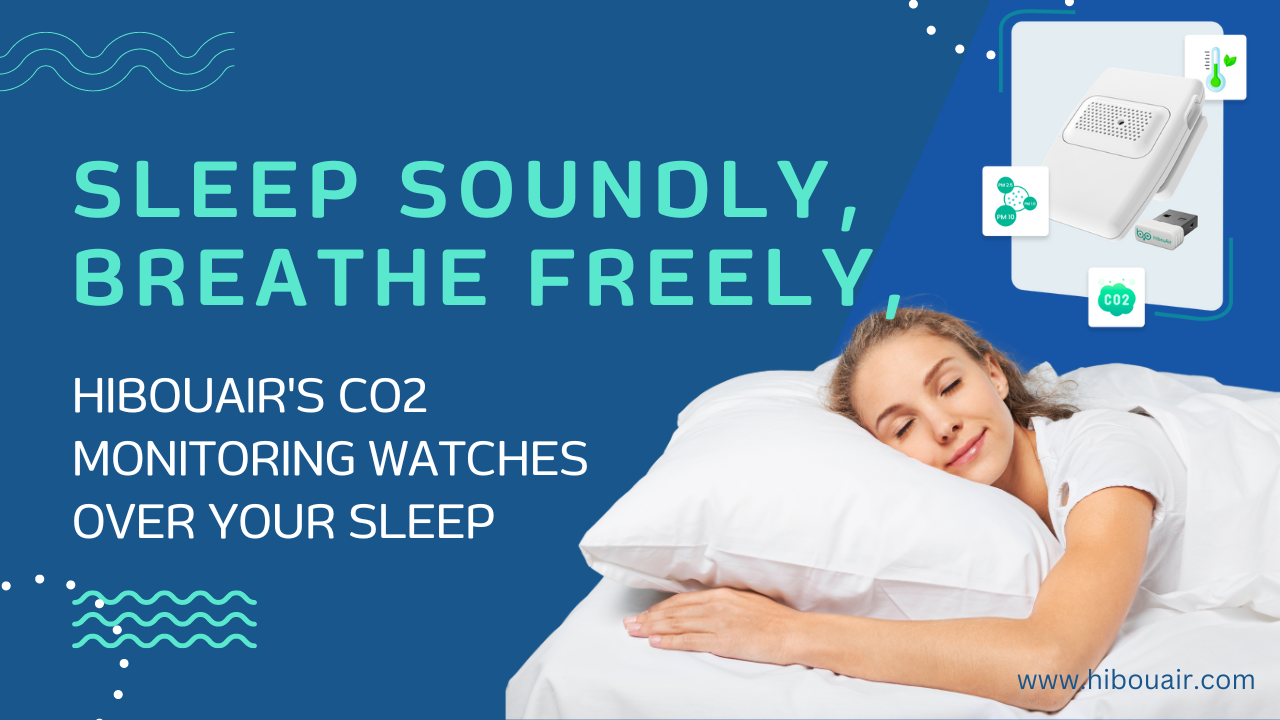
In a world where our surroundings are becoming increasingly polluted, maintaining good air quality is vital not just for our daytime activities but also for our nighttime rest. Poor air quality, especially elevated levels of carbon dioxide (CO2), can have a significant impact on the quality of our sleep.
Carbon dioxide is a natural component of the air we breathe, but its levels can rise due to various factors such as poor ventilation, crowded spaces, and indoor pollution sources. When CO2 concentrations in our sleeping environment become elevated, it can lead to several negative effects on our sleep quality:
Disrupted Sleep Patterns: High CO2 levels can cause sleep disturbances, leading to frequent awakenings during the night. This disrupts the natural sleep cycle and can leave you feeling groggy and fatigued the next day.
Reduced REM Sleep: Rapid Eye Movement (REM) sleep is crucial for cognitive functions, memory consolidation, and overall mental well-being. Elevated CO2 levels have been linked to a reduction in REM sleep, affecting your ability to feel rested and alert during the day.
Morning Headaches: Waking up with a headache is a common symptom of excessive CO2 exposure during sleep. This is often accompanied by feelings of lethargy and lack of focus.
Daytime Sleepiness: Poor sleep quality due to high CO2 levels can contribute to daytime sleepiness and decreased productivity.
Reducing CO2 for Restful Nights
To ensure a peaceful and restorative sleep environment, consider the following tips to reduce CO2 levels:
Improve Ventilation: Proper ventilation is essential to circulate fresh air and expel CO2. Open windows and use fans to increase airflow, especially before bedtime.
Use Air-Purifying Plants: Certain indoor plants, like snake plants and peace lilies, can help naturally filter and purify the air, lowering CO2 levels.
Limit Indoor Pollution Sources: Reduce the use of products that emit pollutants, such as aerosol sprays, cleaning chemicals, and tobacco smoke.
Regular HVAC Maintenance: Ensure your heating, ventilation, and air conditioning systems are well-maintained to optimize airflow and filtration.
Introducing HibouAir: Your Sleep Guardian
Monitoring air quality, particularly CO2 levels, during sleep is now easier than ever with the HibouAir device. HibouAir is an innovative indoor air quality monitoring device that provides real-time data on various air quality parameters, including CO2 levels, temperature, humidity, VOCs, and atmospheric pressure. With its user-friendly interface and comprehensive historical data storage of up to 7 days, HibouAir empowers you to make informed decisions about your sleep environment.
Imagine being able to track your CO2 levels while you sleep and correlating them with your sleep quality. With this data at your fingertips, you can adjust your sleeping environment accordingly, whether it’s opening a window, using an air purifier, or employing other strategies to optimize air quality. HibouAir ensures that you wake up refreshed, rejuvenated, and ready to take on the day.
Sleep is a fundamental pillar of our overall well-being, and the quality of our sleep is closely linked to the air we breathe. High CO2 levels can disrupt our sleep patterns and leave us feeling tired and unrefreshed. By understanding the effects of CO2 on sleep and implementing measures to reduce its presence, we can significantly enhance our sleep quality. The HibouAir device acts as a guardian of your sleep environment, allowing you to monitor and manage CO2 levels effortlessly. With HibouAir, you can take control of your sleep and embark on a journey towards more restful nights and brighter mornings.
Smoke from wildfires in Canada has drifted down into the U.S., leading to extremely poor air quality across much of the eastern U.S., with alerts in effect all the way from New England to the Southeast. In all, more than 100 million Americans were affected by air quality alerts 1. The accompanying smoke poses a significant health risk to individuals, particularly those living in close proximity to affected areas. While it’s vital to remain cautious and aware of outdoor conditions, taking steps to protect yourself and maintain clean indoor air is equally crucial. It is important to understand how smoke enters your home and what you can do to improve indoor air quality. One way to monitor indoor air quality is with a device like HibouAir.
The Health Hazards of Smoke:
Smoke from wildfires contains a mixture of fine particles, gases, and volatile organic compounds (VOCs) that can be extremely harmful when inhaled. The microscopic particles can penetrate deep into the lungs, causing respiratory issues such as coughing, wheezing, and shortness of breath. Prolonged exposure to smoke can also aggravate pre-existing conditions like asthma, bronchitis, and heart disease. Additionally, the toxic gases and chemicals in smoke can lead to eye and throat irritation, headaches, and even long-term health complications.
Who is at Risk?
While smoke can affect anyone, certain groups are particularly vulnerable. This includes individuals with respiratory conditions, older adults, young children, and pregnant women. People with compromised immune systems and those who work or spend significant time outdoors near wildfire-affected areas are also at an increased risk.
Here are some practical steps you can take to protect yourself and keep your indoor air clean during wildfire events:
Limit Outdoor Air Intake: Close all windows and doors to prevent smoke from entering your home. Use weatherstripping and caulking to seal any gaps or cracks that might allow smoke infiltration.
Use Air Quality Monitor: Invest in a high-efficiency particulate indoor air quality monitor. Place them in commonly used rooms, such as bedrooms and living areas, for optimal effectiveness and take necessary actions.
Avoid Activities that Increase Indoor Pollution: During wildfires, avoid using candles, smoking indoors, burning incense, or operating gas stoves, as these activities can worsen indoor air quality.
Create a Clean Zone: Designate one room in your home as a clean zone where you can escape from the smoke. Use a portable air purifier in this room and keep the door closed to maintain clean air.
Monitor Indoor Air Quality with HibouAir:
To effectively track your indoor air quality during wildfire events, consider using HibouAir. This innovative monitoring solution continuously measures and analyzes the air in your home, providing real-time information on particulate matter levels, temperature, humidity, and more. With its user-friendly interface and personalized alerts, HibouAir enables you to make informed decisions to safeguard your health and well-being.
Wildfire smoke can have severe health consequences, making it crucial to take proactive measures to protect yourself and keep indoor air clean. By following the aforementioned tips and utilizing monitoring tools like HibouAir, you can ensure a healthier indoor environment during wildfire events. Remember, your safety is paramount, so prioritize staying informed and taking necessary precautions to mitigate the risks associated with wildfire smoke.
Indoor air quality is an important aspect of human health and well-being. Poor indoor air quality can have adverse effects on human health, including respiratory problems, allergies, and even cancer. The World Health Organization (WHO) has developed guidelines on indoor air quality to help individuals, communities, and governments address this issue.
The WHO Indoor Air Quality Guidelines were first published in 2010 and updated in 2023. The guidelines provide recommendations on how to improve indoor air quality in both residential and non-residential settings. The guidelines cover a range of pollutants, including CO2, particulate matter, VOC, pressure, temperature, humidity, noise etc
CO2
Carbon dioxide (CO2) is a natural component of the atmosphere and is also produced by human activities. However, in indoor spaces, high concentrations of CO2 can lead to headaches, drowsiness, and reduced productivity. WHO recommends maintaining a CO2 concentration of less than 1000 ppm (parts per million) in indoor spaces.
Particulate Matters
Particulate matters (PM) are tiny particles that can be present in the air and can cause respiratory problems. These particles can come from various sources such as smoke, dust, and pollen. WHO recommends maintaining a PM concentration of less than 10 micrograms per cubic meter (µg/m³) for PM2.5 and less than 25 µg/m³ for PM10.
Pressure
Air pressure is the force exerted by air molecules on a surface. It can affect the flow of air and the performance of ventilation systems. WHO recommends maintaining a slightly positive pressure in indoor spaces to prevent the entry of outdoor pollutants.
Temperature
Temperature is a key factor in ensuring comfort and health in indoor environments. The WHO recommends maintaining indoor temperatures of at least 18°C in residential settings during cold seasons to protect against cold-related health risks, particularly for vulnerable populations such as the elderly and those with pre-existing conditions. While WHO does not specify an upper temperature limit or exact ranges for office environments, it emphasizes the need to avoid excessive indoor heat, especially during hot weather, through adequate ventilation, insulation, and cooling measures. Read more
VOCs
Volatile organic compounds (VOCs) are chemicals that can be emitted from various sources such as paints, cleaning products, and furniture. Exposure to high levels of VOCs can cause eye, nose, and throat irritation. WHO recommends maintaining a VOC concentration of less than 200 µg/m³.
Humidity
Humidity refers to the amount of moisture present in the air. Excessive humidity indoors can contribute to mold growth and microbial contamination, which are linked to respiratory issues and allergic reactions. Conversely, very low humidity can lead to discomfort such as dry skin and eyes. While the WHO does not prescribe a specific relative humidity percentage, it emphasizes the importance of preventing persistent dampness and visible mold. Maintaining indoor humidity in a moderate range—commonly considered to be between 30% and 50%—is generally advised by experts to support good indoor air quality and health. Read more .
Noise
Noise is a significant environmental factor that can affect sleep quality, cognitive performance, and overall well-being. Chronic exposure to high noise levels has been associated with stress, sleep disturbance, and increased risk of cardiovascular problems. According to WHO guidelines, indoor noise levels should ideally remain below 35 dB(A) during the day in living spaces to allow comfortable conversation, and below 30 dB(A) at night in bedrooms to prevent sleep disruption. Sudden noise events at night should not exceed 45 dB(A) to protect sleep continuity and health. Read more
Role of Air Quality Monitor
Air quality monitors are devices that measure the concentration of various pollutants in the air. These devices can be used to monitor the levels of CO2, particulate matters, VOCs, humidity, and temperature in indoor spaces. They can also provide real-time data on the air quality, which can be used to identify sources of pollution and take corrective actions.
Air quality monitors can be used to achieve WHO’s guidelines on indoor air quality by providing accurate and timely data on the concentration of various pollutants. This data can be used to adjust ventilation systems, identify and remove sources of pollution, and maintain a healthy indoor environment.
How HibouAir can help achieve this guideline
HibouAir is a comprehensive indoor air quality monitoring solution that provides real-time data on various parameters, including CO2, particulate matter, temperature, humidity, and volatile organic compounds (VOCs). By using a combination of sensors and analytics, HibouAir can help identify sources of pollution and provide insights to improve the indoor air quality.
One of the key features of HibouAir is its user-friendly dashboard, which provides real-time data on various parameters. This dashboard can be accessed from any device with an internet connection, making it easy to monitor indoor air quality from anywhere. With HibouAir, users can set up alerts and notifications for specific parameters, which can help identify potential issues before they become major problems.
Another useful feature of HibouAir is its ability to generate reports on indoor air quality trends. These reports can be used to track changes over time and identify patterns that may indicate a need for corrective action. This information can be valuable for building owners and managers, who can use it to make informed decisions about ventilation systems and other aspects of building management.
HibouAir’s data can also be integrated with other building management systems, such as HVAC and energy management systems, to provide a more comprehensive view of building performance. This integration can help optimize energy use and reduce operating costs while maintaining a healthy indoor environment.
Top 40 air quality blogs
HibouAir’s commitment to providing informative content on indoor air quality has been recognized by Feedspot, a leading content reader platform. HibouAir’s blog has been selected as one of the top 40 air quality blogs on Feedspot’s list of “40 Best Air Quality Blogs and Websites”
HibouAir’s blog provides a wealth of information on indoor air quality, including tips on how to improve air quality, insights on the latest research, and updates on trends in air quality monitoring technology. By sharing this knowledge, HibouAir aims to empower individuals and organizations to take proactive steps towards achieving a healthier indoor environment.
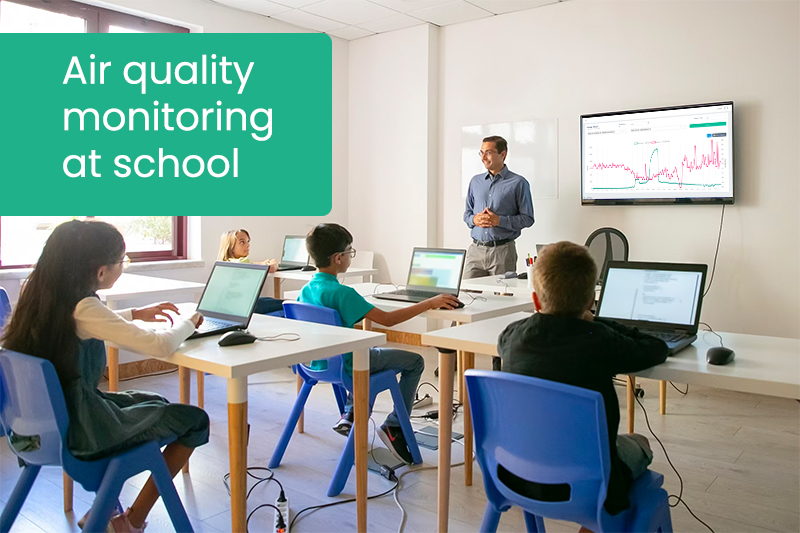
Air quality monitoring at schools has become increasingly important as studies have shown that poor indoor air quality can have negative effects on children’s health and academic performance. Children spend a significant amount of time in school, and ensuring that they have access to clean air can have a significant impact on their overall well-being.
Poor indoor air quality can be caused by a variety of factors, including inadequate ventilation, high humidity levels, and the presence of pollutants such as dust, mould, and volatile organic compounds (VOCs). These pollutants can lead to a range of health problems, including respiratory issues, headaches, and fatigue. Studies have also shown that poor indoor air quality can negatively impact cognitive function and academic performance in children.
Educating children about air pollution and the importance of clean air is crucial in promoting healthy habits and reducing exposure to pollutants. Introducing air quality monitoring devices in schools can help raise awareness and encourage students to take action to improve indoor air quality.
One such device is the HibouAir, a real-time air quality monitoring device that provides historical air quality data. The device includes sensors for measuring CO2, PM 1.0, PM 2.5, PM 10, pressure, temperature, VOCs, light, humidity, and noise levels. The HibouAir is user-friendly and easy to operate, making it an ideal tool for use in schools.
With the HibouAir air quality monitoring solution, school administrators, teachers, and students can monitor the quality of the air in their school in real time. This allows them to identify areas where air quality may be poor and take steps to improve it. For example, if the device detects high levels of CO2 in a particular classroom, steps can be taken to improve ventilation or remove the source of the pollutants.
The HibouAir solution can also provide historical data on air quality, allowing schools to track changes over time and assess the effectiveness of interventions to improve air quality. This information can be used to inform future decision-making and ensure that schools are providing a healthy environment for students and staff.
In conclusion, air quality monitoring at schools is an important tool in promoting healthy indoor environments for students and staff. Poor indoor air quality can negatively impact health and academic performance, and educating children about air pollution and monitoring air quality can help promote healthy habits and reduce exposure to pollutants. The HibouAir is an excellent tool for monitoring air quality in schools, providing real-time and historical data to inform decision-making and promote healthy environments.
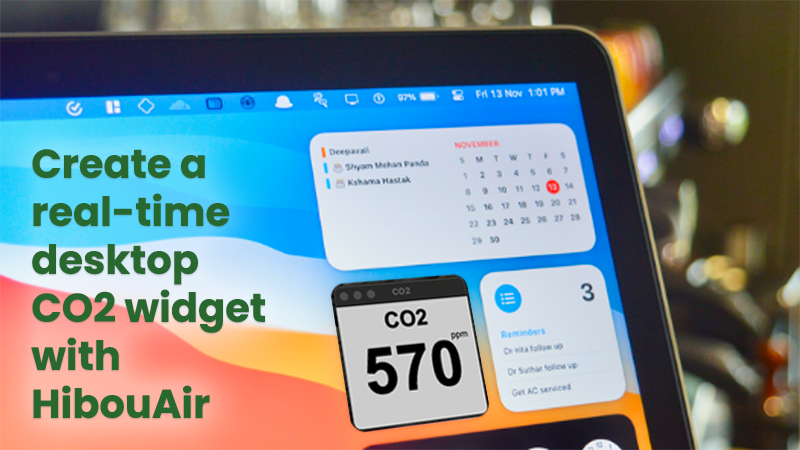
Creating a small real-time desktop CO2 widget using JavaScript and Bluetooth is a fun and engaging project that can help you understand how to work with Bluetooth communication and sensor data processing.
In this project we will use BleuIO to communicate with air quality monitoring sensor to read CO2 data. BleuIO is a bluetooth low energy usb dongle that helps to create BLE application easily. The AT command available on this device makes the development faster and easier.
There are many air quality sensor available but one popular choice is the HibouAir.
We will use electron js and node serial to connect with BleuIO. After that we will use AT commands to scan for nearby Bluetooth device that is advertising with a given board ID which is the air quality monitoring sensor.
Note: both BleuIO and HibouAir are available at digikey.
Here are the steps you can follow to create your own widget:
Hardware setup :
Connect BleuIO to the computer and wait for the device to recognize it. This usually takes 10 seconds. Connect the air quality monitoring sensor HibouAir to a power cable. Make sure the device is within 50 meters.
on terminal. This will install necessary libraries.
Inside this folder we will find three .js files and one html file. The index.html file is the frontend where we will see the real-time CO2 values.
The main.js file initialize the application and creates an window of 200px X 200px
render.js is the file which has all the logic go connect to BleuIO via serial port , gets real-time air quality data, decode it and finally print it on the screen.
Code explanation :
On render.js file, at first we make a list of devices connected to serial port. Then we filter out only the BleuIO devices by filtering with vendorID which is 2dcf. After that we pick the first item of the list.
Once we know the path of the BleuIO device , we connect to it.
ports = ports.filter((x) => x.vendorId == "2dcf");
      if (ports && ports.length > 0) {
        port = new SerialPort({
          path: ports[0].path,
          baudRate: 57600,
        });
}
Now that we are connected to the BleuIO dongle, we can write AT commands to it and get the response.
At first we write AT+DUAL to the dongle to put the dongle in dual role. So that we can scan for nearby devices and advertised data.
to put the dongle in dual role we write
port.write(Buffer.from("AT+DUAL\r"), function (err) {
          if (err) {
            document.getElementById("error").textContent =
              "Error writing at dual";
          } else {
            console.log('dongle in dual role')
}
In this project I am trying to get air quality data from a HibouAir device which has a board ID of 45840D. Therefore I look for advertised data that has this specific boardID. If i write AT+FINDSCANDATA=4584OD, BleuIO will filter out only advertise data from this board ID.
After writing this , we get a response from the dongle. To read the response from serial port we use
 port.on("readable", () => {
          let data = port.read();
console.log(data)
})
We can push the response in an array and later decide what to do with it.
When we do a AT+FINDSCANDATA=45840D
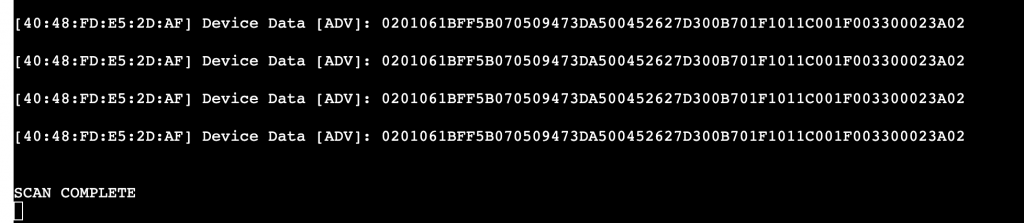
the response from the dongle looks something like this
Then we take the last response by using
resp = readDataArray[readDataArray.length - 2];
After that , get the advertised data from the string by
resp.split(" ").pop();
Now we have the advertised data in a variable. We can easily get the CO2 value from this string by selecting the position. The documentation from HibouAirs says , the CO2 value is right at the end of the string. In that case the value is 023A which is 570 is decimal.
We can print this value in our screen.
We can create a function that do the scanning every 20 seconds to get latest values.
Here is the complete code to render.js file
// This file is required by the index.html file and will
// be executed in the renderer process for that window.
// All of the Node.js APIs are available in this process.
const { SerialPort } = require("serialport");
var port;
var readDataArray = [];
async function listSerialPorts() {
  await SerialPort.list().then((ports, err) => {
    if (err) {
      document.getElementById("error").textContent = err.message;
      return;
    } else {
      document.getElementById("error").textContent = "";
    }
    console.log("ports", ports);

    if (ports.length === 0) {
      document.getElementById("error").textContent = "No ports discovered";
    } else {
      ports = ports.filter((x) => x.vendorId == "2dcf");
      if (ports && ports.length > 0) {
        port = new SerialPort({
          path: ports[0].path,
          baudRate: 57600,
        });
        port.write(Buffer.from("AT+DUAL\r"), function (err) {
          if (err) {
            document.getElementById("error").textContent =
              "Error writing at dual";
          } else {
            const myWriteFunc = () => {
              port.write(Buffer.from("AT+FINDSCANDATA=5B0705=3\r")),
                function (err) {
                  if (err) {
                    document.getElementById("error").textContent =
                      "Error writing findscandata";
                  } else {
                    console.log("here");
                  }
                };
            };
            myWriteFunc();
            setInterval(() => {
              myWriteFunc();
            }, 20000);
          }
        });
        // Read serial port data
        port.on("readable", () => {
          let data = port.read();
          let enc = new TextDecoder();
          let arr = new Uint8Array(data);
          let removeRn = enc.decode(arr).replace(/\r?\n|\r/gm, "");
          if (removeRn != null) readDataArray.push(removeRn);
          if (removeRn == "SCAN COMPLETE") {
            console.log(readDataArray);
            let resp = readDataArray[readDataArray.length - 2];

            let advData = resp.split(" ").pop();
            let pos = advData.indexOf("5B0705");
            console.log("advData", advData);
            console.log("c", advData.substr(pos + 46, 4));
            let co2 = parseInt("0x" + advData.substr(pos + 46, 4));
            console.log(co2);
            document.getElementById("co2Val").innerHTML = co2;
          }
        });
      } else {
        document.getElementById("error").innerHTML =
          "No device found. Please connect a BleuIO ongle to your computer and try again.";
      }
    }
  });
}

function listPorts() {
  listSerialPorts();
  setTimeout(listPorts, 20000);
}

// Set a timeout that will check for new serialPorts every 2 seconds.
// This timeout reschedules itself.
//setTimeout(listPorts, 2000);

listSerialPorts();
To build this app we need a library called electron-builder. To install this library we write on terminal npm i electron-builder
Once the library is build , we need to update our package json file and add build option or mac.
We will see a dmg file in our dist folder. Once we run the app, the widget will look like this.
The value will update every 20 seconds.
In conclusion, monitoring indoor CO2 levels is essential for maintaining a healthy indoor environment, particularly in light of the ongoing COVID-19 pandemic. HibouAir is an air quality monitoring device that can help you monitor indoor CO2 levels in real-time. By installing and setting up the HibouAir widget on your desktop, you can easily monitor indoor CO2 levels and take steps to improve indoor air quality. With its easy-to-use bluetooth interface, HibouAir is a valuable tool for anyone looking to maintain a healthy indoor environment.
HibouAir – Air quality monitoring device comes with both BLE and wifi. HibouAir wifi device collects real-time air quality data from surrounding environment and sends it to the cloud. Users with a HibouAir account can access and analyse air quality data using the HibouAir dashboard or mobile application.
However, different organization has different needs especially when it comes to air quality data analysis. After all, it’s not enough to simply own data these days; in order for the data to be useful to the organization, it needs to be cleaned, organized, and presented in a digestible way for analysis.
HibouAir provides a developer-friendly API which helps you to build your own analytical dashboard in your preferred programming language. The data collected from the API can be used to visually represent an indoor environment with visuals, text, charts, tables, and figures, and other metrics. This makes decision maker to easily understand indoor air quality to serve their purpose.
To build your own air quality monitoring dashboard, you will need
HibouAir wifi device
A HibouAir cloud account
API key and code
Steps to create your own dashboard
Connect your device to a power source and get close to the device.
Once your device is connected to the cloud, you will be able to collect data using HibouAir API.
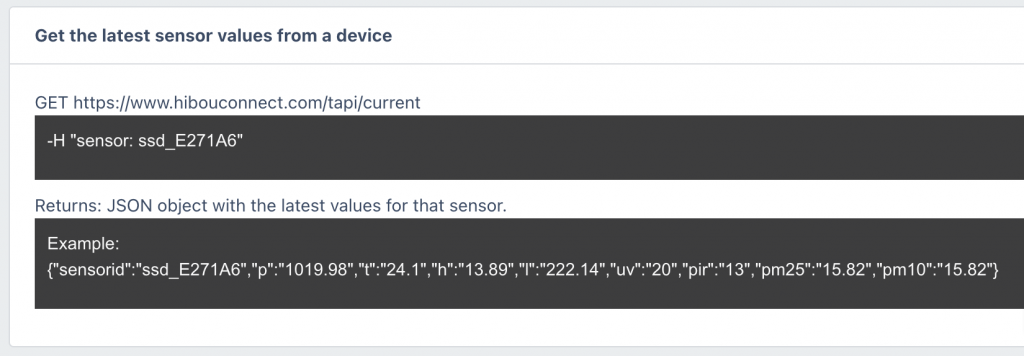
The API helps to get current and historical air quality data of multiple devices and sensors. There are several API endpoints available to get data such as current data, last n hours, date range etc
To get real-time sensor values from a specific device
Details of API documentation will be provided with the HibouAir cloud account.
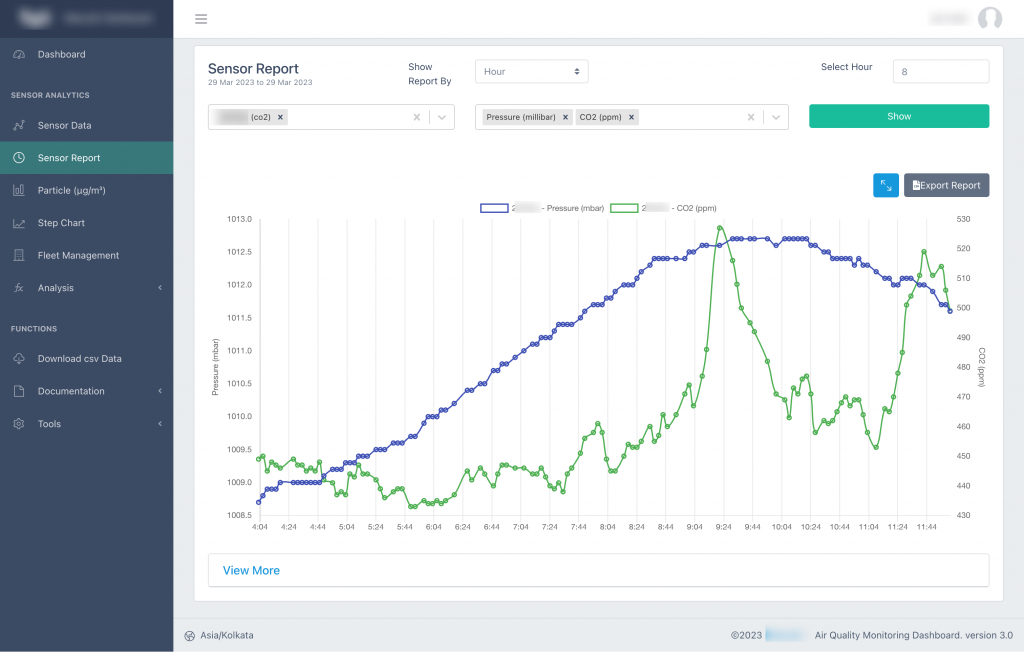
Here is an example of an air quality monitoring dashboard developed using HibouAir API.
HibouAir API has several ways to create dashboards querying the API. If you’re not sure about the best way to connect and use the API, contact us at info@hibouair.com
Share this post on :
Contact Us
Call us or simply fill out the form below, and one of our representatives will get back to you as soon as possible.