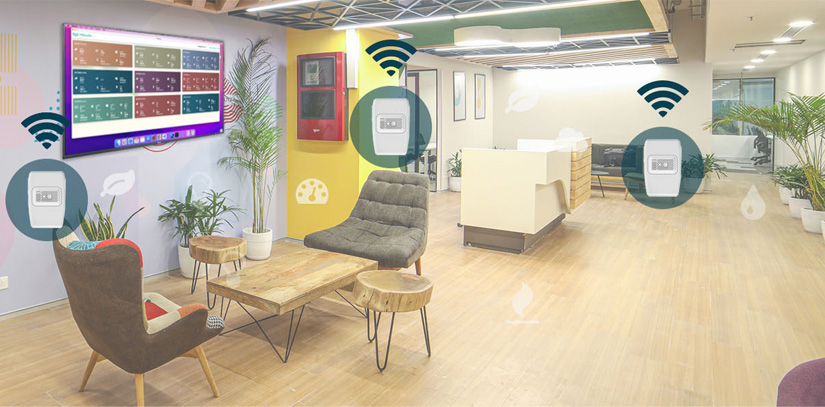
Identify the problems in buildings environment to reduce the risks of diseases spread virus like Covid 19

On july 2022 The Lancet COVID-19 Commission has release a Task force report “The First Four Healthy Building Strategies Every Building Should Pursue to Reduce Risk from COVID-19”, that calls for every building owner and operator should pursue to reduce the risk of COVID-19 transmission. The commission focused on lowering the amount of virus-laden aerosols in indoor air by Increasing outdoor air ventilation to dilute aerosols and reduce their concentration and/or enhanced filtration efficiency to remove particles from recirculated air have been shown to be effective as part of an overall strategy to reduce the spreading risk.

Harvard T.H. Chan School of Public Health also recommended the building systems should verify heating, ventilation, and air conditioning are performing as intended.

While monitoring the indoor air quality, you need a measurement tool that will give a real time level of pollution in the indoor environment, before taking actions. According to that you can set up your building. For example, control ventilation, upgrading air filters etc.,.

Most important to choose the best air quality monitoring device for healthy buildings

HibouAir is providing air quality monitoring devices with a simple setup that helps you accurately monitor the indoor air quality for observations and studies to preserve a healthy air quality environment. HibouAir provides CO2 or particulate Matter (PM) and volatile organic compounds (VOC) and also the other parameters such as humidity, temperature, atmospheric pressure & light level that affect the ambient environment around us.

HibouAir comes with two different variations; particulate Matter (PM) and CO2 sensors.

There are several indoor air quality monitoring solutions provided by HibouAir:

Users can choose the best solution that meets their requirements.

HibouAir mobile and desktop applications work for any solution which provides real-time air quality data of nearby devices over Bluetooth. The data will store only new days. 

HibouAir Dashboard account is available for cloud solutions, which provides real-time data with various maps, charts and graphs for analysis. It can also generate alert notifications and periodically reports upon request. The cloud solution can store the data in the cloud so we can not lose the information.

For more information please visit our websites Smart Sensor Devices and HibouAir.

The indoor air quality monitoring solution

  • 5 CO2 Air quality sensor
  • 1 USB dongle
Order Now
Share this post on :

Importance of monitoring the indoor air quality levels at warehouses and manufacturing plants

Workers within factories and warehouses are exposed to substantial amounts of chemicals and pollutants, making air quality a critical safety issue for anyone working in these environments. Air quality in industrial manufacturing plants has an immense impact on a person’s health, and therefore, their ability to work.

How does the poor indoor air quality affect your business?

Although air pollutants are invisible, they can have a serious impact on our health. Air pollutants can cause respiratory diseases and even cancer, along with other health effects, causing sick-leaves. The cost of one sick-leave day can cost even hundreds of euros for an employer. The indirect effect of it is a poor employer image, that makes it difficult to recruit qualified personnel. According to this, it is very important to monitor the indoor air quality in warehouses and manufacturing plants. Air quality measures particulate matter (PM) and CO2, along with other environmental factors such as VOCs, ambient temperature, humidity, pressure, and ambient light. 

Indoor air quality monitors

The data collected from air quality monitoring would primarily help us identify polluted areas, the level of pollution and air quality level. 

Smart Sensor Devices are providing the indoor air quality monitors called HibouAir. Quick & easy set up. No need for a Wi-Fi, gateway or cloud. Access air quality measurement history in the HibouAir analytics app, and gain insight to live a healthy life for you and your employees everyday.

This air quality monitor provides CO2 or PM and volatile organic compounds (VOC) and also the other parameters such as humidity, temperature, atmospheric pressure & light level that affect the ambient environment around us. 

For more information please visit our websites Smart Sensor Devices and HibouAir.

The indoor air quality monitoring solution

  • 5 CO2 Air quality sensor
  • 1 USB dongle
Order Now
Share this post on :

Problems with indoor air and find the solutions by using air quality monitor

The quality of indoor air inside offices, schools, and other workplaces is important not only for workers’ comfort but also for their health. Poor indoor air quality has been tied to symptoms like headaches, fatigue, trouble concentrating, and irritation of the eyes, nose, throat and lungs. Also, some specific diseases have been linked to specific air contaminants or indoor environments, like asthma with damp indoor environments. In addition, some exposures, such as asbestos and radon, do not cause immediate symptoms but can lead to cancer after many years.

Many factors affect indoor air quality. These factors include poor ventilation, problems controlling temperature, high or low humidity, recent remodeling, and other activities in or near a building that can affect the fresh air coming into the building. Sometimes, specific contaminants like dust from construction or renovation, mold, cleaning supplies, pesticides, or other airborne chemicals (including small amounts of chemicals released as a gas over time) may cause poor air quality. Most of the people are spending the time indoors so It is good to monitor and measure air conditioning regularly indoors.

Indoor air quality monitoring with devices

An air quality monitor can help us to know about the environment around us, so that we can take actions accordingly.

Smart Sensor Devices providing air quality monitoring devices called the  HibouAir. It is specially designed for indoor air quality monitoring with a simple setup that provides real-time indoor air quality data.

HibouAir provides the concentration of different elements in the air such as CO2, PM and volatile organic compounds (VOC) but also the other parameters such as humidity, temperature, atmospheric pressure & light level that affect the ambient environment around us.

We can find ways to solve complicated things with our devices and we can protect ourselves from the polluted environment and health problems.

The indoor air quality monitoring solution

  • 5 CO2 Air quality sensor
  • 1 USB dongle
Order Now
Share this post on :

The facts of indoor air quality and the way to take care of indoor air quality

According to Harvard T.H’s study the emerging evidence that air pollution has an impact on our health. The findings show that increases in PM2.5 levels were associated with acute reductions in cognitive function. We’ve seen these short-term effects among younger adults, said Jose Guillermo Cedenö Laurent, a research fellow in the  Department of Environmental Health and lead author of the study. “The study also confirmed how low ventilation rates negatively impact cognitive function. Overall, the study suggests that poor indoor air quality affects health.”

A growing body of research has shown that indoor air pollution diminishes cognitive function. While it is well known that air pollutants such as PM2.5 can penetrate indoor environments, few studies have focused on how indoor exposures to PM2.5.

The way to know indoor air quality

There are many infectious can transmission indoors. To better understand the air quality the Smart Sensor Devices are providing air quality monitoring devices which can check the level of air quality, CO2 and temperature. By using our devices you can measure a number of parameters such as humidity, temperature, volatile organic compounds, CO2 or fine particles PM1.0, PM2.5, PM10. The environmental sensors detected levels of CO2 that fell below or exceeded certain thresholds.

How the air quality monitors works

These air quality monitors take a sample of the air in environments to provide certainty about the ppm values ​​of carbon dioxide and other particles found in them. Air quality monitors allow us to understand exactly if the indoor environment is safe or not.

HibouAir is an air quality monitor specially designed for indoor air quality monitoring. HibouAir Desktop Solution comes with an easy set-up. No need for wifi, gateway or cloud connectivity. It works in desktop and mobile applications are simple and effective. The app presents information in a logical way, with a clear display of air quality. It displays the current indoor air quality data and shows reading with graphs for the past 7 days.

Air quality monitoring solution for office

  • 5 CO2 Air quality sensor
  • 1 USB dongle
Order Now
Share this post on :

Why and how to improve indoor air quality in offices?

Along with thermal comfort, sounds and light, indoor air quality (IAQ) is an integral part of the quality of life at work criteria.

For the majority of working people, the working day essentially takes place in closed environments: offices, open spaces, shops, etc.

Indoor air pollution in these confined spaces exposes employees to adverse health effects and affects their work efficiency. 

What are the sources of indoor air pollution in the office?

According to the World Health Organization, indoor air is up to 8 times more polluted than outdoor air. 

In the workplace, employees are exposed to different categories of indoor air pollutants: 

  • – Construction and decoration materials, furniture and office supplies emit Volatile Organic Compounds (VOCs).
  • – The inks of printers and photocopiers emit ozone and hydrocarbons (NB: laser printers emit 6 times more VOCs than inkjet printers).
  • – Human presence can degrade indoor air quality. Some sick employees can carry viruses that spread through the air through breathing or coughing. Some perfumes or deodorants also emit fine particles. A large presence of employees in the same room increases the CO2 concentration
  • – The use of cleaning and disinfection products by cleaning teams generates fumes of irritating chemical particles.
  • – Outdoor pollution can also impact indoor air quality: the proximity of a workplace to traffic routes, construction sites or production sites can increase the concentration of VOCs and fine particles in offices.

The building design is often an aggravating factor in indoor air pollution:

  • – In most office buildings, the windows do not open and the air renewal is done only by mechanical ventilation systems. Some “blind” meeting rooms do not even have a window and it is, therefore, impossible to ventilate them.
  • – The majority of ventilation systems in offices are outdated
  • – Air conditioning systems, very present in modern workspaces, are even suspected of acting as a diffuser of viruses in the air through offices and floors of buildings.
  • – The vast open spaces increase the presence of collaborators in the same room, at the same time increasing the concentration of CO2.

Yet we spend more than 80% of our time in closed environments. This almost continuous exposure to indoor air pollution has a direct impact on the health of employees.

Indoor air pollution: what impact on health at work?

Regular exposure to indoor air pollution can cause, in the short term, various symptoms that affect well-being at work: 

  • – Fatigue
  • – Concentration difficulties
  • – Headache
  • – Dizziness
  • – Irritation of eyes and mucous membranes 

Indoor air pollution leads to cognitive impairment and reduced productivity: it directly affects the efficiency of employees.

Thus, in poorly ventilated buildings, with high indoor air pollution, some employees may suffer from Sick Building Syndrome.

Long-term exposure to polluted indoor air can even lead to more serious pathologies such as asthma, lung diseases and even cardiovascular diseases.

These symptoms can even lead to work stoppages or even occupational diseases.

Indoor air pollution is costing businesses money

To measure the impact of indoor air pollution on companies, American researchers looked at the effects of absenteeism and the decline in employee productivity. 

The American College of Allergists estimates that poor indoor air quality causes or worsens all illnesses by 50%. 

Absenteeism and reduced productivity due to poor indoor air quality cost businesses an average of $480 per worker per yearaccording to research.

By improving the air quality at work, you protect the health of your employees and boost their efficiency. And your investments can be quickly amortized: according to a study by the ASHRAE (American Society of Heating, Refrigerating and Air-Conditioning Engineers), productivity gains by improving indoor air quality at the workplace.

The special case of COVID-19

The SARS-CoV-2 pandemic has increased the risk of contamination at work. For several months, employees were encouraged or even required and wearing a mask in workspaces was made compulsory. 

Despite these reinforced sanitary measures, certain living areas in the office continued to facilitate the airborne spread of the virus: toilets, break areas, company restaurants, etc.

Where mask-wearing was not possible or required, the virus continued to circulate freely through the air.  

The monitoring and management of IAQ in the workplace is now a key issue for companies.

How to monitor IAQ in workspaces?

An air quality monitor can help us see things more clearly by providing measurements of the air that is present around us. Knowing what’s in the air can give us peace of mind, reveal sources of pollution and help us take action.  

These air quality monitors take a sample of the air in environments to provide certainty about the ppm values ​​of carbon dioxide and other particles found in them. Air quality monitors allow us to understand exactly if space is safe and healthy, or not. 

In addition, we must ensure that you take the appropriate measures to improve your IAQ.

Our IAQ monitoring solutions

HibouAir is an air quality monitor specially designed for indoor air quality monitoring. HibouAir comes with a quick & easy set-up. No need for wifi, gateway or cloud connectivity. Its design is sleek and the navigation of its desktop and mobile applications is simple and effective. The app presents information in a logical way, with a clear display of air quality. The device is easy to set up and use, as it doesn’t require connecting or pairing. It displays the current indoor air quality data and shows reading graphs for the past 7 days. The colour codes (green, yellow and red) indicate whether the measurements represent good, moderate or severely polluted air. 

Monitor air quality at the office with HibouAir 

HibouAir analytic app provides real-time air quality data from multiple devices. A desktop setup with a dongle can provide an overall air quality snapshot of the office. An employee can also use the mobile app to access data whenever they want. 

Air quality monitoring solution for small office

  • 5 CO2 Air quality sensor
  • 1 USB dongle
Order Now
Share this post on :

Tips for breathing healthy air at home

We spend between 80 and 90% of our time indoors, and yet the air inside is often more polluted than outside! It is therefore important to take steps that can preserve our health at home. Here are a few tips.

Several types of pollutants can be present in our homes and cause bothersome or harmful effects on our health. The quality of indoor air depends on the concentration of pollutants and the renewal of the air in the dwelling.

Sometimes odourless, colourless and in low concentrations but nevertheless present in our habitat, the most frequent pollutants are:

  • Biological pollutants that come from living organisms (moulds, viruses, animals, etc.)
  • – Chemical pollutants such as volatile organic compounds ( VOC ), widely used in the manufacture of construction products but also in cleaning products and tobacco smoke
  • – Physical pollutants result from combustion, in particular from our boiler but also from human breathing.

What advice is to avoid emitting pollutants at home?

  • – Ventilate daily for 10 minutes in the morning and evening
  • – Open windows when doing household chores
  • – Keep the air inlets or extraction vents clean
  • – Do not turn off the ventilation system. It is indeed designed to operate continuously.
  • – Never block the air inlets (even in winter)
  • – Dust the air inlets located at the window level every month
  • – Maintain a humidity level between 40 and 60%, using an air quality monitor(a device that measures the humidity level)
  • – When cooking, put a lid on pans to reduce humidity

Air quality and the renovation of the building

When we carry out renovation work in our condominium, it is essential to integrate the indoor air quality aspect into the project. Indeed, if the apartment is well insulated, but the ventilation system is not adapted to the buildings after work, the stale air cannot be renewed. Insulation and ventilation must be systematically coupled in order to avoid humidity in the air and walls, mould, paint blistering, etc.

Purifying the air improves your daily comfort and your long-term health!

In the long term, the consequences of this unhealthy air can be very significant and can even seriously affect our health. Polluting air can not only cause many diseases such as asthma, cancer or other cardiovascular diseases, but it also plays a determining role in our daily comfort. The role of air is far from trivial since it can carry two things: allergens, colds and other viruses on the one hand, and gases such as CO2 or volatile organic compounds on the other. These elements strongly influence the human body, starting with the quality of sleep, among other things. Like the food we eat, the air we breathe plays a vital role in our well-being.

Thanks to indoor air quality monitoring devices, which makes it is possible to measure the levels of C02, VOCs or other pollutants (in ppm – particles per million) that are in our home. Thus, this allows us to know if the air in our home is too polluted, and therefore to ventilate accordingly to renew the air significantly.

Why HibouAir for monitoring air quality at home

HibouAir is a wireless air monitor that can track the air quality at home to help us breathe better easily and effortlessly. The best thing about HibouAir is that we are always informed about our surrounding environment in real-time. The monitor continuously analyzes the most important polluting elements such as CO2 or fine particles, volatile organic compounds (VOC), temperature, humidity, pressure, and noise and gives us the information in real time. Thanks to this revolutionary device, which helps improve the air inside our homes and above all understand how to avoid polluting it. 

A precise analysis of pollutants to ensure your well-being!

The HibouAir monitor is a very innovative device with an extraordinary ability to analyze its environment. It is indeed able to monitor the air quality of our interior, whether it is a house or an apartment! How? By simply measuring a number of parameters such as humidity, temperature, volatile organic compounds, CO2 or fine particles (PM1.0, PM2.5, PM10).

Air quality is visible in real-time and via the HibouAir mobile and desktop application!

The results can also be accessed via an extremely easy-to-use mobile application which allows us to see the details of each pollutant. Not only is the application easy to install, but it also translates complex data into a language that everyone can understand. The application highlights how pollutants evolve according to our daily activities!

But the application does not stop there! It also gives us a decision on how good the indoor environment is in terms of CO2 or fine particles.

Order Now

Share this post on :

Measure the air quality yourself at home with HibouAir

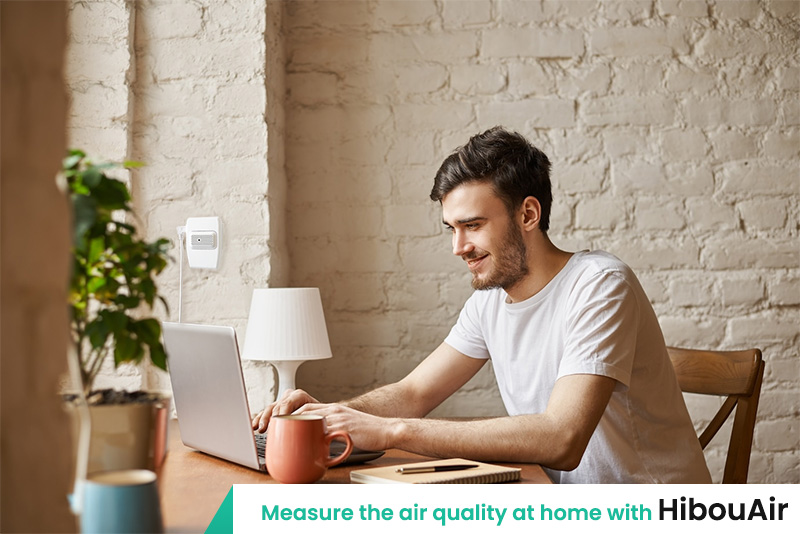
In our well-insulated houses, we constantly breathe stale air and that is not healthy at all. Good air quality is important for our health and well-being. Smart Sensor Devices has developed HibouAir, an intelligent air quality monitor. It comes with both particle and CO2 sensors. The device visually indicates when the air is polluted in the house and it is time to ventilate.

Studies have shown that we spend at least 90% of our time indoors: at home, office, or school… These living environments are designed to make us feel safe and protected. It is with this in mind that over the past 20 years, buildings have been better and better insulated. Indeed, this allows us to keep our homes warm without having to consume too much energy. But the situation turned against us. Our living environments have turned into “hermetic boxes”, in which the air can no longer enter or leave, and this is a major problem!

Poor air quality at home

Many people believe that outdoor air is more polluted than indoor air. And yet, nothing could be less true. Our indoor air is filled with CO2 – which is the substance we release when we breathe. Humidity and VOCs (volatile organic substances), can seriously damage your health. These substances are released into the air when we cook, light candles, the paint on our walls or the varnish that covers our furniture, etc. These parameters can cause fatigue and migraine in the short term and cancer in the long term. Without our realization, these substances have a significant impact on our comfort and well-being. 

Know what you breathe!

Everyone assumes that our homes and living environments are “sanctuaries” in which we can live healthily and where our children can grow up safely, but the reality is unfortunately quite different. Since it is known that Covid-19 can also be spread through the air, many renowned virologists insist that it is vital to sufficiently renew the indoor air in our schoolsoffices and homes to contain the risk of the spread of the coronavirus. This is how we gradually realized that the quality of the air we breathe had to be good.

While understanding this necessity is a first step forward, however, an additional problem has been added due to the odourless and colourless nature of stale air. Therefore, we do not realize when the air quality deteriorates in a room. And that’s why Smart Sensor Devices has developed the HibouAir, a smart air quality monitor.

How to measure the air quality in your home?

The HibouAir contains detectors, which constantly monitor the air quality in your home. The main parameter that HibouAir closely monitors is the CO2 rate. The monitor notices when it increases too much and shows in the desktop or mobile application visually. On the application, it turns green if the air is healthy and orange if the CO2 level is between 800 and 1200 ppm ( parts per million ), a sign that indoor air quality is deteriorating. If the screen on the CO2 value turns red, this means that the amount of CO2 has exceeded 1200 ppm. In this case, the accommodation must be generously ventilated as quickly as possible by opening doors and windows.

The HibouAir is more than just a CO2 monitor

The HibouAir is more than just a visual CO2 monitor. The device also lists other parameters, such as VOC content, temperature, air humidity, pressure etc. In short, all the factors contribute to a healthy and comfortable indoor climate. All the air quality data measured by the device is stored on the device. The device can store up to 7 days of air quality data which can be accessed from the HibouAir mobile or desktop application. This allows you to judge the health of your home in real-time, as well as view history or see if you can identify repeating patterns. And it also lets you know if your home has structural problems, which will then need to be resolved urgently.

Not only for home but also offices, schools and classrooms.

Order Now


Image by karlyukav on Freepik

Share this post on :

HibouAir Desktop Pro for monitoring air quality at office

It is necessary for human health that indoor air is of high quality. A large part of the active population spends their 8-hour workday in an office. Working in large spaces often means being with large groups of people who all share the air. People’s health depends largely on the indoor environment where we work, live or carry out any type of activity for a long time.

The air pollution in an office may seem harmless compared to how it looks in some industries. And of course, the risk of serious occupational diseases as a result of chemicals and particles is less. Nevertheless, poor air quality in the office can make people tired, cause headaches and reduce work performance.

Airflow, air quality, temperature and humidity are factors that affect the performance of an employee in an office environment. There is also a connection between air circulation and sickness absence. In other words, a good indoor climate in office buildings is of great importance for productivity, comfort and, above all, people’s well-being. 

Use air quality monitor to improve air quality in office 

When it comes to air quality in the office, how useful is an indoor air quality monitor and should you get one? Anyone looking at how to improve the air quality inside office buildings should definitely consider investing in an air quality monitor.  

Why HibouAir for office?

HibouAir indoor air quality monitoring solution for the office helps to keep track of the air quality in real-time. It comes with a quick & easy set-up. No need for wifi, gateway or cloud connectivity. The device can store up to 7 days air quality data.

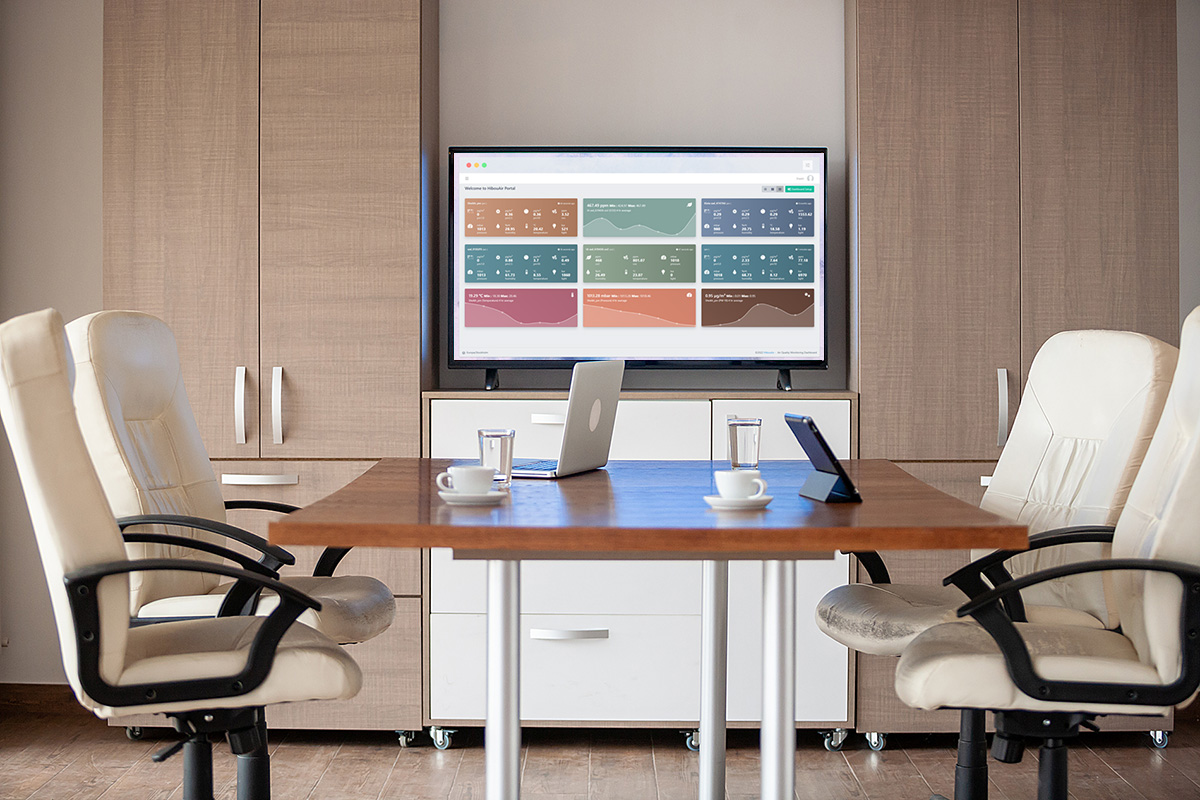
HibouAir’s air quality monitoring Desktop Pro application gives users insight into their indoor air quality in real time. The dashboard provides an overview of all the devices on one screen. An employee can also use the mobile app to access data whenever they want. The device list can be managed from the settings. The value updates every thirty seconds. This information will help to reduce the risks of bad indoor air and improve employee productivity and performance.

The application is available for both Windows and MAC operating system.

air quality monitoring at office.jpg

HibouAir measures and monitors the air quality levels in an indoor environment where the user can follow the values ​​for CO2 or PM (PM1, PM2.5, PM10), Volatile organic compounds (VOCs), relative humidity and temperature.

Air quality monitoring solution for small office

  • 5 CO2 Air quality sensor
  • 1 USB dongle
Order Now
Share this post on :

Get control of the buildings ventilation system with a co2 sensor

A building management system (BMS), is a fully computerized and automated control system that controls and monitors mechanical and electrical building equipment, such as ventilation, lighting, electrical systems, fire extinguishing systems and protection systems. This tool has given facility managers a central system through which they can monitor and control building operations such as lighting, security systems and elevators.

A BMS can be used to bring the exact amount of fresh air that is needed to make sure occupants stay productive by measuring CO2 levels and delivering demand-controlled ventilation. Companies who know how to drive productivity get the most out of their people’s talent, produce fewer failures and bring better products and services to the market, which in turn drives revenue and profits. Staff are the most valuable asset of any organisation.

Today, the measurement of carbon dioxide is an important tool to ensure good ventilation of the building while saving energy by reducing the number of over-ventilated buildings. Obviously high levels of CO2 indoors indicate poor ventilation, which also allows other potentially dangerous air pollutants to accumulate and create health, productivity and comfort problems. However, measuring CO2 is not an indicator of good air quality: it is an indicator of the need for air renewal.

CO2 sensor is an instrument used for the measurement of carbon dioxide gas in a given environment. These devices usually record carbon dioxide in parts per million (ppm) in occupied spaces and offer us a sample of the concentration of this gas in the air we breathe.

With the use of CO2 sensors, it is possible to identify the areas or inhabited rooms in which the levels of carbon dioxide are higher than acceptable. From here it will be necessary to design or adjust the ventilation systems and the airflow to these needs in order to obtain adequate renewal and quality of the interior air.

Air quality monitoring devices can be linked to BMS. HibouAir is one such air quality monitoring device that measures all important environmental parameters. HibouAir is simple, easy to install and economical. 

Why HibouAir for building management system

HibouAir is an air quality monitor specially designed for indoor air quality monitoring. HibouAir comes with a quick & easy set-up as it doesn’t require connecting or pairing. The device can be mounted easily on the wall. This indoor air quality monitor provides not only the concentration of different elements in the air such as CO2 or PM and volatile organic compounds (VOC) but also the other parameters such as humidity, temperature, atmospheric pressure & light level that affect the ambient environment around us. The device can store up to 7 days of indoor air quality data for analysis and decision-making. The system will be able to read real-time air quality data from HibouAir via Bluetooth or cloud using the API for effective ventilation. 


Order Now
Share this post on :

Review on HibouAir by Dr. Vikas Gupta

The growing urbanization, industrialization and deforestation has led to an increase in the number and density of undesirable particles and airborne pathogens (bacteria, viruses, etc.) in our environment. Indoor air quality has therefore become even more important especially after covid-19 wreaked havoc around the world and its measurement is the first step towards ensuring that the immediate surrounding is safe for our families. As a researcher in medical domain with a keen interest in technology that affects our health, I compared various air sensors online before deciding to try HibouAir (Air monitoring devices-IoT sensor) at our home. I liked the fact that they use recycled materials for manufacturing their products, which is beneficial for the environment.

My initial experience with the HibouAir sensor has been positive. This small and affordable device requires simple setup but provides relevant data in real time for timely intervention, if required. It was interesting to not only monitor the concentration of different elements in the air such as CO2 and volatile organic compounds (VOC) but also the other parameters such as humidity, temperature, atmospheric pressure & light level that affect the ambient environment around us. The apps on both the desktop ( I tested the Mac OS app) and mobile (android) worked well and showed the parameters using a clean design and intuitive interface.

As with any other product, there is still some room for further improvements. In particular, I would like to see a display on the device itself so that a mobile phone or a pc is not always needed. I would also like to see a comparison with external air quality in the app that can be easily arranged by sourcing that data from external source (e.g., EPA). This could give an indication of the improvement in air quality compared to outdoors if a customer is using an air purifier. These are just a couple of suggestions for further improvements and don’t take away the fact that HibouAir sensor is a great product already in its current form. I would highly recommend it for indoor air quality monitoring.

Dr. Vikas Gupta, PhD
Senior Clinical Scientist
Philips Innovation Hub @ Karolinska University Hospital, Stockholm

Share this post on :

Contact Us

Call us or simply fill out the form below, and one of our representatives will get back to you as soon as possible.